If you buy through our links, Amazon pays us a small commission at no extra cost to you. That’s how we keep the site running. How we choose.
Contents
Overview
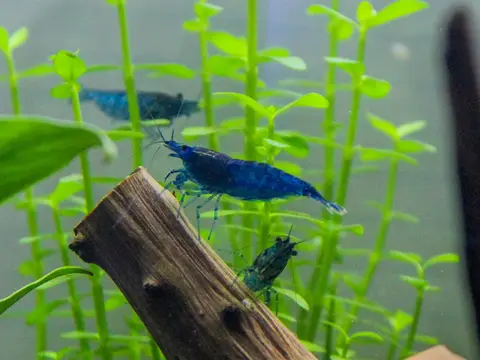
The blue dream shrimp is a color line of Neocaridina davidi, the same species as the cherry shrimp, selectively bred until it shows a deep, solid blue over the whole body, males included. It does not exist in the wild; it is the result of years of line breeding.
It is just as hardy as other Neocaridina, so it is an easy way to keep eye-catching shrimp without the demands of soft-water species. It pops against green moss and light plants, and a blue colony in a planted nano tank makes a stunning contrast. Suitable for beginners with a well-established tank.
Care and tank setup
Care is the same as for any Neocaridina: stable water, a mature tank and absolutely no copper.
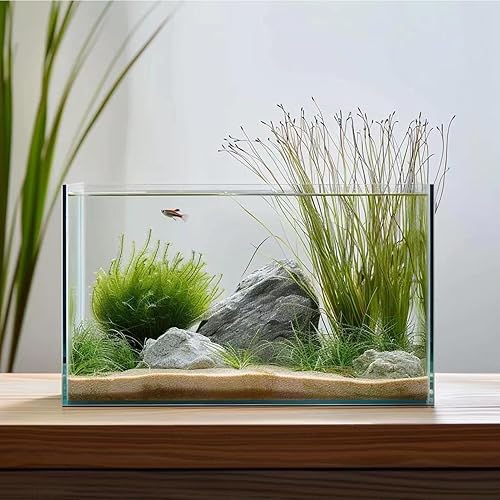
- Tank: 5 gallons (20 L) or more, cycled and with plenty of biofilm. Moss, dense plants and dried leaves provide cover and food.
- Color: looks deeper over dark substrate and a dark background. Stress, shipping or a rough molt fade it temporarily.
- Acclimation: drip for an hour or more; sudden hardness changes cause failed molts.
- Copper: toxic. Avoid medications and fertilizers that contain it.
- Filter: sponge over the intake.
To keep the line pure, don't mix it with cherry shrimp or other Neocaridina colors: hybrids lose their color within a few generations. Good companions are tiny peaceful fish, snails and Caridina shrimp, which won't crossbreed with them.
Feeding
An eager omnivore. It scrapes biofilm and algae all day and appreciates 3-5 feedings a week of shrimp food, blanched vegetables and dried Indian almond leaves. Foods with astaxanthin or spirulina help keep the color strong. Remove leftovers after a couple of hours so water quality doesn't suffer. Avoid fish foods with added copper and stick to products made for invertebrates.
Breeding
It breeds just like the cherry shrimp: the female carries the eggs under her tail for 3-4 weeks and fully formed babies hatch, with no larval stage. Every colony throws some paler or brownish offspring; if you want an even blue, move them to another tank and keep the darkest animals as breeders. Never release culls into the wild.
Compatible tank mates
Species from our database that share water parameters, size and temperament with the Blue dream shrimp. Calculated from the data in each profile.
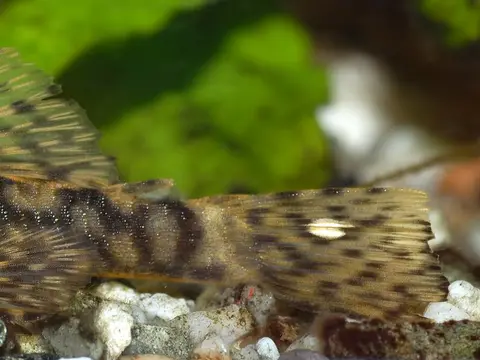 Bristlenose pleco Ancistrus sp. 26 gal (100 L) · 72–81 °F (22–27 °C)
 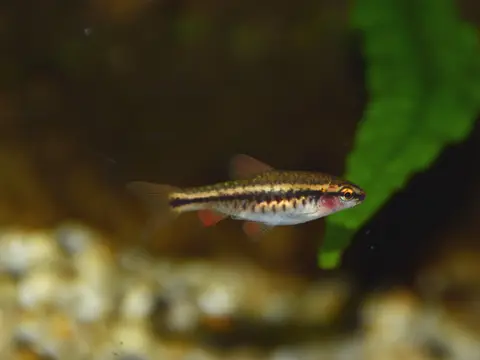 Cherry barb Puntius titteya 16 gal (60 L) · 73–81 °F (23–27 °C)
 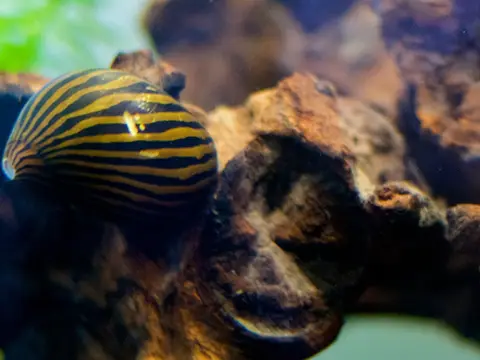 Nerite snail Neritina natalensis 5 gal (20 L) · 72–82 °F (22–28 °C)
 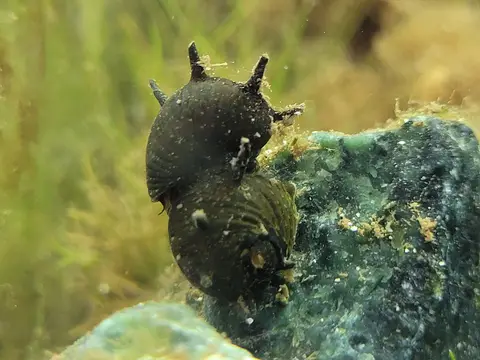 Horned nerite snail Clithon corona 5 gal (20 L) · 72–82 °F (22–28 °C)
 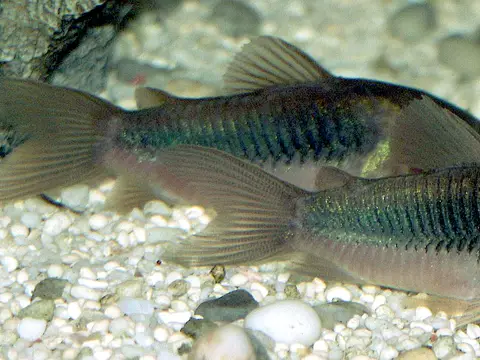 Bronze cory Corydoras aeneus 21 gal (80 L) · 72–81 °F (22–27 °C)
 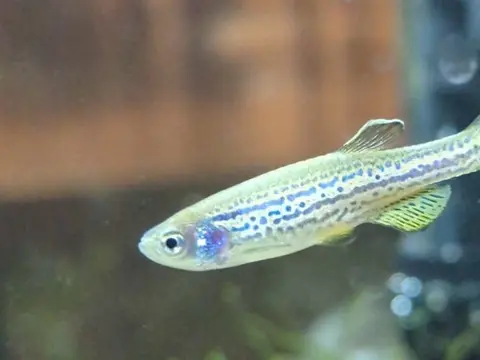 Zebra danio Danio rerio 16 gal (60 L) · 64–77 °F (18–25 °C)
 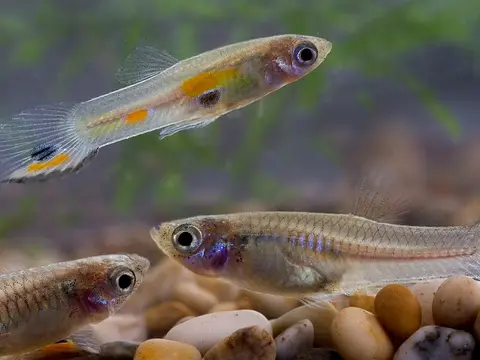 Guppy Poecilia reticulata 14 gal (54 L) · 72–82 °F (22–28 °C)
 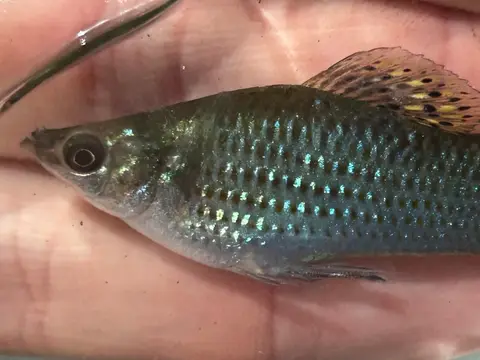 Molly Poecilia sphenops 26 gal (100 L) · 75–82 °F (24–28 °C)
 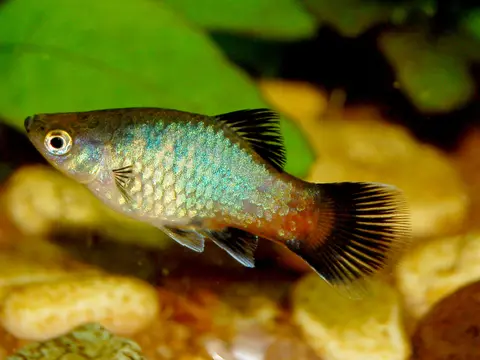 Platy Xiphophorus maculatus 16 gal (60 L) · 68–79 °F (20–26 °C)
 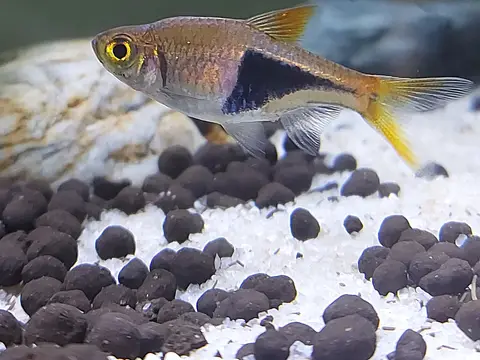 Harlequin rasbora Trigonostigma heteromorpha 16 gal (60 L) · 72–81 °F (22–27 °C)
 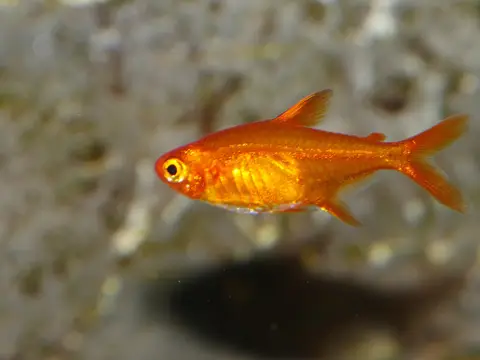 Ember tetra Hyphessobrycon amandae 11 gal (40 L) · 73–82 °F (23–28 °C)
 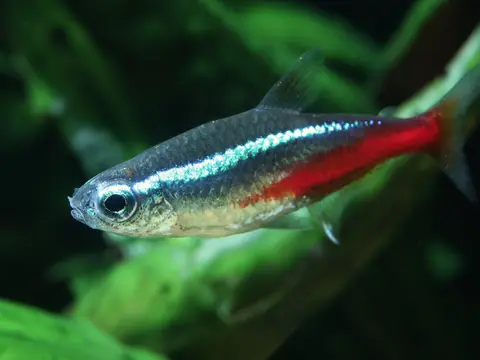 Neon tetra Paracheirodon innesi 16 gal (60 L) · 68–79 °F (20–26 °C)
 Check the compatibility of your whole tank →
What not to keep it with
Popular species you shouldn’t house with the Blue dream shrimp, and why.
- Tiger barb: eats shrimp
- Betta fish: eats shrimp
- Common goldfish: eats shrimp
- Discus: incompatible temperatures, eats shrimp
- Angelfish: eats shrimp
- Yellow lab cichlid: eats shrimp
- Clown loach: eats shrimp
- Oranda goldfish: eats shrimp
Recommended equipment
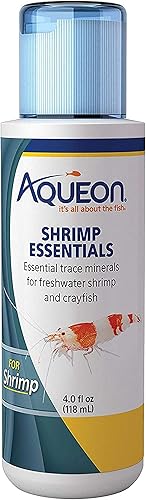
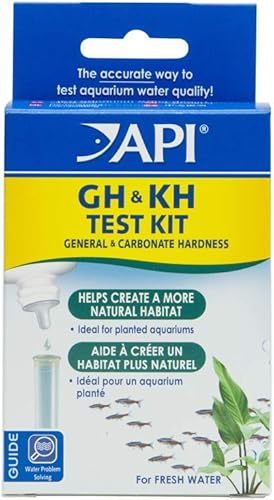
What you need to keep the Blue dream shrimp healthy, checked against Amazon stock.

Frequently asked questions
How many liters does a Blue dream shrimp need?
At least about 20 liters for a group of at least 10 fish. More space always helps keep the water stable.
What water temperature does the Blue dream shrimp need?
Between 18 and 27 °C, with a pH of 6.5 to 8.
What fish can live with the Blue dream shrimp?
Based on water, size and temperament, it fits with species such as Bristlenose pleco, Cherry barb, Nerite snail, Horned nerite snail and Bronze cory. Use our compatibility calculator to check your whole tank.