If you buy through our links, Amazon pays us a small commission at no extra cost to you. That’s how we keep the site running. How we choose.
Contents
Overview
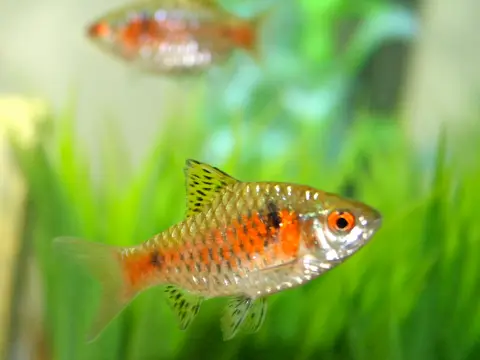
The Odessa barb is one of the prettiest barbs in the hobby: males show a vivid ruby-red band along the flank over a silvery body with black-edged scales and speckled fins. Females are more subdued, golden and without the red.
Its name has an unusual backstory: it became popular in the aquarium markets of Odessa and Moscow in the 1970s while its origin remained a mystery. Decades later, wild populations were found in Myanmar, and it was formally described as a species in 2008. It is hardy, active and less troublesome than the tiger barb, making it a good choice for beginners with a mid-sized tank.
Care and tank setup
For a group of eight, plan on about 26 gallons (100 L), ideally a 29-gallon or larger at least 30 inches (75 cm) long. Use a cycled tank, a filter with moderate flow and a heater.
- Decor: plants along the sides and back, driftwood and stones, with open swimming space. Dark substrate and moderate lighting intensify the males' red.
- Water: they adapt to most tap water and tolerate somewhat cooler temperatures than many tropicals. Change 25-30% weekly.
- Group: keep several females per male; males compete by showing off their colors without causing harm.
- Tank mates: danios, larger rasboras, mid-sized tetras, other peaceful barbs, corydoras and plecos. They are usually calm, but some individuals nip long fins, so skip bettas, angelfish and fancy guppies, and do not trust them with small shrimp.
In groups of three or four they get nervous and are more likely to pester other fish.
Feeding
An undemanding omnivore. Use quality flakes and pellets as a base, with frozen or live foods (mosquito larvae, brine shrimp, daphnia) several times a week and some spirulina-based food. A varied diet is the key to keeping the males' red intense. Two small feedings a day are enough.
Breeding
An easy egg scatterer to breed. A well-conditioned pair, or one male with two females, in a breeding tank with moss or fine-leaved plants and mesh on the bottom usually spawns in the morning. They do not guard the eggs and will eat them, so remove the adults after spawning. Fry are free-swimming within a few days and take infusoria, then baby brine shrimp.
Compatible tank mates
Species from our database that share water parameters, size and temperament with the Odessa barb. Calculated from the data in each profile.
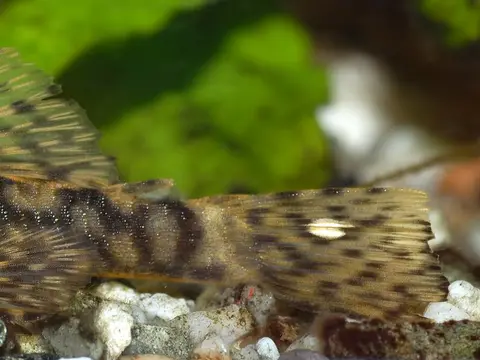 Bristlenose pleco Ancistrus sp. 26 gal (100 L) · 72–81 °F (22–27 °C)
 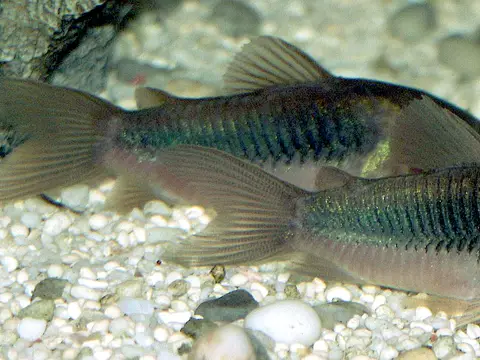 Bronze cory Corydoras aeneus 21 gal (80 L) · 72–81 °F (22–27 °C)
 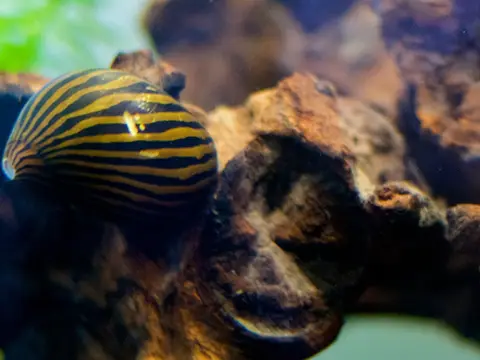 Nerite snail Neritina natalensis 5 gal (20 L) · 72–82 °F (22–28 °C)
 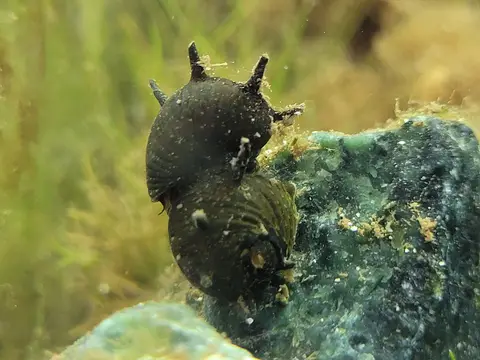 Horned nerite snail Clithon corona 5 gal (20 L) · 72–82 °F (22–28 °C)
 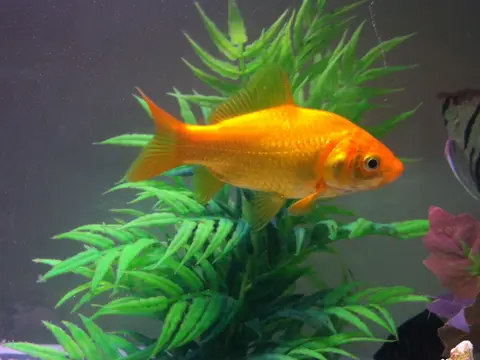 Common goldfish Carassius auratus 79 gal (300 L) · 50–75 °F (10–24 °C)
 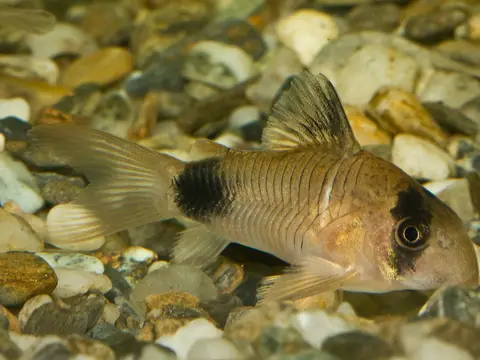 Panda cory Corydoras panda 16 gal (60 L) · 68–77 °F (20–25 °C)
 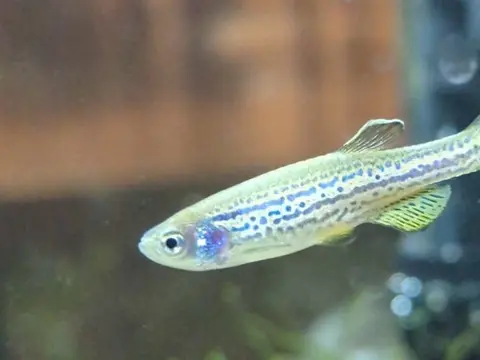 Zebra danio Danio rerio 16 gal (60 L) · 64–77 °F (18–25 °C)
 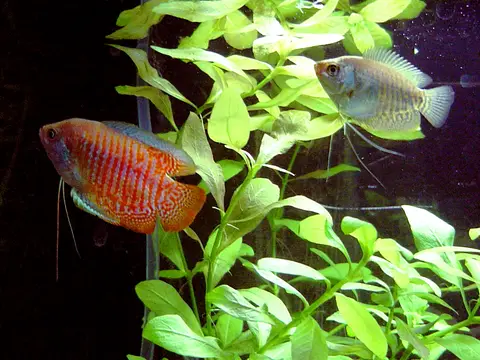 Dwarf gourami Trichogaster lalius 16 gal (60 L) · 75–82 °F (24–28 °C)
 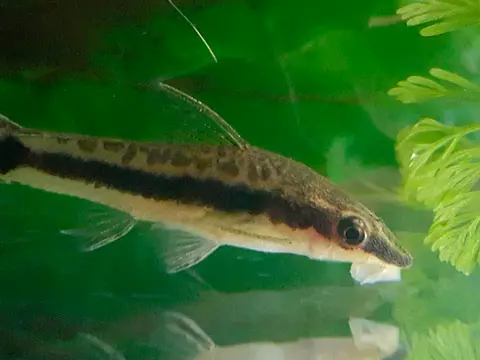 Otocinclus catfish Otocinclus vestitus 16 gal (60 L) · 70–79 °F (21–26 °C)
 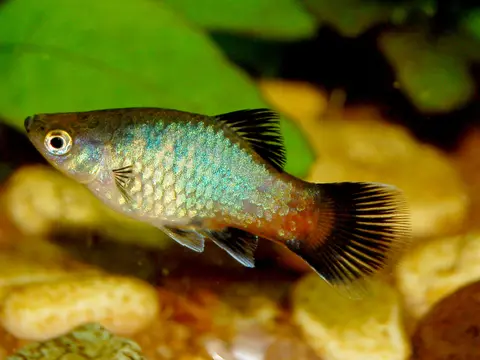 Platy Xiphophorus maculatus 16 gal (60 L) · 68–79 °F (20–26 °C)
 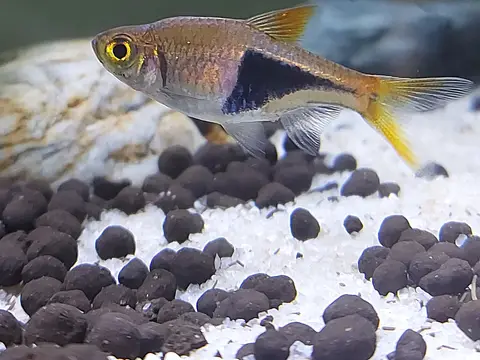 Harlequin rasbora Trigonostigma heteromorpha 16 gal (60 L) · 72–81 °F (22–27 °C)
 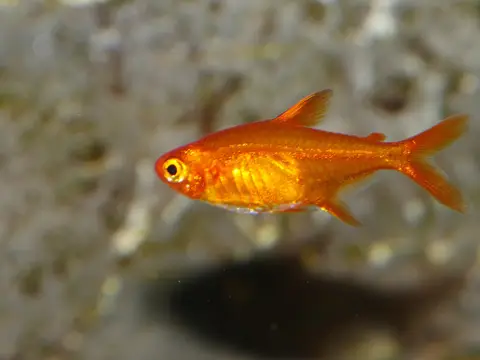 Ember tetra Hyphessobrycon amandae 11 gal (40 L) · 73–82 °F (23–28 °C)
 Check the compatibility of your whole tank →
What not to keep it with
Popular species you shouldn’t house with the Odessa barb, and why.
- Betta fish: nips long fins
- Discus: incompatible temperatures
- Angelfish: one may eat the other due to size, nips long fins
- Guppy: nips long fins
- Clown loach: incompatible temperatures, one may eat the other due to size
- Oranda goldfish: nips long fins
- Oscar: one may eat the other due to size, incompatible temperaments
- Amano shrimp: eats shrimp
Recommended equipment
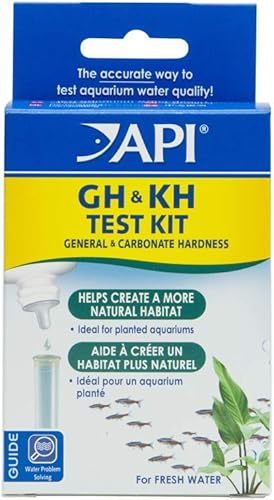
What you need to keep the Odessa barb healthy, checked against Amazon stock.



Frequently asked questions
How many liters does a Odessa barb need?
At least about 100 liters for a group of at least 8 fish. More space always helps keep the water stable.
What water temperature does the Odessa barb need?
Between 20 and 26 °C, with a pH of 6 to 7.5.
What fish can live with the Odessa barb?
Based on water, size and temperament, it fits with species such as Bristlenose pleco, Bronze cory, Nerite snail, Horned nerite snail and Common goldfish. Use our compatibility calculator to check your whole tank.
Can the Odessa barb be kept with shrimp?
Not recommended: because of its size or instinct, it will eat shrimp.