If you buy through our links, Amazon pays us a small commission at no extra cost to you. That’s how we keep the site running. How we choose.
Contents
Our top 3 picks
Stock checked on October 7, 2026

cichlid food comparison, in stock

Cichlid Lake Salt, 250 g / 8.8 oz
Seachem Cichlid Trace 250 mL / 8.5 fl. oz.
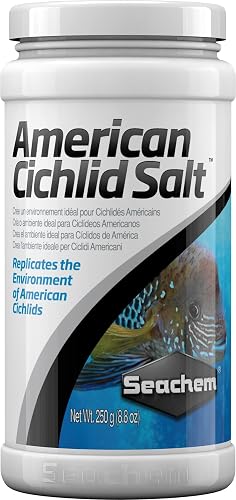
Seachem American Cichlid Salt 250gram, Model: 1466

Super Cichlids Freeze-Dried Color Boost Blackworms Fish Food (15g)
Crystalpro Cichlid Minerals 4.22 Oz - Mineral Additive for Cichlids Replenishes Protective Coat Improves Respiration…
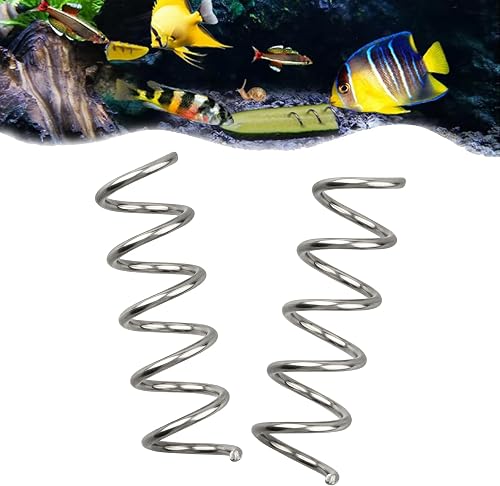
Fish Tank/Aquarium Vegetable Feeder,for Fish,Malawi Cichlid 2 Pack

Penn-Plax shorefins Pro-Balance Cichlid Shape Vacation Feeding Block - 1 Per Blister Card

Cichlid Lake Salt 250g, MaIawi Buffer 300g, Cichlid Trace 500ML Including Microfiber Cleaning Cloth
AcuarioSano rating: combines the average rating and the number of buyer reviews on Amazon. No brand pays to be featured.
Every cichlid eats differently
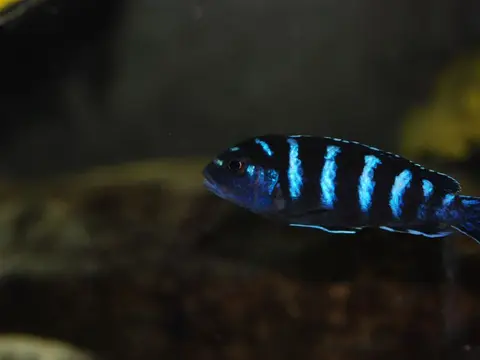
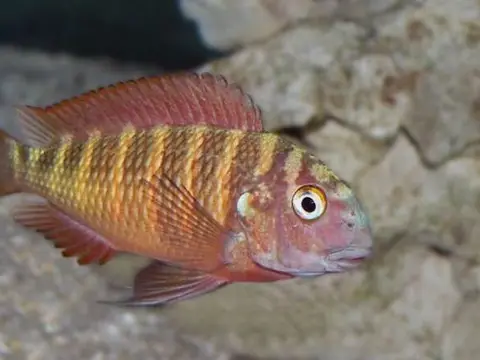
The cichlid family is huge and their diets have little in common. Lake Malawi mbuna scrape aufwuchs, the layer of algae and microorganisms that covers the rocks: their gut is long and built to digest plant matter. The Pseudotropheus demasoni and Maylandia species are good examples, and the Tanganyikan Tropheus moorii is an even stricter herbivore.
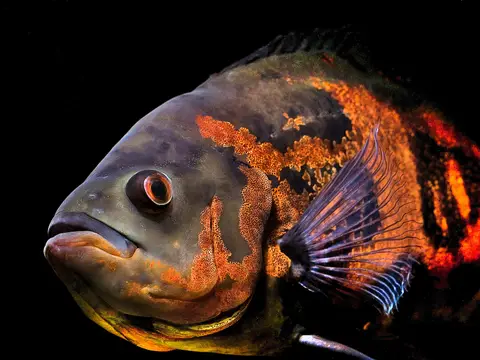
At the other end are the carnivores: the oscar, the frontosa, and peacocks and haps like Aulonocara and Sciaenochromis eat insects, crustaceans and small fish, and need more protein. In between sit omnivores like the yellow lab (Labidochromis caeruleus), an mbuna that eats plenty of invertebrates in the wild and tolerates a bit more protein than its neighbors.
Which staple food to choose by group
| Group | Examples | Staple food | Avoid |
|---|---|---|---|
| Herbivorous mbuna | demasoni, Maylandia, Tropheus | spirulina pellets or flakes, moderate protein | bloodworms, meat, high-protein food |
| Malawi omnivores | yellow lab | mixed pellets with plant content | too much animal food |
| Carnivores | oscar, frontosa, peacocks | high-protein fish or krill pellets | live feeder fish, mammal meat |
| South American cichlids | angelfish, discus, rams | omnivore pellets and flakes, varied frozen food | big, infrequent meals |
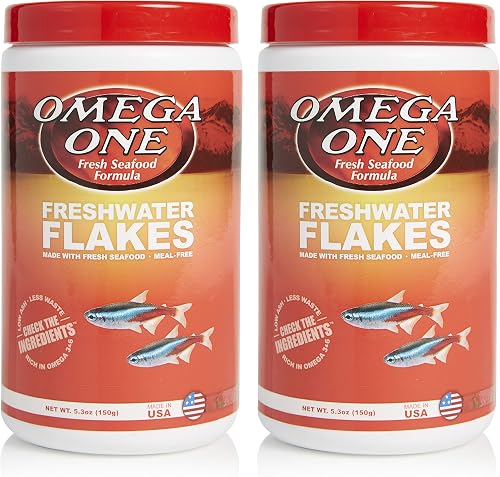
Brands like Hikari, Omega One, New Life Spectrum, Tetra and Fluval make dedicated lines: check whether the label says "herbivore/spirulina" or "carnivore". A generic "cichlid" formula is often protein-rich and not the best choice for an mbuna tank.
Malawi bloat and how to prevent it
So-called Malawi bloat is an abdominal swelling that mainly hits mbuna and Tropheus: the fish stops eating, swells up, hides and may pass white, stringy feces. Its cause is not fully understood, but it is linked to overly rich, high-protein diets or mammal meat (classic beef heart), stress from aggression and poor water quality. If you suspect it, read up on common aquarium fish diseases and act quickly.
Warning: no beef heart, ground meat or bloodworms for mbuna and Tropheus. What is a treat for an oscar can trigger serious digestive problems in a herbivore.
Pellet size and portions
Pellets should fit easily into the mouth of the smallest fish in the group. Mbuna feed throughout the water column, so a slow-sinking pellet works well; large carnivores take pellets around 1/8 to 1/4 inch (4-7 mm). For South American cichlids such as the angelfish, which feed mid-water, flakes and small pellets are ideal, and discus need several small meals a day.
In large, heavily stocked tanks, typical for Malawi setups, overfeeding is easy. Stick to what they eat in 2-3 minutes, once or twice a day, with one fasting day a week. More detail in how much and how often to feed fish. Strong filtration (over 5 times the tank volume per hour) and weekly 20-30% water changes do the rest.
Tip: in an mbuna tank, scatter food in several spots at once. Dominant fish cannot hog it all, and stress, one of the factors linked to bloat, goes down.
Common mistakes
- Feeding carnivore food to mbuna because "they're all cichlids".
- Using bloodworms or meat as a regular treat for herbivores.
- Choosing pellets too large for the smallest fish.
- Overfeeding to "calm down" aggression.
- Feeding oscars live feeder fish from the store, which can carry disease.
- Buying huge tubs that stay open for months and lose their vitamins.
We compare spec sheets, verified reviews and real-world use criteria, but we do not physically test the products: use the products above as a starting point and check each listing for protein content, ingredients and pellet size.
Frequently asked questions
What food do Malawi cichlids need?
It depends on the group. Herbivorous mbuna like demasoni or Maylandia need spirulina-based pellets with moderate protein. Peacocks and other carnivores handle more protein. Check the label before you buy.
What is Malawi bloat?
An abdominal swelling that mainly affects mbuna and Tropheus. It is linked to overly rich or meat-based diets, stress and poor water quality. The fish swells, stops eating and hides; act quickly.
Can I feed bloodworms to my cichlids?
Occasionally to carnivores and South American cichlids, yes. Better not to herbivorous mbuna and Tropheus, since bloodworms are very protein-rich and associated with digestive problems.
What pellet size should I choose?
One that fits easily into the mouth of the smallest fish in the tank. Small to medium pellets usually suit mbuna; adult oscars take large pellets around 1/8 to 1/4 inch (4-7 mm).