If you buy through our links, Amazon pays us a small commission at no extra cost to you. That’s how we keep the site running. How we choose.
Contents
Overview
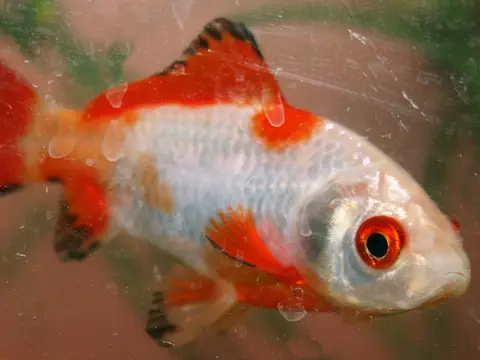
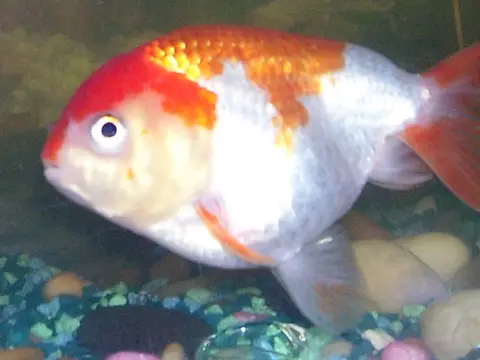
The comet goldfish is a goldfish variety developed in the United States in the late 1800s. It keeps the slim body of the common goldfish but sports a very long, deeply forked tail, sometimes as long as the body itself. The best-known colors are red, yellow and "sarasa", white with red patches.
It is a fast, agile swimmer and one of the toughest goldfish, which is why it is a pond staple. That same energy makes it a poor fit for small aquariums: it needs room to swim in straight lines. It is ideal for backyard ponds and very large coldwater tanks shared with other slim-bodied goldfish.
Care and tank setup
Think of the comet as a pond fish that, at most, spends its youth in an aquarium. A pair needs 75-80 gallons (300 L) or more in a long tank (4-5 ft front), and in the medium term a pond is the right home.
- Swimming room: keep the middle open; place large rocks along the sides and use hardy or artificial plants.
- Filtration and oxygen: a powerful filter and plenty of surface agitation. Change 30-50% of the water weekly.
- Lid: comets are quick and may jump when startled.
Golden rule: do not mix comets with fancy goldfish (oranda, lionhead, telescope). Comets eat far faster, leave the fancies hungry and stress them. Better companions are other comets, shubunkins or common goldfish. In a pond they overwinter well given enough depth. Like every goldfish, a comet must never be released into the wild: dumped comets have become a serious pest in lakes and rivers across North America.
Feeding
Comets are hungry omnivores. Feed quality goldfish pellets as the staple, blanched vegetables (peas, zucchini, romaine) a couple of times a week and frozen brine shrimp or daphnia as treats. In a pond, cut back sharply once the water drops below 50 °F (10 °C) and stop feeding in midwinter, since digestion slows right down. Never offer more than they finish in two minutes.
Breeding
In ponds, comets spawn on their own in spring. Males chase females relentlessly and the females scatter hundreds of sticky eggs over plants or roots. Fry hatch brownish and color up over the following months; not all will have long tails. If you want to avoid overpopulation, let the adults eat most of the eggs and only raise fry if you have homes lined up.
Compatible tank mates
Species from our database that share water parameters, size and temperament with the Comet goldfish. Calculated from the data in each profile.
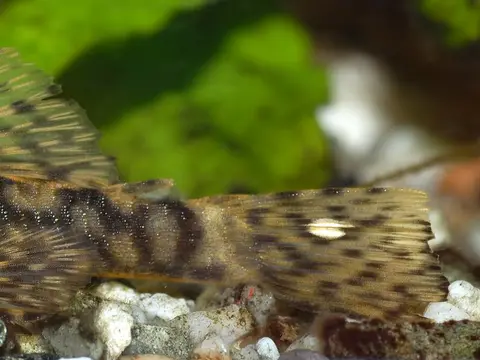 Bristlenose pleco Ancistrus sp. 26 gal (100 L) · 72–81 °F (22–27 °C)
 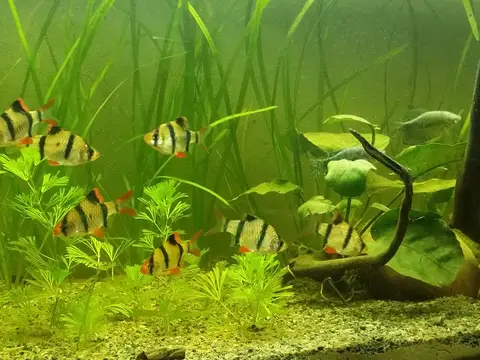 Tiger barb Puntigrus tetrazona 26 gal (100 L) · 72–79 °F (22–26 °C)
 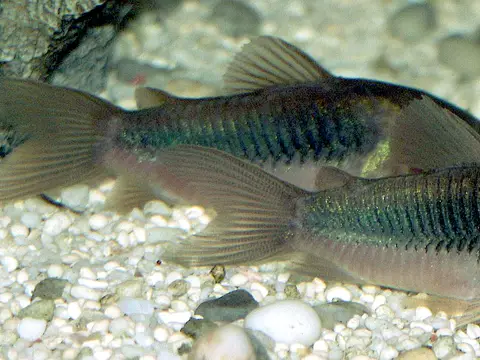 Bronze cory Corydoras aeneus 21 gal (80 L) · 72–81 °F (22–27 °C)
 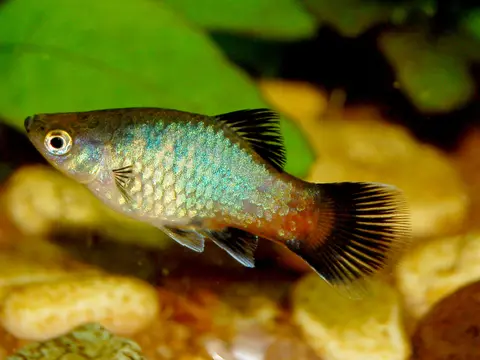 Platy Xiphophorus maculatus 16 gal (60 L) · 68–79 °F (20–26 °C)
 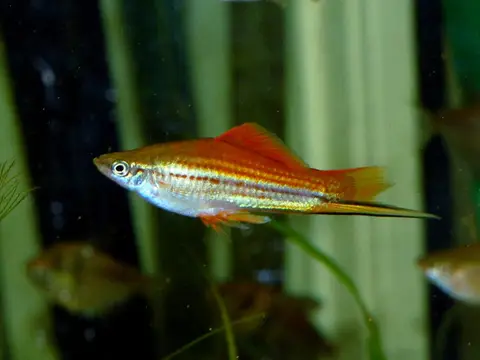 Swordtail Xiphophorus hellerii 32 gal (120 L) · 72–81 °F (22–27 °C)
 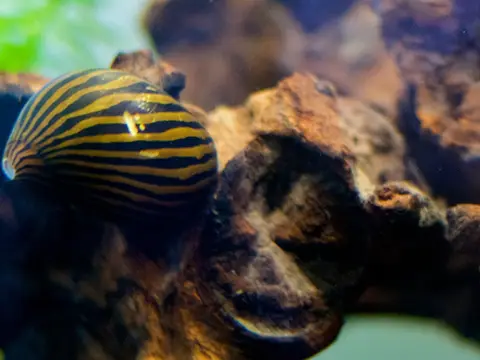 Nerite snail Neritina natalensis 5 gal (20 L) · 72–82 °F (22–28 °C)
 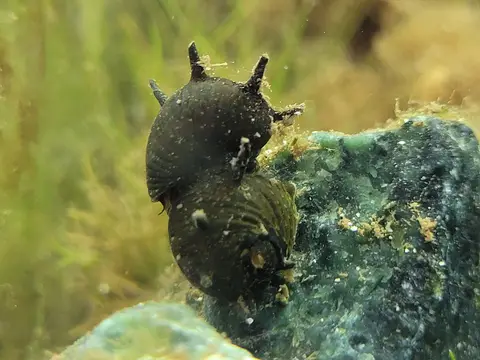 Horned nerite snail Clithon corona 5 gal (20 L) · 72–82 °F (22–28 °C)
 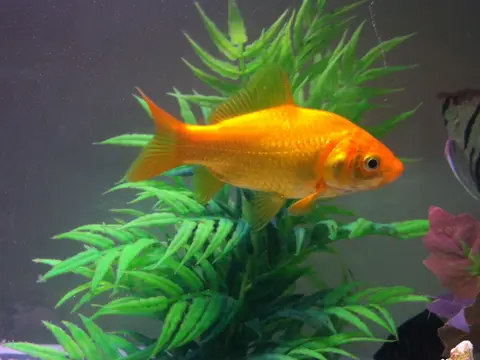 Common goldfish Carassius auratus 79 gal (300 L) · 50–75 °F (10–24 °C)
 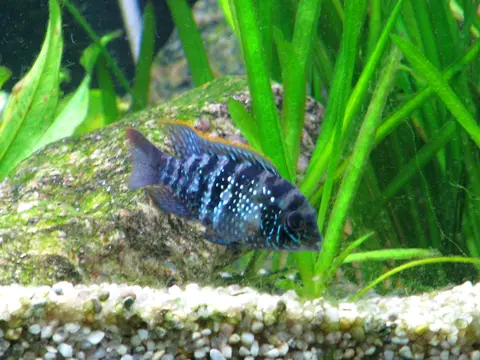 Blue acara Andinoacara pulcher 53 gal (200 L) · 72–82 °F (22–28 °C)
 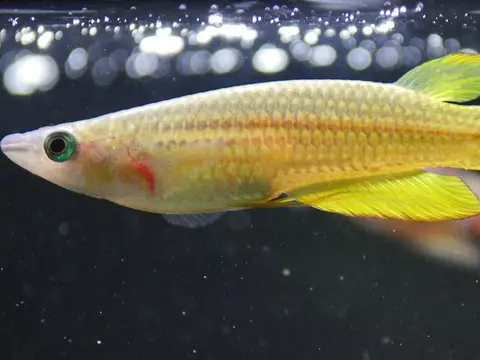 Golden wonder killifish (striped panchax) Aplocheilus lineatus 26 gal (100 L) · 72–81 °F (22–27 °C)
 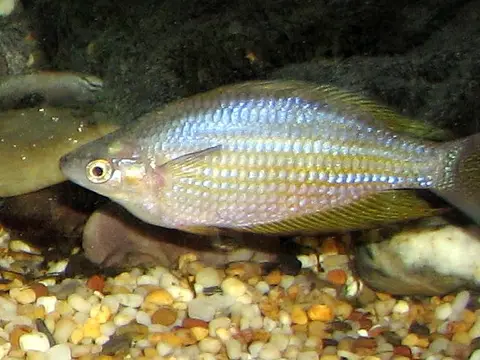 Eastern rainbowfish (splendid rainbowfish) Melanotaenia splendida 53 gal (200 L) · 72–82 °F (22–28 °C)
 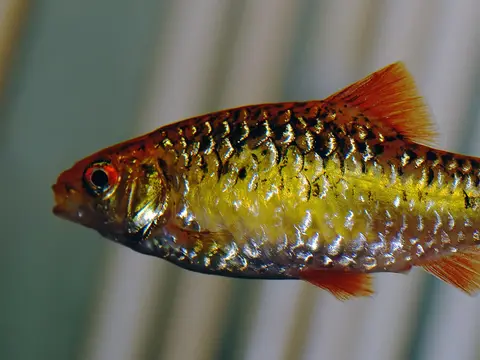 Gold barb Barbodes semifasciolatus 26 gal (100 L) · 64–75 °F (18–24 °C)
 Check the compatibility of your whole tank →
What not to keep it with
Popular species you shouldn’t house with the Comet goldfish, and why.
- Cherry barb: incompatible temperatures, one may eat the other due to size
- Panda cory: one may eat the other due to size
- Zebra danio: one may eat the other due to size
- Discus: incompatible temperatures
- Guppy: one may eat the other due to size
- Clown loach: incompatible temperatures
- Oscar: incompatible temperatures, incompatible temperaments
- Otocinclus catfish: one may eat the other due to size
Recommended equipment
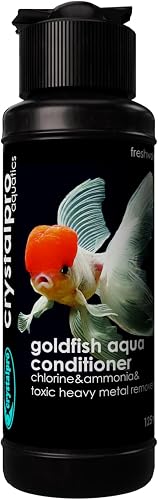
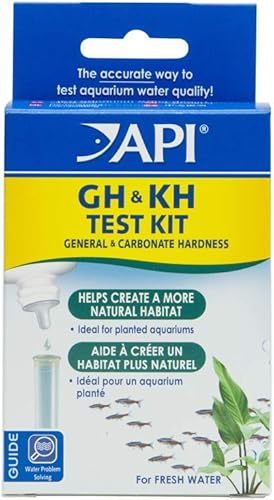
What you need to keep the Comet goldfish healthy, checked against Amazon stock.


Frequently asked questions
How many liters does a Comet goldfish need?
At least about 300 liters for a group of at least 2 fish. More space always helps keep the water stable.
What water temperature does the Comet goldfish need?
Between 10 and 24 °C: it’s a coldwater species that doesn’t need a heater in a normal home. pH 6.5 to 8.
What fish can live with the Comet goldfish?
Based on water, size and temperament, it fits with species such as Bristlenose pleco, Tiger barb, Bronze cory, Platy and Swordtail. Use our compatibility calculator to check your whole tank.
Can the Comet goldfish be kept with shrimp?
Not recommended: because of its size or instinct, it will eat shrimp.
You may also like
Coldwater fish → Freshwater fish → Complete aquarium guide →