If you buy through our links, Amazon pays us a small commission at no extra cost to you. That’s how we keep the site running. How we choose.
Contents
Overview
The sailfin molly is a large, eye-catching livebearer native to the southeastern United States and Mexico's Gulf coast, where it lives in marshes, coastal lagoons and fresh or brackish estuaries. Its signature feature is the huge dorsal fin of adult males, raised like a sail during courtship.
Stores sell greenish wild-type fish as well as gold, white and black strains, and many "sailfin" mollies are actually hybrids with other species. It is a peaceful and beautiful fish, but not one for every tank: it needs room, hard water and steady water quality for males to grow a full sail.
Care and tank setup
Plan on at least 40 gallons (150 L) and a tank around 40 inches (1 m) long for a small group. Males only develop a proper sail when they have space and little stress; in small tanks they stay stunted with a drooping fin.
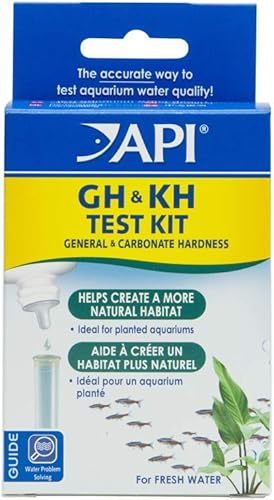
- Water: hard and alkaline, with strong filtration and generous weekly water changes. A little salt is tolerated but not required when hardness is high.
- Group: one male per two or three females; several males need more room.
- Decor: open swimming lanes, hardy plants (anubias, vallisneria, ferns) and wood or rock without sharp edges.
Good tank mates are other peaceful hard-water fish of similar size. Avoid fin nippers like tiger barbs. Common mistakes are soft water, overstocking and constantly high temperatures, which shorten their lives. Never release them; they are already invasive in some regions.
Feeding
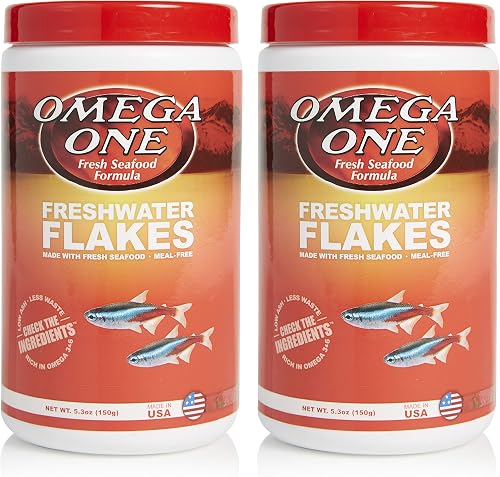
In the wild sailfins eat mostly algae and detritus, so their diet should be heavily plant-based: spirulina flakes, algae wafers and blanched vegetables almost daily. Add frozen brine shrimp, daphnia or bloodworms once or twice a week.
A diet low in greens leads to digestive trouble and poorly developed sails.
Breeding
Like other mollies, they are livebearers. Big females can drop up to 80 fry every four to six weeks, although aquarium broods are usually much smaller. Adults eat the fry, so a densely planted area is essential.
Males with spectacular sails come from slow growth, space and stable water; raising young males in a roomy grow-out tank helps a lot.
Compatible tank mates
Species from our database that share water parameters, size and temperament with the Sailfin molly. Calculated from the data in each profile.
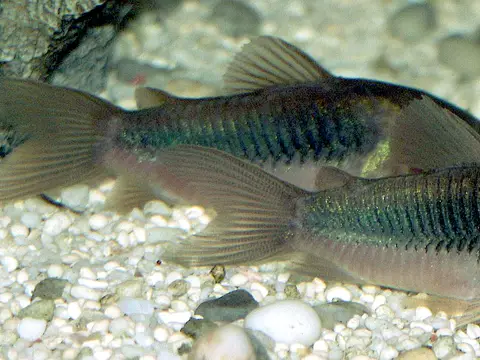 Bronze cory Corydoras aeneus 21 gal (80 L) · 72–81 °F (22–27 °C)
 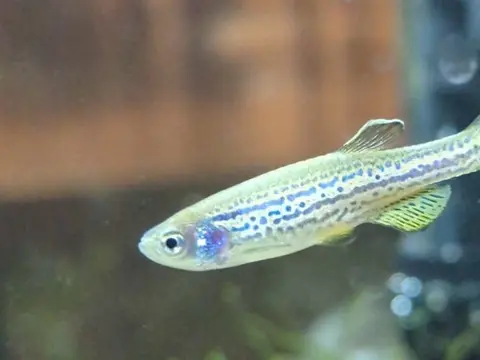 Zebra danio Danio rerio 16 gal (60 L) · 64–77 °F (18–25 °C)
 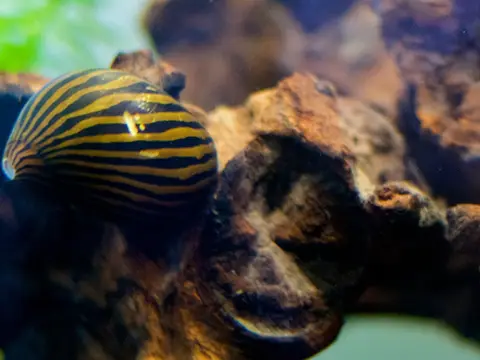 Nerite snail Neritina natalensis 5 gal (20 L) · 72–82 °F (22–28 °C)
 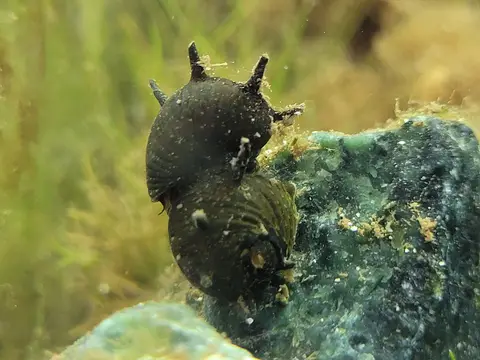 Horned nerite snail Clithon corona 5 gal (20 L) · 72–82 °F (22–28 °C)
 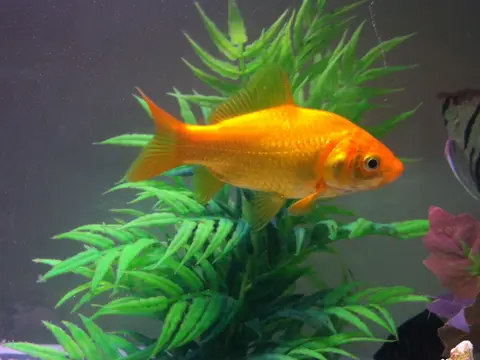 Common goldfish Carassius auratus 79 gal (300 L) · 50–75 °F (10–24 °C)
 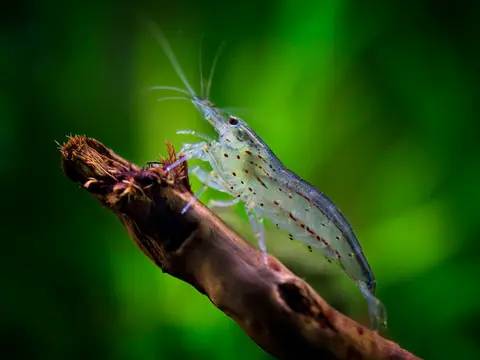 Amano shrimp Caridina multidentata 11 gal (40 L) · 64–82 °F (18–28 °C)
 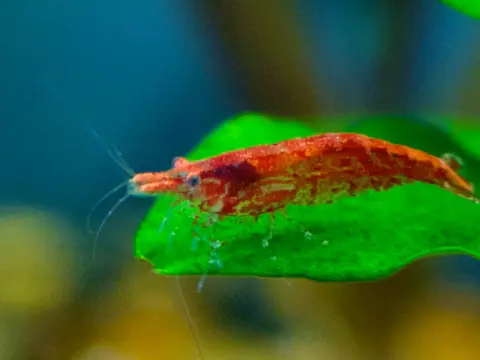 Cherry shrimp Neocaridina davidi 5 gal (20 L) · 64–81 °F (18–27 °C)
 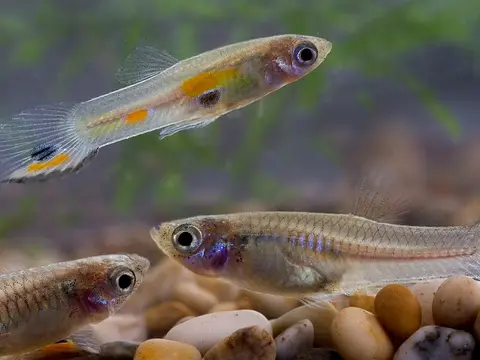 Guppy Poecilia reticulata 14 gal (54 L) · 72–82 °F (22–28 °C)
 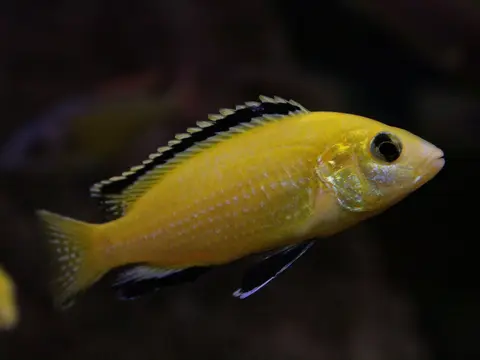 Yellow lab cichlid Labidochromis caeruleus 53 gal (200 L) · 75–82 °F (24–28 °C)
 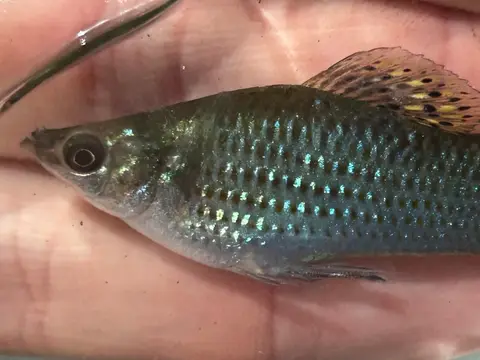 Molly Poecilia sphenops 26 gal (100 L) · 75–82 °F (24–28 °C)
 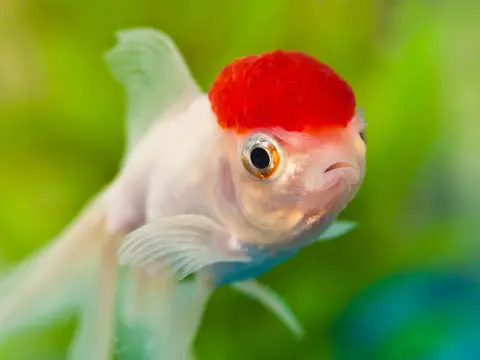 Oranda goldfish Carassius auratus 40 gal (150 L) · 59–75 °F (15–24 °C)
 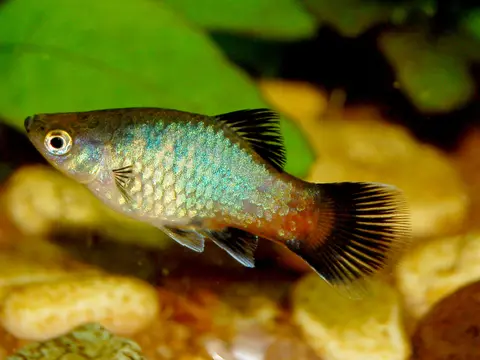 Platy Xiphophorus maculatus 16 gal (60 L) · 68–79 °F (20–26 °C)
 Check the compatibility of your whole tank →
What not to keep it with
Popular species you shouldn’t house with the Sailfin molly, and why.
- Discus: incompatible temperatures, incompatible pH, incompatible water hardness
- Oscar: incompatible pH, one may eat the other due to size, incompatible temperaments
- Ram cichlid: incompatible pH, incompatible water hardness
- Celestial pearl danio: incompatible pH, one may eat the other due to size
- Rummy-nose tetra: incompatible pH, incompatible water hardness
- Cardinal tetra: incompatible pH, incompatible water hardness
- Ember tetra: incompatible pH, one may eat the other due to size
Recommended equipment
What you need to keep the Sailfin molly healthy, checked against Amazon stock.


Frequently asked questions
How many liters does a Sailfin molly need?
At least about 150 liters for a group of at least 4 fish. More space always helps keep the water stable.
What water temperature does the Sailfin molly need?
Between 22 and 28 °C, with a pH of 7.5 to 8.5.
What fish can live with the Sailfin molly?
Based on water, size and temperament, it fits with species such as Bronze cory, Zebra danio, Nerite snail, Horned nerite snail and Common goldfish. Use our compatibility calculator to check your whole tank.
Can the Sailfin molly be kept with shrimp?
Yes: it usually won’t eat adult shrimp, though some shrimplets may get picked off. A tank with plenty of moss gives the babies cover.