If you buy through our links, Amazon pays us a small commission at no extra cost to you. That’s how we keep the site running. How we choose.
Contents
Overview
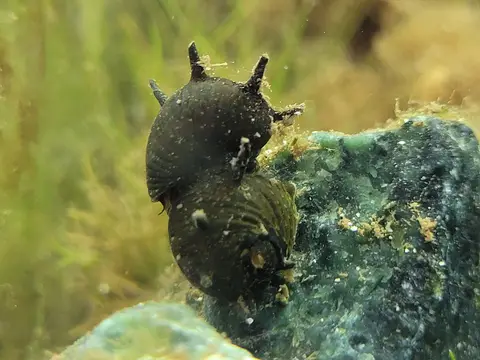
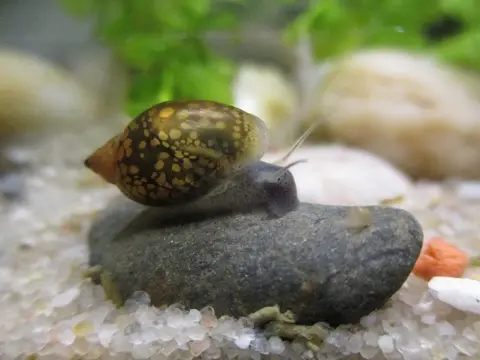
The bladder snail (Physella acuta) is a small snail, about 0.4 in (1 cm), with a thin, translucent shell that coils to the left. It is native to North America and is now found almost worldwide in ponds, ditches and aquariums.
Hardly anyone buys it on purpose: it arrives as a hitchhiker, usually as eggs on the leaves of new plants. That has earned it a reputation as a "pest snail," yet it is harmless to fish, shrimp and healthy plants and it eats leftovers and soft algae. Understanding why it shows up in huge numbers is the key to living with it.
Care and tank setup
It survives in almost any aquarium, even a small 2.5-3 gallon (10 L) container, in soft or hard water and across a wide temperature range. It is extremely hardy and often adapts better than the fish.
- Why it multiplies: overfeeding, melting plants or weak filtration. Population size mirrors available food.
- How to control it: feed less, remove dead leaves, vacuum the substrate and drop in a blanched lettuce leaf at night, then lift it out in the morning with the snails on it.
- Prevention: inspect new plants or give them an alum dip, or buy tissue-culture plants.
Avoid snail-killing chemicals: they also kill shrimp and wanted snails, and a mass die-off can spike ammonia. Assassin snails or some loaches will control them, but decide whether that trade-off is worth it. Never flush or dump them outdoors.
Feeding
It eats almost anything: leftover food, soft algae, biofilm, decaying plant matter and even dead fish. It needs no feeding of its own. In fact, the less food left over in the tank, the fewer bladder snails you will have. If you want to keep a few as a cleanup crew, whatever the fish leave behind is enough.
Breeding
It is a hermaphrodite that can self-fertilize, so a single snail can start a whole population. It lays small, clear, jelly-like clutches of several eggs on glass and leaves; babies hatch in one to two weeks and mature within a few more. It lives about a year, but its fast life cycle explains why it seems to appear overnight.
Compatible tank mates
Species from our database that share water parameters, size and temperament with the Bladder snail. Calculated from the data in each profile.
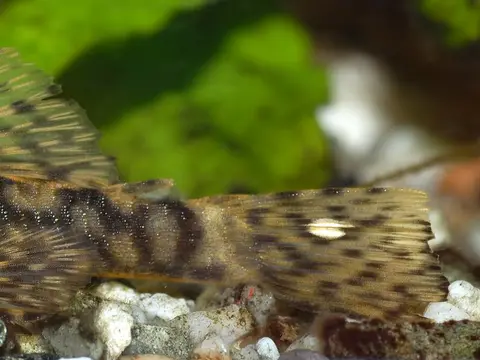 Bristlenose pleco Ancistrus sp. 26 gal (100 L) · 72–81 °F (22–27 °C)
 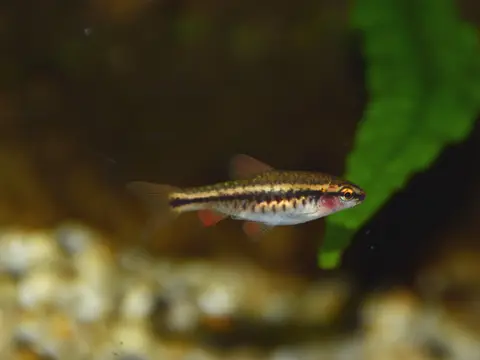 Cherry barb Puntius titteya 16 gal (60 L) · 73–81 °F (23–27 °C)
 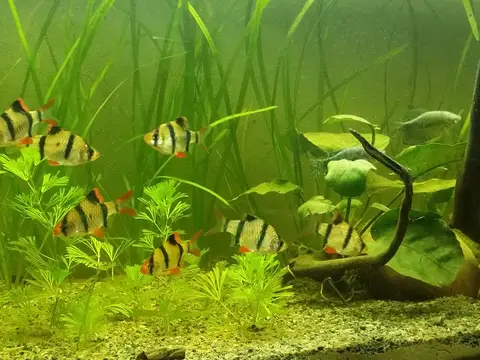 Tiger barb Puntigrus tetrazona 26 gal (100 L) · 72–79 °F (22–26 °C)
 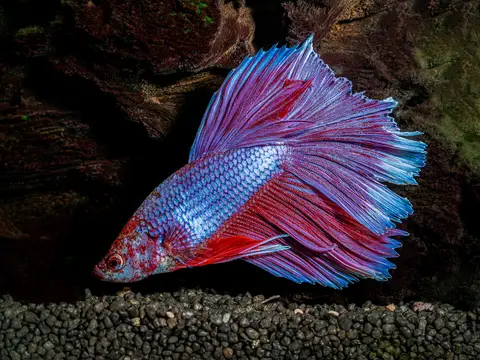 Betta fish Betta splendens 7 gal (25 L) · 75–82 °F (24–28 °C)
 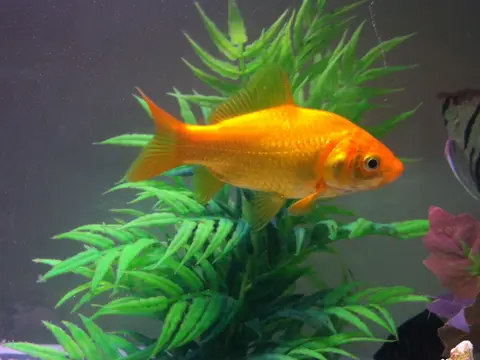 Common goldfish Carassius auratus 79 gal (300 L) · 50–75 °F (10–24 °C)
 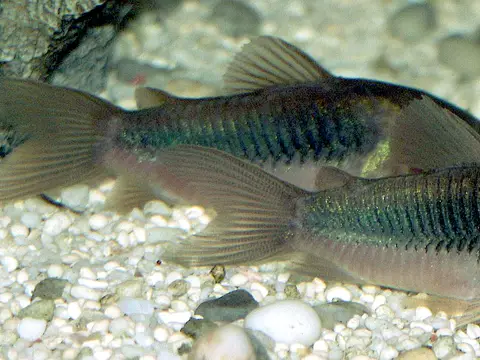 Bronze cory Corydoras aeneus 21 gal (80 L) · 72–81 °F (22–27 °C)
 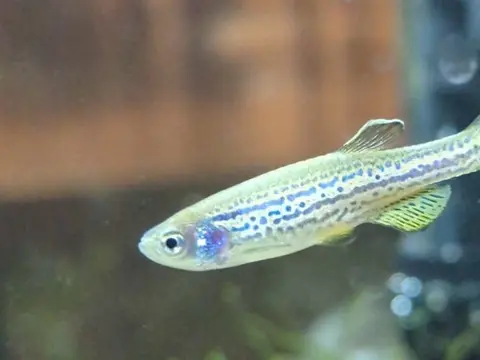 Zebra danio Danio rerio 16 gal (60 L) · 64–77 °F (18–25 °C)
 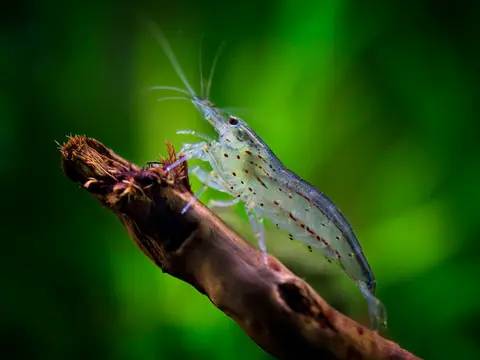 Amano shrimp Caridina multidentata 11 gal (40 L) · 64–82 °F (18–28 °C)
 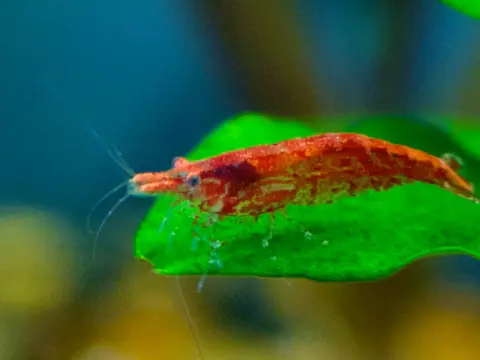 Cherry shrimp Neocaridina davidi 5 gal (20 L) · 64–81 °F (18–27 °C)
 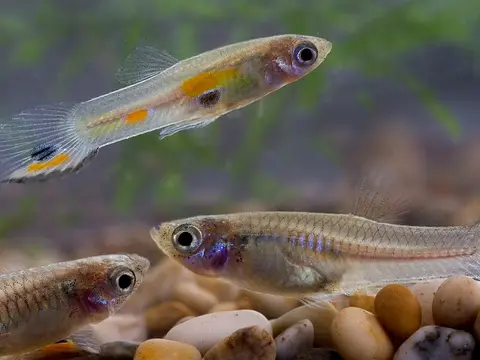 Guppy Poecilia reticulata 14 gal (54 L) · 72–82 °F (22–28 °C)
 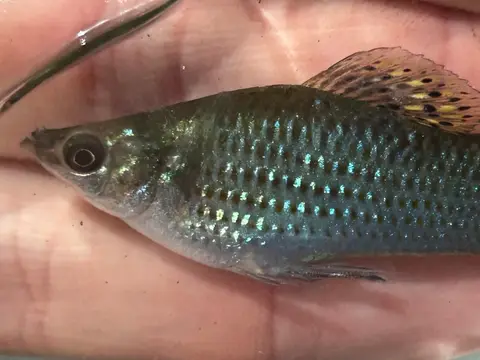 Molly Poecilia sphenops 26 gal (100 L) · 75–82 °F (24–28 °C)
 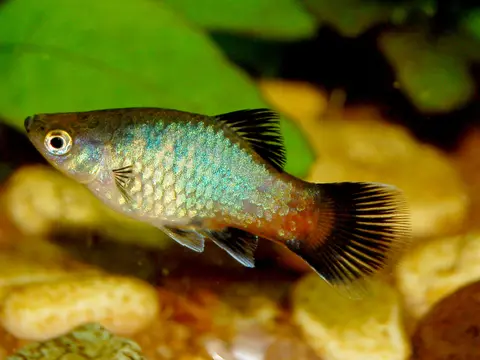 Platy Xiphophorus maculatus 16 gal (60 L) · 68–79 °F (20–26 °C)
 Check the compatibility of your whole tank →
What not to keep it with
Popular species you shouldn’t house with the Bladder snail, and why.
- Clown loach: eats snails
- Oscar: eats snails
Recommended equipment
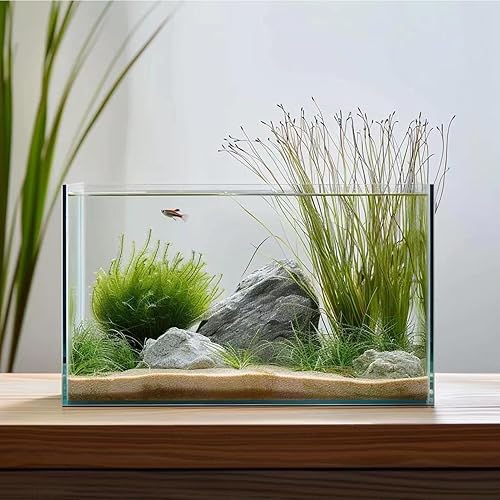
What you need to keep the Bladder snail healthy, checked against Amazon stock.


Frequently asked questions
How many liters does a Bladder snail need?
At least about 10 liters. More space always helps keep the water stable.
What water temperature does the Bladder snail need?
Between 15 and 28 °C, with a pH of 6.5 to 8.5.
What fish can live with the Bladder snail?
Based on water, size and temperament, it fits with species such as Bristlenose pleco, Cherry barb, Tiger barb, Betta fish and Common goldfish. Use our compatibility calculator to check your whole tank.