If you buy through our links, Amazon pays us a small commission at no extra cost to you. That’s how we keep the site running. How we choose.
Contents
Overview
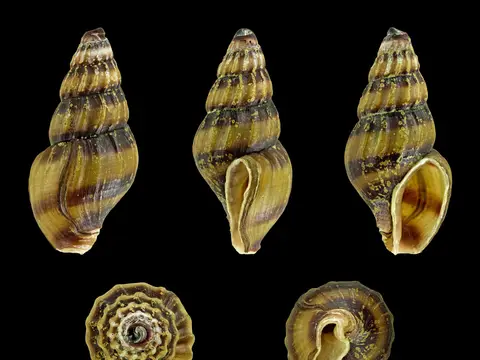
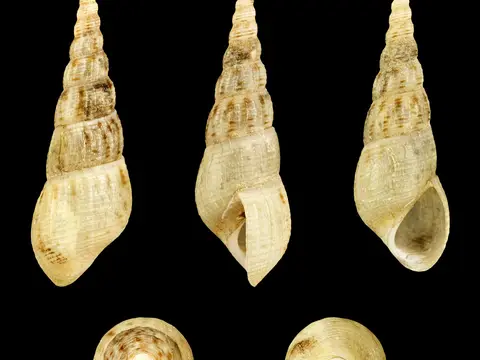
The Malaysian trumpet snail (Melanoides tuberculata), often called MTS, has a long, pointed, cone-shaped shell in brown with darker flecks and grows to about 0.8-1.2 in (2-3 cm). It is native to fresh waters of Africa and Asia but now lives wild in much of the world, spread by releases and by hitchhiking on plants.
It often arrives uninvited in a plant pot or a clump of moss. It is genuinely useful: it spends the day buried, turning over the sand, preventing stagnant pockets and eating waste, then roams the glass at night. It is nearly indestructible and ideal for low-fuss tanks, though it multiplies quickly when there is spare food.
Care and tank setup
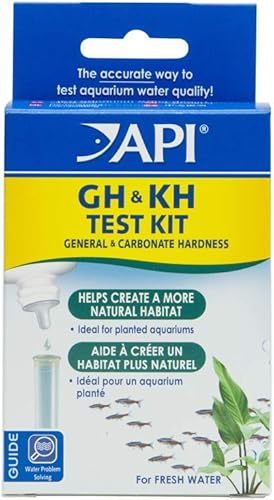
It adapts to almost any cycled tropical tank of 5 gallons (20 L) or more, ideally with sand or fine gravel to burrow into. It handles warm temperatures and hard water well; in very soft, acidic water the shell tip erodes, so keep some hardness and calcium.
- Tankmates: completely peaceful with fish, shrimp and plants.
- Predators: loaches, puffers and assassin snails keep numbers down, although the operculum (trapdoor) gives some protection.
- Warning sign: if they climb the glass en masse during the day, test your water; it usually means low oxygen or excess organic waste.
The usual mistake is panicking over numbers, which simply reflect overfeeding. Feed less and pick out the ones that emerge at night. Never dump a tank or release snails into streams or ditches: this species is invasive.
Feeding
It eats leftover food, detritus, soft algae and organic matter in the substrate. In a tank with fish it usually needs nothing more. If scraps are scarce, an occasional sinking wafer or blanched vegetable is plenty. The more you feed the tank, the more snails you will have, so control the population through feeding.
Breeding
It reproduces without a partner: most populations are parthenogenetic females. It is a livebearer, brooding eggs in an internal pouch and releasing fully formed baby snails that burrow right away. That is why a single snail can become hundreds within a few months if food is plentiful. Without excess food, the population levels off on its own.
Compatible tank mates
Species from our database that share water parameters, size and temperament with the Malaysian trumpet snail. Calculated from the data in each profile.
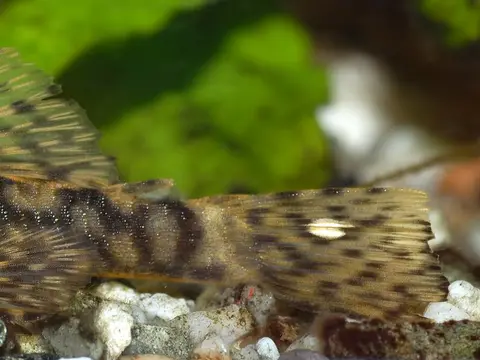 Bristlenose pleco Ancistrus sp. 26 gal (100 L) · 72–81 °F (22–27 °C)
 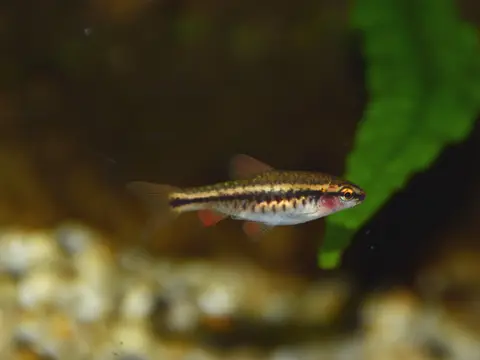 Cherry barb Puntius titteya 16 gal (60 L) · 73–81 °F (23–27 °C)
 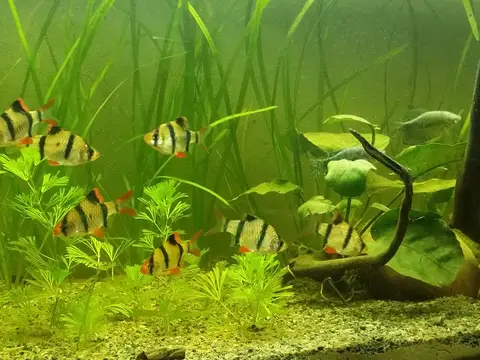 Tiger barb Puntigrus tetrazona 26 gal (100 L) · 72–79 °F (22–26 °C)
 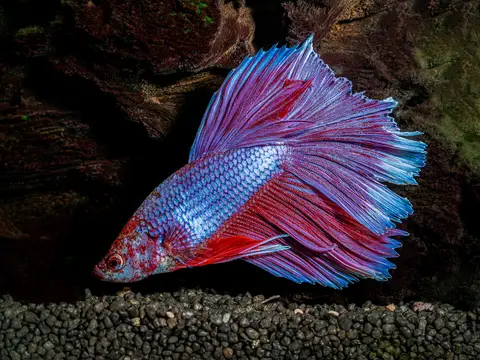 Betta fish Betta splendens 7 gal (25 L) · 75–82 °F (24–28 °C)
 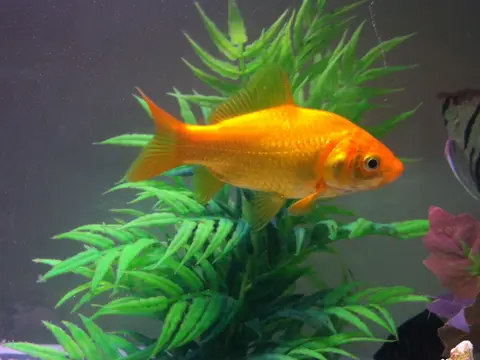 Common goldfish Carassius auratus 79 gal (300 L) · 50–75 °F (10–24 °C)
 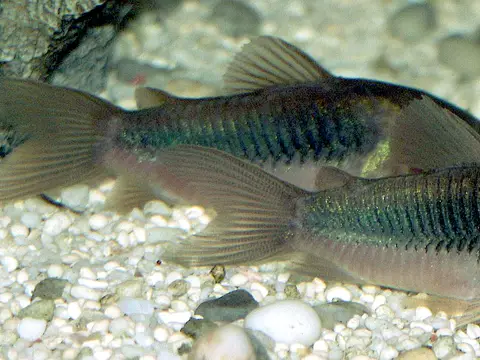 Bronze cory Corydoras aeneus 21 gal (80 L) · 72–81 °F (22–27 °C)
 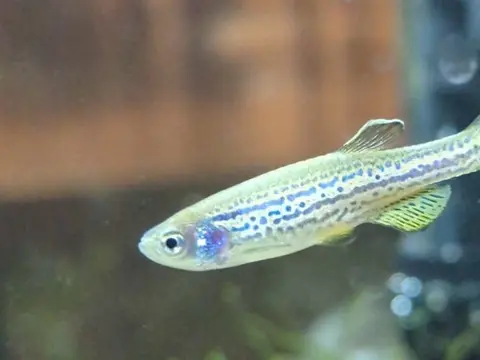 Zebra danio Danio rerio 16 gal (60 L) · 64–77 °F (18–25 °C)
 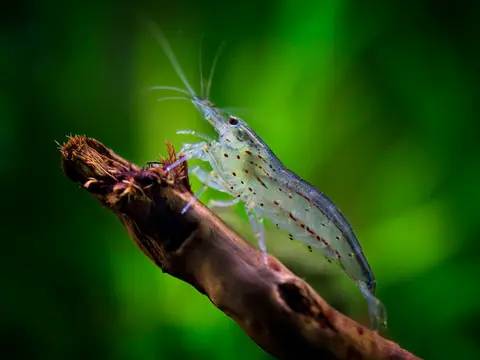 Amano shrimp Caridina multidentata 11 gal (40 L) · 64–82 °F (18–28 °C)
 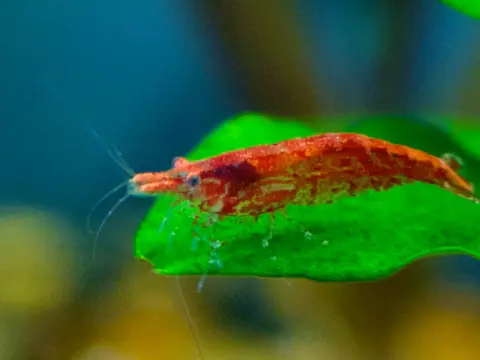 Cherry shrimp Neocaridina davidi 5 gal (20 L) · 64–81 °F (18–27 °C)
 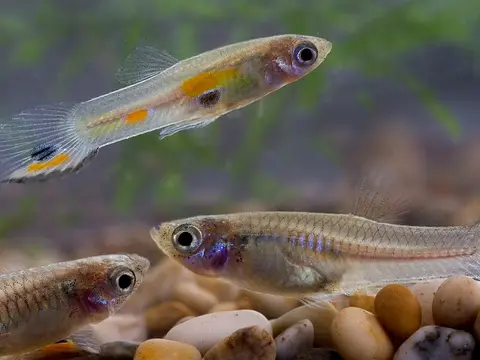 Guppy Poecilia reticulata 14 gal (54 L) · 72–82 °F (22–28 °C)
 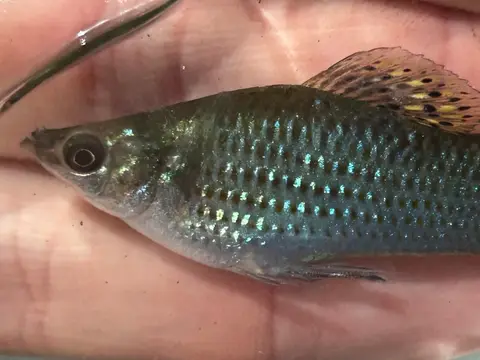 Molly Poecilia sphenops 26 gal (100 L) · 75–82 °F (24–28 °C)
 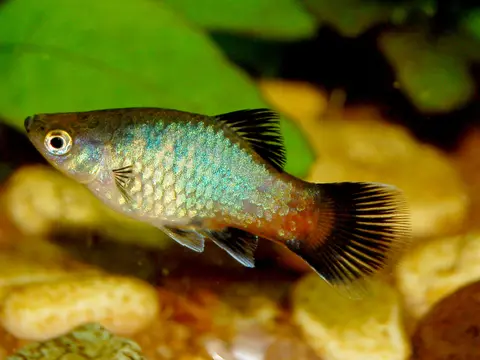 Platy Xiphophorus maculatus 16 gal (60 L) · 68–79 °F (20–26 °C)
 Check the compatibility of your whole tank →
What not to keep it with
Popular species you shouldn’t house with the Malaysian trumpet snail, and why.
- Clown loach: eats snails
- Oscar: eats snails
Recommended equipment
What you need to keep the Malaysian trumpet snail healthy, checked against Amazon stock.


Frequently asked questions
How many liters does a Malaysian trumpet snail need?
At least about 20 liters. More space always helps keep the water stable.
What water temperature does the Malaysian trumpet snail need?
Between 20 and 30 °C, with a pH of 6.8 to 8.5.
What fish can live with the Malaysian trumpet snail?
Based on water, size and temperament, it fits with species such as Bristlenose pleco, Cherry barb, Tiger barb, Betta fish and Common goldfish. Use our compatibility calculator to check your whole tank.