If you buy through our links, Amazon pays us a small commission at no extra cost to you. That’s how we keep the site running. How we choose.
Contents
Overview
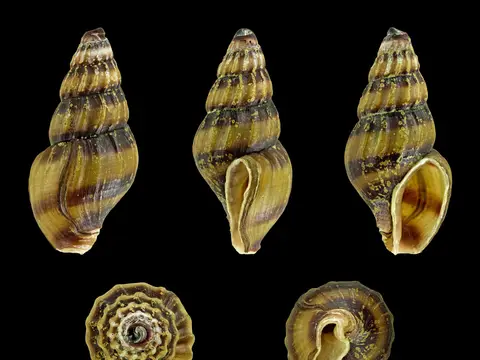
The assassin snail (Anentome helena) has a cone-shaped shell banded in yellow and dark brown like a bumblebee and comes from rivers and lakes in Southeast Asia. It grows to about 0.8-1 in (2-2.5 cm) and spends much of the day half-buried in sand with only its siphon showing.
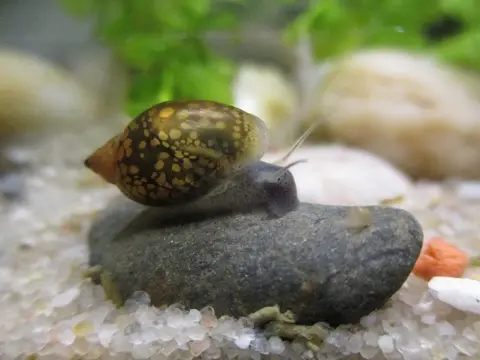
Its reputation comes from its diet: it is a predator that hunts and eats other snails, which is why many hobbyists use it to control outbreaks of bladder, ramshorn or Malaysian trumpet snails. It is easy to keep and fun to watch, but think before adding it: it cannot tell the snails you want gone from the ones you want to keep.
Care and tank setup
A cycled tank of 5 gallons (20 L) or more, with a filter, heater and ideally fine sand to burrow in, is enough. Like all snails, it needs some hardness and calcium in the water to keep its shell healthy.
- Other snails: it will wipe out ramshorns, bladder snails, trumpet snails and small mystery snails. Large nerites and adult rabbit snails usually hold out, but there is no guarantee.
- Shrimp: healthy adults are generally safe, but it may eat eggs, shrimplets and weak or freshly molted shrimp. Skip it in a shrimp breeding tank.
- Fish: peaceful with fish and plants.
A common mistake is adding lots of them to "clean up fast": one or two per 15 gallons (55-60 L) is plenty, and once the prey snails are gone you must feed them another way. Never release it outdoors; it threatens native snails.
Feeding
It is a carnivore. It prefers live snails, which it catches with its proboscis, but it also takes meaty foods: protein-rich sinking wafers, bloodworms, frozen brine shrimp or bits of shrimp. Once the pest snails are gone, offer these foods two or three times a week so it does not go hungry.
Breeding
Assassin snails have separate sexes, so you need a male and a female; a group of five or six almost guarantees both. They lay single eggs in square capsules on rocks, wood or glass, and the young stay buried in the sand for several months before you see them. Breeding is slow, so they never turn into a pest themselves.
Compatible tank mates
Species from our database that share water parameters, size and temperament with the Assassin snail. Calculated from the data in each profile.
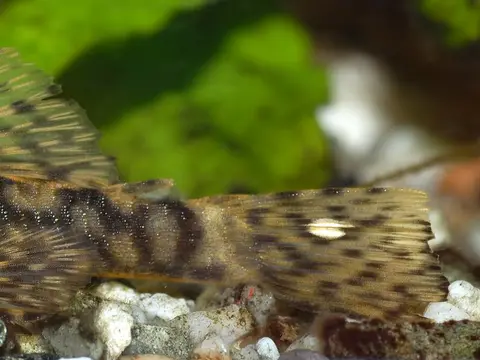 Bristlenose pleco Ancistrus sp. 26 gal (100 L) · 72–81 °F (22–27 °C)
 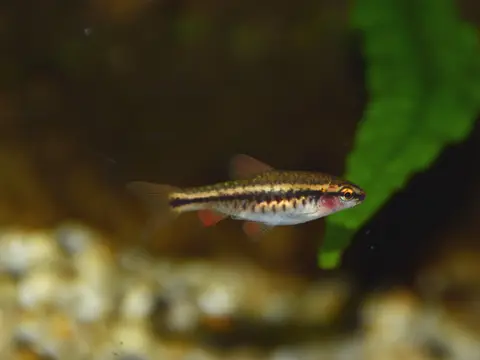 Cherry barb Puntius titteya 16 gal (60 L) · 73–81 °F (23–27 °C)
 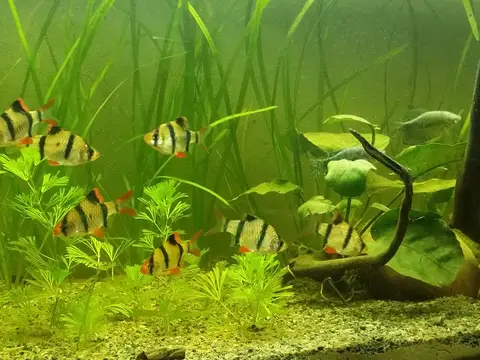 Tiger barb Puntigrus tetrazona 26 gal (100 L) · 72–79 °F (22–26 °C)
 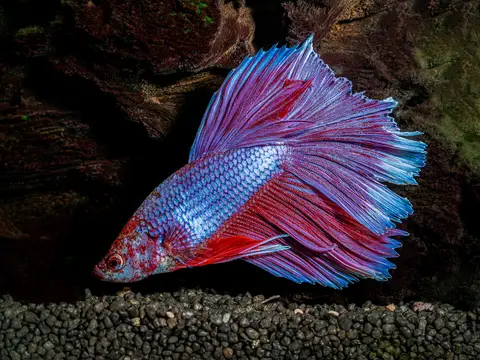 Betta fish Betta splendens 7 gal (25 L) · 75–82 °F (24–28 °C)
 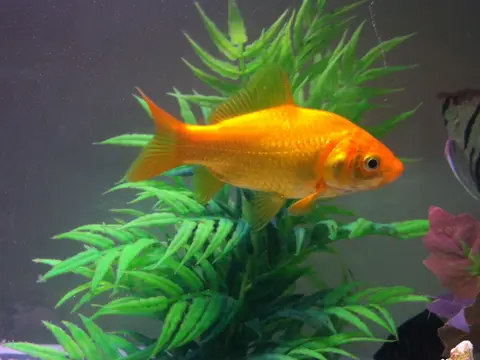 Common goldfish Carassius auratus 79 gal (300 L) · 50–75 °F (10–24 °C)
 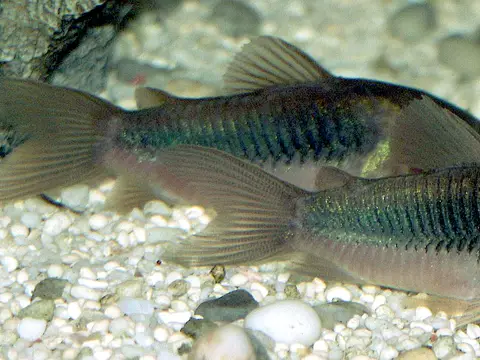 Bronze cory Corydoras aeneus 21 gal (80 L) · 72–81 °F (22–27 °C)
 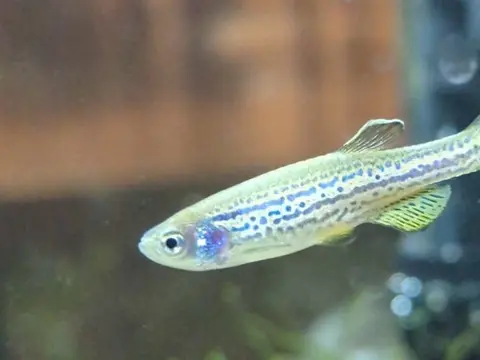 Zebra danio Danio rerio 16 gal (60 L) · 64–77 °F (18–25 °C)
 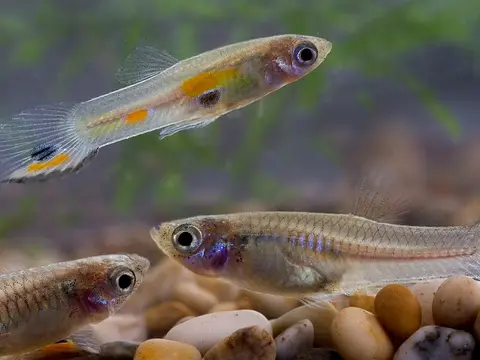 Guppy Poecilia reticulata 14 gal (54 L) · 72–82 °F (22–28 °C)
 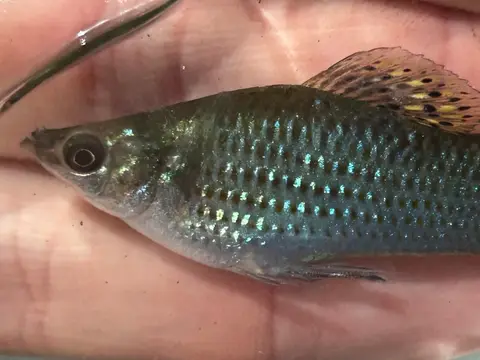 Molly Poecilia sphenops 26 gal (100 L) · 75–82 °F (24–28 °C)
 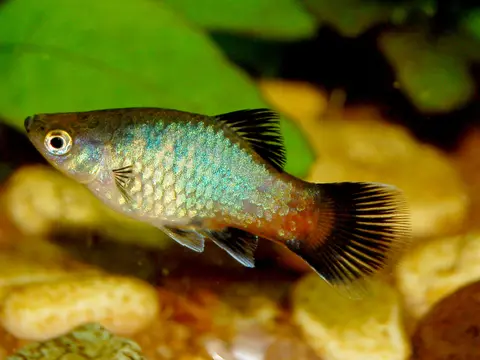 Platy Xiphophorus maculatus 16 gal (60 L) · 68–79 °F (20–26 °C)
 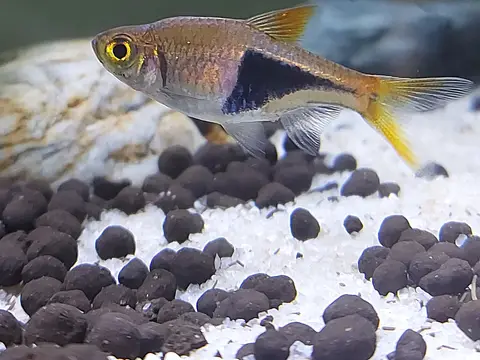 Harlequin rasbora Trigonostigma heteromorpha 16 gal (60 L) · 72–81 °F (22–27 °C)
 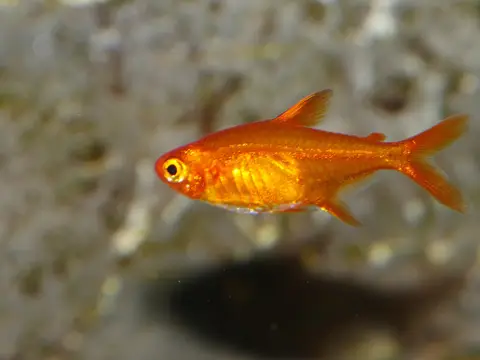 Ember tetra Hyphessobrycon amandae 11 gal (40 L) · 73–82 °F (23–28 °C)
 Check the compatibility of your whole tank →
What not to keep it with
Popular species you shouldn’t house with the Assassin snail, and why.
- Clown loach: eats snails
- Oscar: eats snails
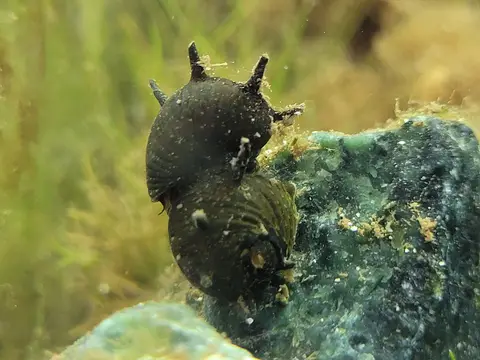
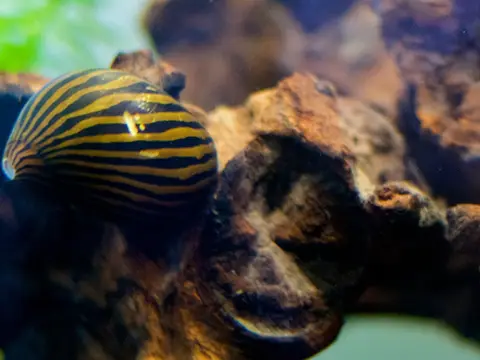
- Nerite snail: eats snails
- Horned nerite snail: eats snails
Recommended equipment
What you need to keep the Assassin snail healthy, checked against Amazon stock.


Frequently asked questions
How many liters does a Assassin snail need?
At least about 20 liters. More space always helps keep the water stable.
What water temperature does the Assassin snail need?
Between 22 and 28 °C, with a pH of 7 to 8.2.
What fish can live with the Assassin snail?
Based on water, size and temperament, it fits with species such as Bristlenose pleco, Cherry barb, Tiger barb, Betta fish and Common goldfish. Use our compatibility calculator to check your whole tank.