If you buy through our links, Amazon pays us a small commission at no extra cost to you. That’s how we keep the site running. How we choose.
Contents
Overview
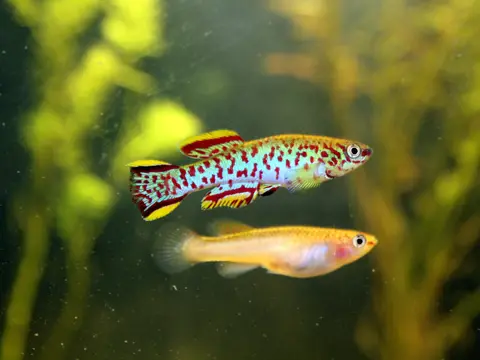
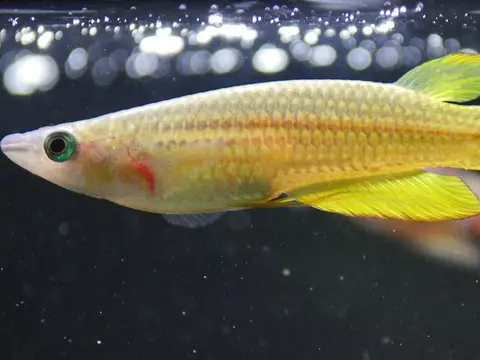
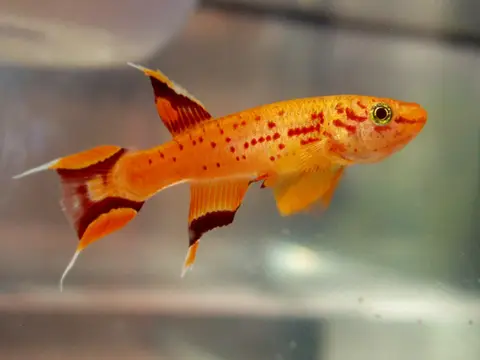
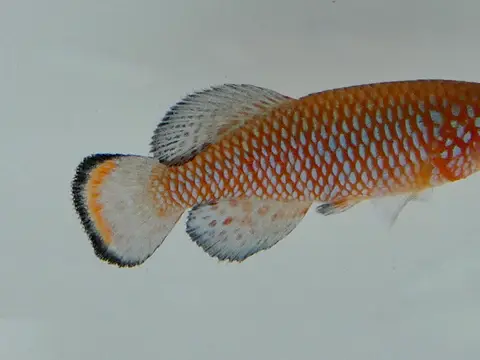
Nothobranchius rachovii may be the most colorful killifish of all: males combine electric-blue scales edged in red, red-and-black patterned fins and a tail with an orange band and black edge. Females are smaller and brownish. It comes from seasonal pools on the plains of Mozambique that fill with the rains and dry out every year.
It's an annual killifish: in the wild, adults die when the pool dries up, and the species survives as eggs buried in the mud until the next rainy season. In the aquarium it typically lives only about a year, sometimes a bit longer. This is a fish for hobbyists interested in killies and breeding, not a decorative fish for a community tank.
Care and tank setup
The best setup is a 10-gallon (40 L) species tank for one male and two or three females, with soft lighting, hardy plants, some moss and an area of peat or coconut fiber on the bottom. It prefers soft to moderately hard, slightly acidic to neutral water that's clean and calm; a sponge filter is enough.
- Males are very aggressive toward each other and chase females hard, so keep more females than males and provide cover.
- Always use a lid; it jumps.
- Water that's too warm shortens its life even more; 72-75 °F (22-24 °C) is usually ideal.
Mixing it with other fish isn't a good idea: it turns shy around active species and, in turn, may eat small shrimp and fry. Be realistic: this fish ages fast, loses color after 9-12 months and dies young even with perfect care. That isn't your fault; it's simply its biology.
Feeding
A voracious carnivore that grows very fast. It needs live or frozen food almost daily: mosquito larvae, brine shrimp, daphnia, clean blackworms or grindal worms. It rarely takes dry food well. Offer several small feedings a day and remove leftovers, which foul the water; in small tanks ammonia rises quickly.
Breeding
It's an annual substrate spawner: the pair dives into a layer of peat and lays the eggs there. To breed it, remove the peat after a few weeks, squeeze it until just damp and store it in a sealed bag at room temperature for about 3-6 months (diapause). When you rewet it with soft water, fry hatch within hours and take baby brine shrimp. It takes patience, but it's fascinating.
Compatible tank mates
Species from our database that share water parameters, size and temperament with the Nothobranchius rachovii (Rachow's nothobranch). Calculated from the data in each profile.
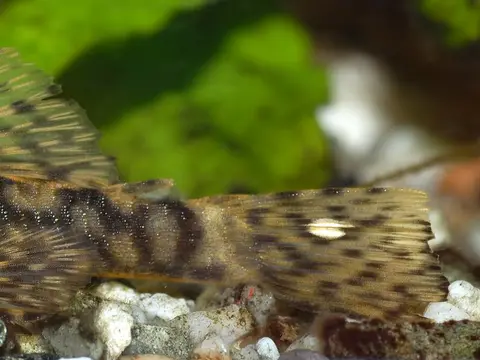 Bristlenose pleco Ancistrus sp. 26 gal (100 L) · 72–81 °F (22–27 °C)
 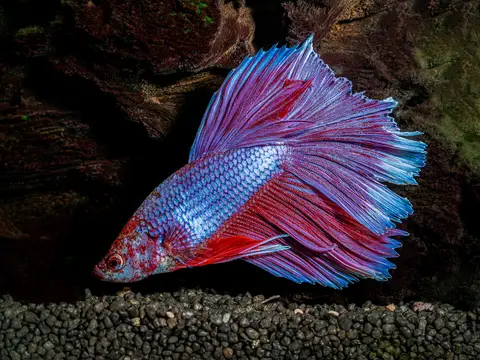 Betta fish Betta splendens 7 gal (25 L) · 75–82 °F (24–28 °C)
 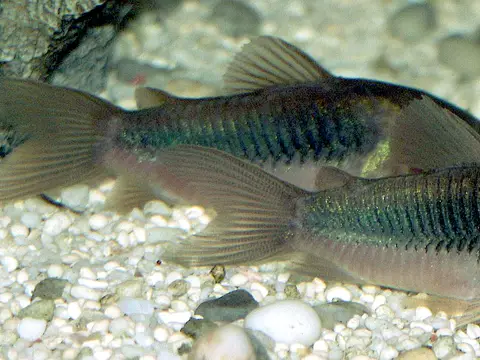 Bronze cory Corydoras aeneus 21 gal (80 L) · 72–81 °F (22–27 °C)
 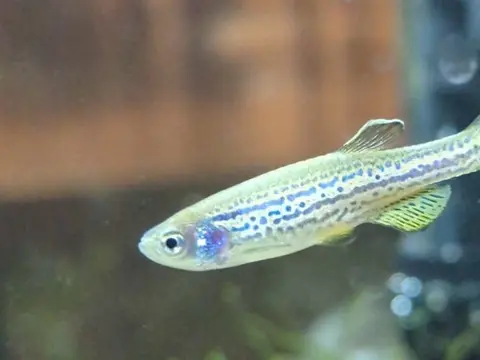 Zebra danio Danio rerio 16 gal (60 L) · 64–77 °F (18–25 °C)
 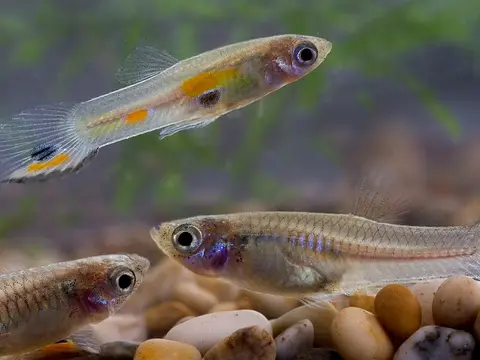 Guppy Poecilia reticulata 14 gal (54 L) · 72–82 °F (22–28 °C)
 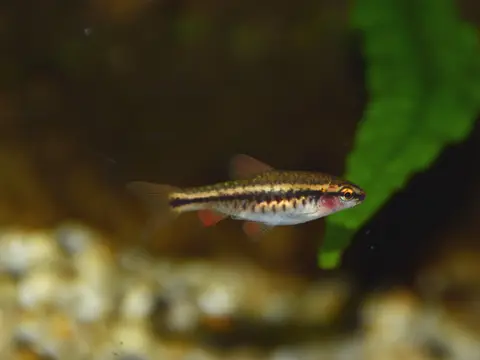 Cherry barb Puntius titteya 16 gal (60 L) · 73–81 °F (23–27 °C)
 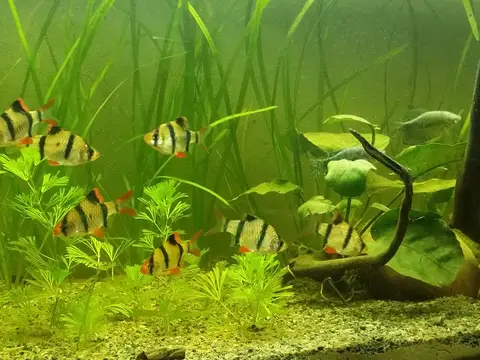 Tiger barb Puntigrus tetrazona 26 gal (100 L) · 72–79 °F (22–26 °C)
 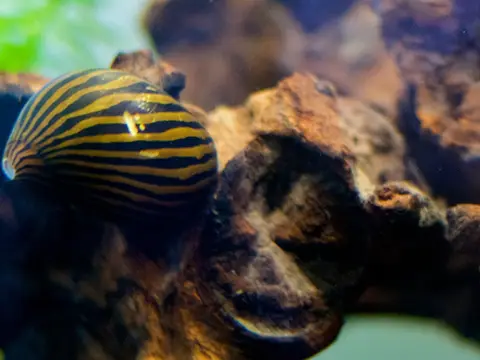 Nerite snail Neritina natalensis 5 gal (20 L) · 72–82 °F (22–28 °C)
 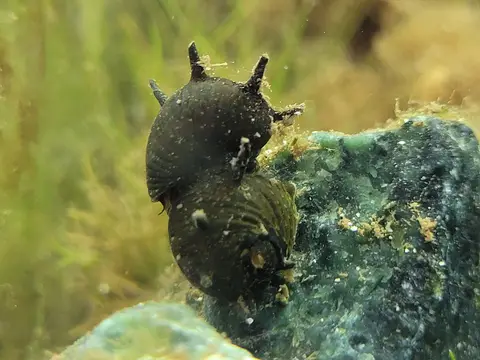 Horned nerite snail Clithon corona 5 gal (20 L) · 72–82 °F (22–28 °C)
 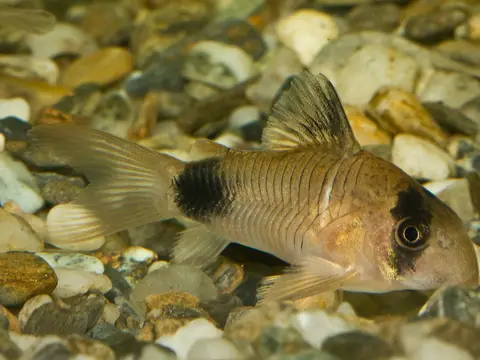 Panda cory Corydoras panda 16 gal (60 L) · 68–77 °F (20–25 °C)
 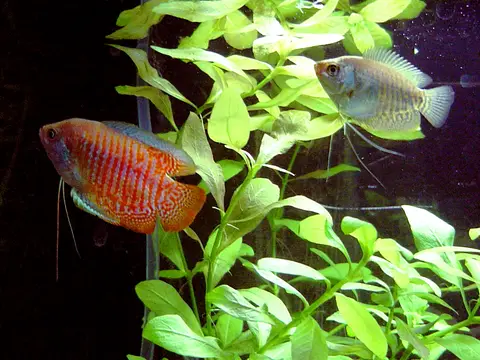 Dwarf gourami Trichogaster lalius 16 gal (60 L) · 75–82 °F (24–28 °C)
 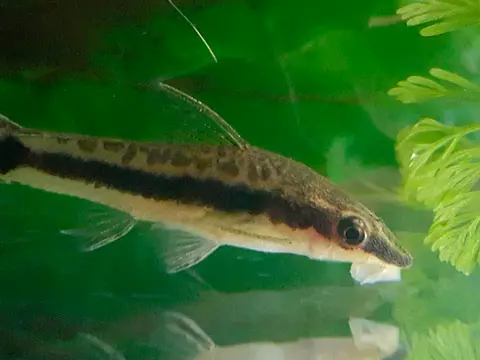 Otocinclus catfish Otocinclus vestitus 16 gal (60 L) · 70–79 °F (21–26 °C)
 Check the compatibility of your whole tank →
What not to keep it with
Popular species you shouldn’t house with the Nothobranchius rachovii (Rachow's nothobranch), and why.
- Common goldfish: one may eat the other due to size
- Discus: incompatible temperatures
- Angelfish: one may eat the other due to size
- Clown loach: incompatible temperatures, one may eat the other due to size
- Oscar: one may eat the other due to size, incompatible temperaments
- Amano shrimp: eats shrimp
- Cherry shrimp: eats shrimp
Recommended equipment
What you need to keep the Nothobranchius rachovii (Rachow's nothobranch) healthy, checked against Amazon stock.




Frequently asked questions
How many liters does a Nothobranchius rachovii (Rachow's nothobranch) need?
At least about 40 liters for a group of at least 3 fish. More space always helps keep the water stable.
What water temperature does the Nothobranchius rachovii (Rachow's nothobranch) need?
Between 22 and 26 °C, with a pH of 6 to 7.5.
What fish can live with the Nothobranchius rachovii (Rachow's nothobranch)?
Based on water, size and temperament, it fits with species such as Bristlenose pleco, Betta fish, Bronze cory, Zebra danio and Guppy. Use our compatibility calculator to check your whole tank.
Can the Nothobranchius rachovii (Rachow's nothobranch) be kept with shrimp?
Not recommended: because of its size or instinct, it will eat shrimp.