If you buy through our links, Amazon pays us a small commission at no extra cost to you. That’s how we keep the site running. How we choose.
Contents
Overview
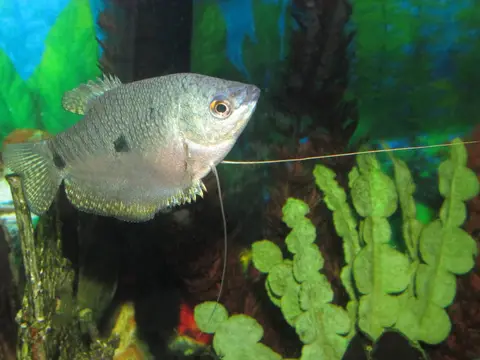
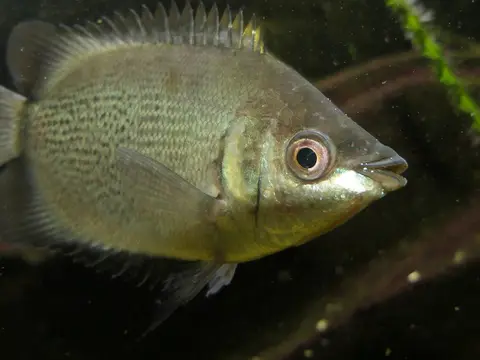
The kissing gourami is famous for its thick lips and the face-to-face "kisses" two fish exchange. It comes from slow rivers, swamps and floodplains in Thailand, Malaysia and Indonesia, where it is also caught as a food fish. The pink form dominates the trade, though the silvery green wild type is also available.
Let's be honest about two things. That "kiss" is not affection; it is a trial of strength between rivals. And the 2-inch fish in the store grows to about 8 inches (20 cm) in aquariums, up to 12 inches (30 cm) in the wild. It is long-lived, hardy and calm with fish its own size, but it only suits keepers who can provide a genuinely large tank.
Care and tank setup
An adult needs at least an 80-gallon (300 L) tank, 48-60 inches long, with strong filtration but no fierce current, a heater and a lid that leaves an air gap, since it breathes at the surface.
- Numbers: it does fine on its own. Keep several only in a very large tank to spread out squabbles; two in a cramped tank tend to harass each other.
- Plants: it rasps everything with its lips and eats soft plants. Stick to tough species like anubias, java fern and bucephalandra, or use artificial plants.
- Decor: driftwood, rocks and plenty of open swimming space.
- Tank mates: sturdy medium to large fish such as large barbs, bigger gouramis, clown loaches or plecos. Small or slow fish may get bullied.
The usual mistake is adding it to a 25-gallon community because "it's peaceful." It grows quickly, and without room it becomes stressed and pushier.
Feeding
It is an omnivore with a strong herbivorous streak: in the wild it filters plankton and grazes algae and biofilm off wood and stones. Feed a base of spirulina flakes or pellets, plus blanched vegetables (zucchini, peas, spinach) and occasional frozen foods such as brine shrimp or daphnia. It will graze some algae from the glass and decor, but that never replaces a complete diet.
Breeding
It does not build a bubble nest. The pair releases hundreds to thousands of eggs that float at the surface, then ignores them and may eat them. Spawning is uncommon at home because it requires adults and a very large tank; most fish in stores come from Asian fish farms. If it happens, separate eggs and parents and raise the fry on infusoria, then baby brine shrimp.
Compatible tank mates
Species from our database that share water parameters, size and temperament with the Kissing gourami. Calculated from the data in each profile.
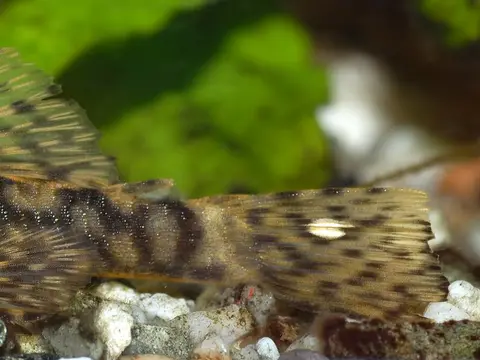 Bristlenose pleco Ancistrus sp. 26 gal (100 L) · 72–81 °F (22–27 °C)
 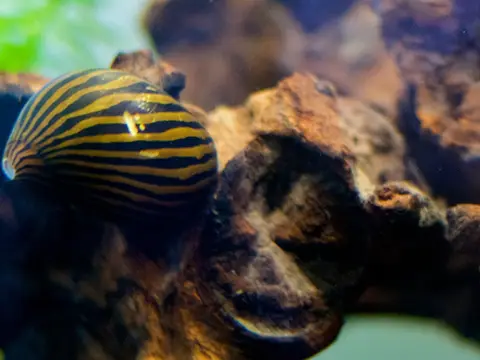 Nerite snail Neritina natalensis 5 gal (20 L) · 72–82 °F (22–28 °C)
 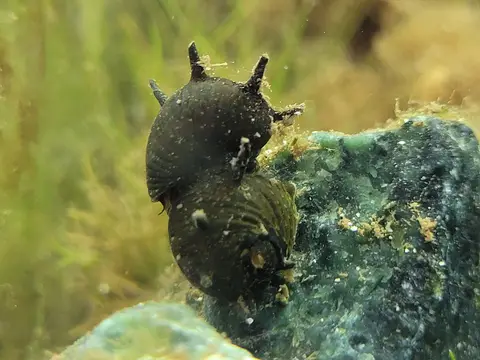 Horned nerite snail Clithon corona 5 gal (20 L) · 72–82 °F (22–28 °C)
 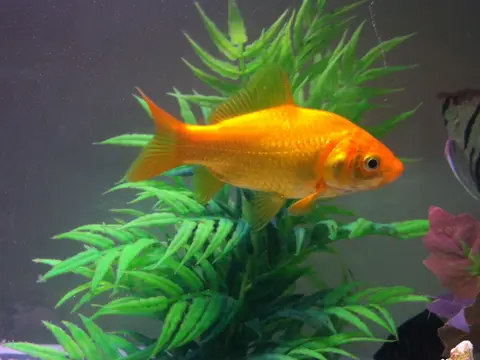 Common goldfish Carassius auratus 79 gal (300 L) · 50–75 °F (10–24 °C)
 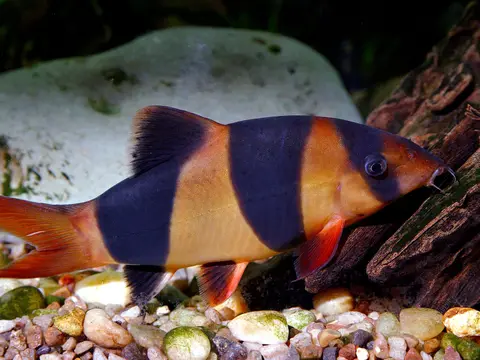 Clown loach Chromobotia macracanthus 132 gal (500 L) · 77–86 °F (25–30 °C)
 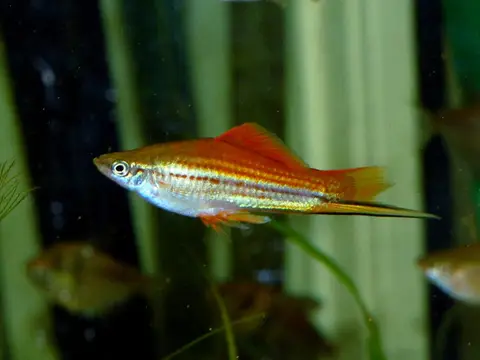 Swordtail Xiphophorus hellerii 32 gal (120 L) · 72–81 °F (22–27 °C)
 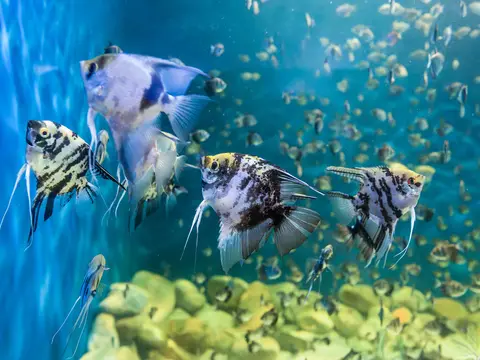 Angelfish Pterophyllum scalare 53 gal (200 L) · 75–84 °F (24–29 °C)
 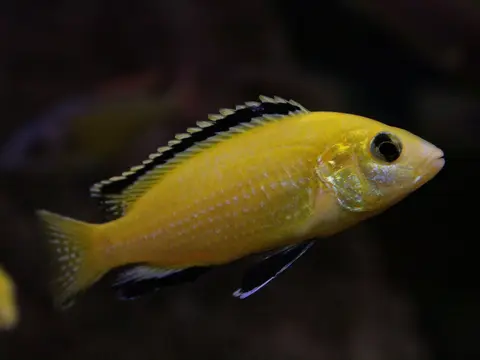 Yellow lab cichlid Labidochromis caeruleus 53 gal (200 L) · 75–82 °F (24–28 °C)
 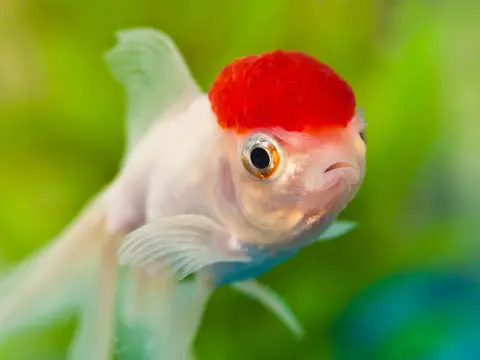 Oranda goldfish Carassius auratus 40 gal (150 L) · 59–75 °F (15–24 °C)
 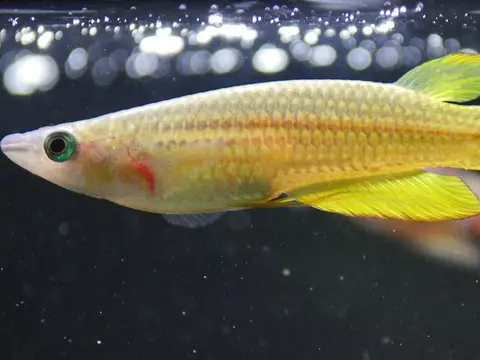 Golden wonder killifish (striped panchax) Aplocheilus lineatus 26 gal (100 L) · 72–81 °F (22–27 °C)
 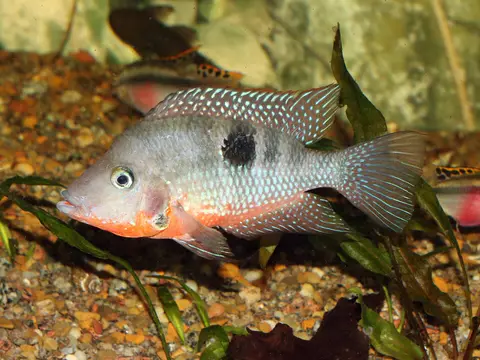 Firemouth cichlid Thorichthys meeki 53 gal (200 L) · 75–84 °F (24–29 °C)
 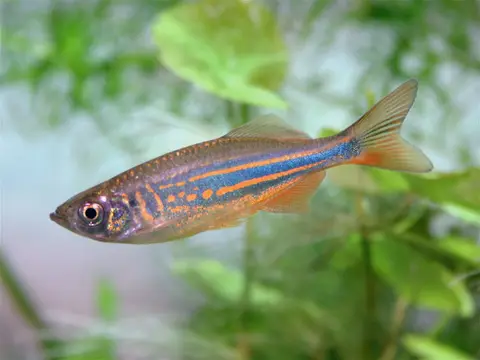 Giant danio Devario aequipinnatus 63 gal (240 L) · 68–79 °F (20–26 °C)
 Check the compatibility of your whole tank →
What not to keep it with
Popular species you shouldn’t house with the Kissing gourami, and why.
- Cherry barb: one may eat the other due to size
- Tiger barb: one may eat the other due to size
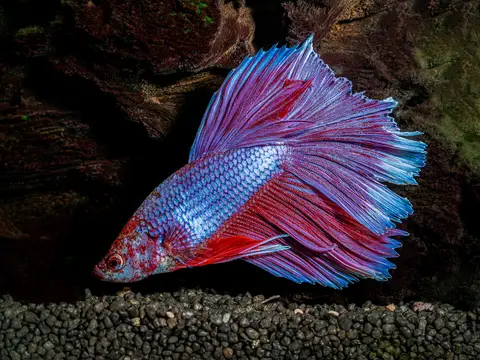
- Betta fish: one may eat the other due to size
- Bronze cory: one may eat the other due to size
- Panda cory: one may eat the other due to size
- Zebra danio: one may eat the other due to size
- Guppy: one may eat the other due to size
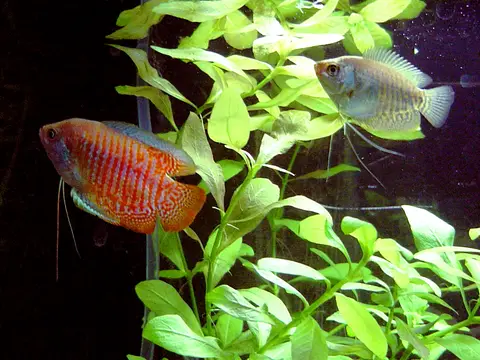
- Dwarf gourami: one may eat the other due to size
Recommended equipment
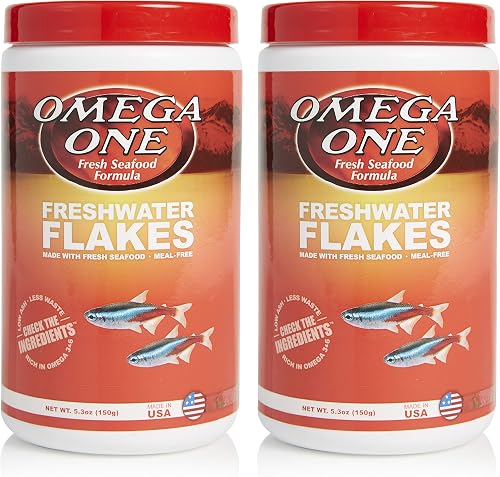
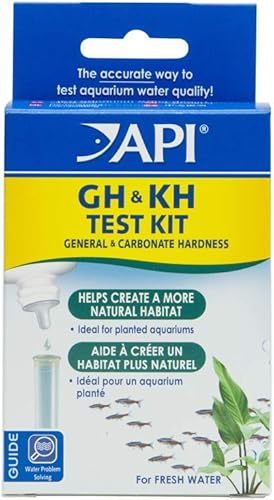
What you need to keep the Kissing gourami healthy, checked against Amazon stock.


Frequently asked questions
How many liters does a Kissing gourami need?
At least about 300 liters. More space always helps keep the water stable.
What water temperature does the Kissing gourami need?
Between 22 and 28 °C, with a pH of 6 to 8.
What fish can live with the Kissing gourami?
Based on water, size and temperament, it fits with species such as Bristlenose pleco, Nerite snail, Horned nerite snail, Common goldfish and Clown loach. Use our compatibility calculator to check your whole tank.
Can the Kissing gourami be kept with shrimp?
Not recommended: because of its size or instinct, it will eat shrimp.