If you buy through our links, Amazon pays us a small commission at no extra cost to you. That’s how we keep the site running. How we choose.
Contents
Overview
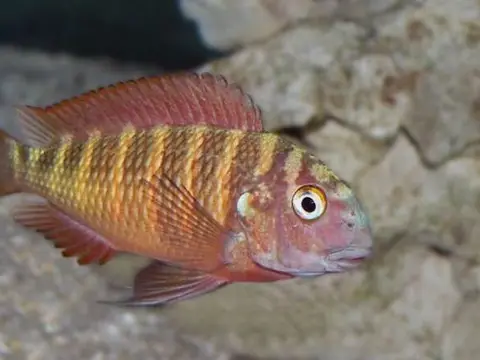
Tropheus moorii, sometimes called the blunthead cichlid, lives along the rocky shores of Lake Tanganyika and is famous for its countless geographic color morphs: each stretch of coast has its own look, from black with a yellow band ("Kaiser," "Ilangi") to deep red ("Moliro," "Bemba"). It has a stocky body, an underslung mouth and swims constantly among the rocks.
It is a fascinating fish with a complex social life, but also one of the most demanding African cichlids. It needs large groups to spread aggression, an almost entirely plant-based diet and spotless water, and it is very prone to bloat, which can be fatal. This is a fish for keepers with African cichlid experience, not for beginners.
Care and tank setup
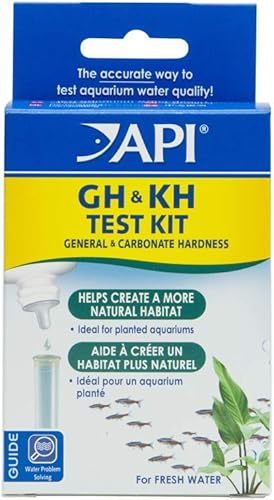
The golden rule: groups of 12-15 or more of a single morph in at least 110 gallons (400 liters) and 5 feet (150 cm) of length. In small groups the dominant fish kills the others. Water must be very hard and alkaline, pH 8-9, stable and with very low nitrates.
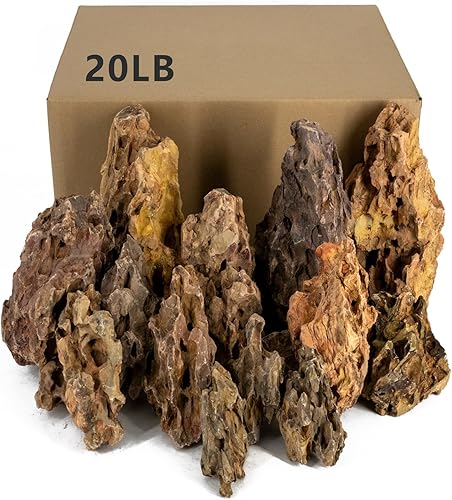
- Aquascape: stacked rock with caves across much of the tank, over sand, and open swimming room in front.
- Plants: pointless; they get eaten.
- Tankmates: a species-only tank is best. At most, open-water or sand-dwelling Tanganyikans such as Cyprichromis. Never other Tropheus morphs or mbuna.
- Common mistakes: buying too few fish, adding newcomers to an established group, or mixing morphs (they hybridize).
Strong filtration, a heater and weekly water changes of 30% or more are essential.
Feeding
Tropheus are strict herbivores that scrape aufwuchs off rocks. Their long gut handles animal protein poorly, so the staple should be a quality spirulina or vegetable-based food, with blanched vegetables now and then. Avoid brine shrimp, bloodworms and meaty foods. Feed small amounts several times a day and never overfeed, as that is the main cause of bloat.
Breeding
They are unusual maternal mouthbrooders: the female lays very few, very large eggs, usually 5 to 15, and holds them for four weeks or more. The fry emerge large and well developed and are usually tolerated by the group. They breed in aquariums when the group is stable, but avoid pulling the female out abruptly, since reintroducing her later can trigger fights.
Compatible tank mates
Species from our database that share water parameters, size and temperament with the Tropheus moorii. Calculated from the data in each profile.
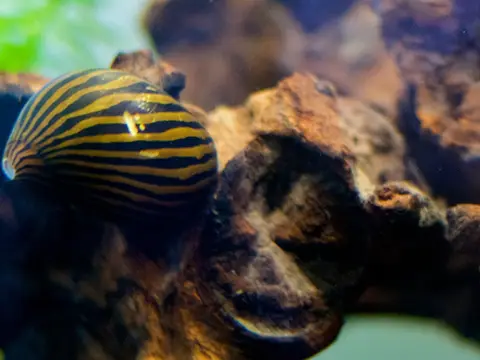 Nerite snail Neritina natalensis 5 gal (20 L) · 72–82 °F (22–28 °C)
 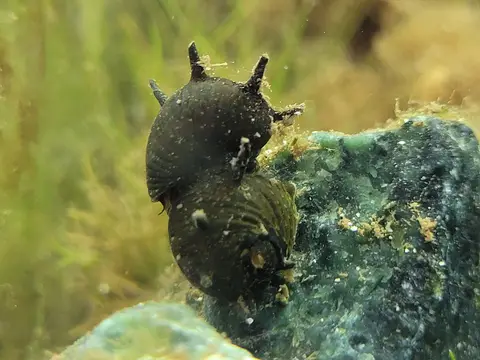 Horned nerite snail Clithon corona 5 gal (20 L) · 72–82 °F (22–28 °C)
 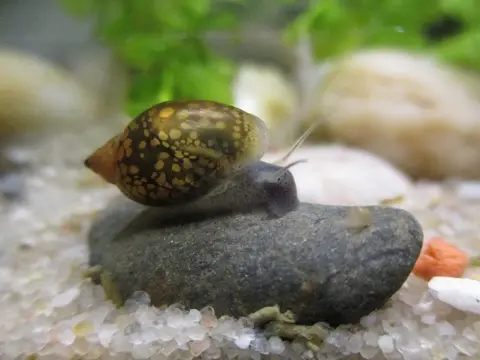 Bladder snail Physella acuta 3 gal (10 L) · 59–82 °F (15–28 °C)
 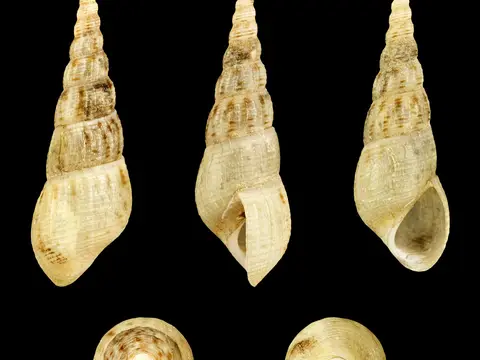 Malaysian trumpet snail Melanoides tuberculata 5 gal (20 L) · 68–86 °F (20–30 °C)
 Check the compatibility of your whole tank →
What not to keep it with
Popular species you shouldn’t house with the Tropheus moorii, and why.
- Bristlenose pleco: incompatible pH, incompatible temperaments
- Cherry barb: incompatible pH, incompatible temperaments
- Tiger barb: incompatible pH, incompatible temperaments
- Betta fish: incompatible pH, incompatible temperaments
- Common goldfish: incompatible temperatures, incompatible pH, incompatible temperaments
- Bronze cory: incompatible pH, incompatible temperaments
- Panda cory: incompatible temperatures, incompatible pH, incompatible temperaments
- Zebra danio: incompatible temperatures, incompatible pH, incompatible temperaments
Recommended equipment
What you need to keep the Tropheus moorii healthy, checked against Amazon stock.


Frequently asked questions
How many liters does a Tropheus moorii need?
At least about 400 liters for a group of at least 12 fish. More space always helps keep the water stable.
What water temperature does the Tropheus moorii need?
Between 24 and 27 °C, with a pH of 8 to 9.
What fish can live with the Tropheus moorii?
Based on water, size and temperament, it fits with species such as Nerite snail, Horned nerite snail, Bladder snail and Malaysian trumpet snail. Use our compatibility calculator to check your whole tank.
Can the Tropheus moorii be kept with shrimp?
Not recommended: because of its size or instinct, it will eat shrimp.
You may also like
African cichlids → Freshwater fish → Complete aquarium guide →