If you buy through our links, Amazon pays us a small commission at no extra cost to you. That’s how we keep the site running. How we choose.
Contents
Overview
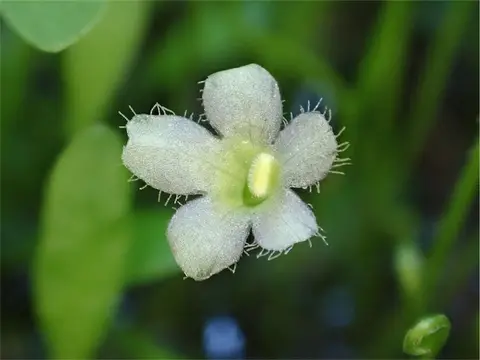
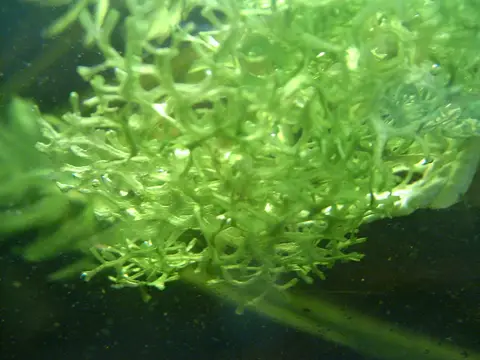
Riccia (Riccia fluitans), also called crystalwort, is neither a moss nor a rooted plant but a liverwort: a light green thallus made of tiny forked, Y-shaped branches. It lives in ponds and still waters almost worldwide, including Europe and North America, floating just below the surface.
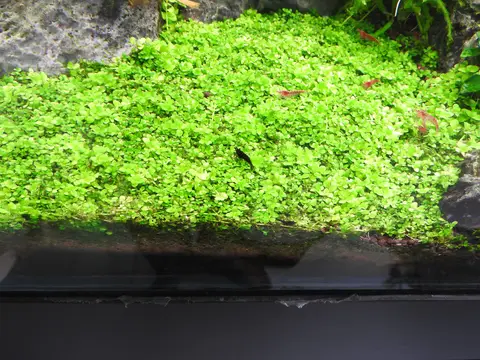
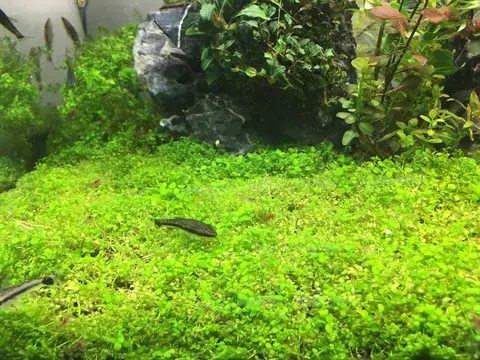
Hobbyists use it in two ways: as a floating plant that shelters fry and shrimp and soaks up excess nutrients, or tied to stones and mesh to create glowing green carpets that, with good light and CO2, sparkle with oxygen bubbles. It was one of the signature plants of Takashi Amano's classic nature aquariums.
Care and tank setup
As a floater, Riccia is very easy. As a carpet, it asks for more: good light, CO2 and regular upkeep, because it tends to break loose and drift up.
- Light: medium to high. In low light it turns pale and falls apart into fragments.
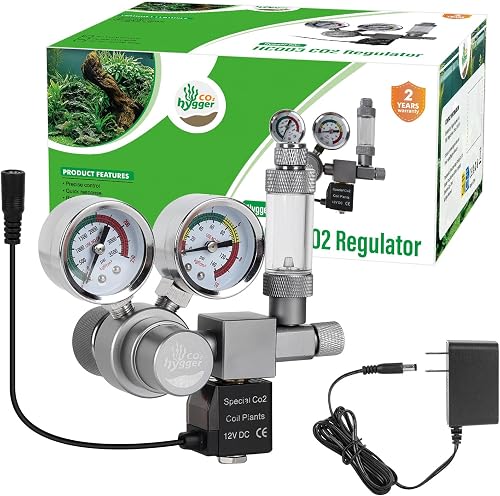
- CO2: optional when floating; strongly recommended for submersed carpets.
- Substrate: not needed. It has no roots and takes everything from the water.
- Attaching: spread a thin layer over a flat stone and secure it with fishing line or stainless steel mesh. If the layer gets thick, the bottom rots.
- Placement: floating in a low-flow corner, or tied down in a brightly lit foreground.
Its main drawback: loose bits end up in the filter, tangled in other plants or blocking light. Net out the excess every week. Avoid fish that graze on it heavily, such as some barbs and goldfish.
Fertilizing and trimming
It absorbs nutrients straight from the water, so a balanced liquid fertilizer is enough, and in heavily stocked tanks it often needs nothing extra. When tied down, trim it every 2-3 weeks or re-tie it from scratch every month or two, because as it thickens it lifts and comes loose. When floating, remove half the mat once it covers too much of the surface.
Propagation
It multiplies by simple fragmentation: every little piece branches and grows on its own, and under good light it can double in volume in a week or two. To propagate it, just take a handful and place it in another tank or on another stone. That is also why it should never go down the drain or into a natural pond.
Recommended equipment
What you need to keep the Riccia (Riccia fluitans) healthy, checked against Amazon stock.



Frequently asked questions
What light and CO₂ does Riccia (Riccia fluitans) need?
Light: medium. CO₂: optional (helps). Growth: fast.
Is it a good plant for beginners?
It’s manageable if you have decent lighting and fertilize regularly.