If you buy through our links, Amazon pays us a small commission at no extra cost to you. That’s how we keep the site running. How we choose.
Contents
Our top 3 picks
Stock checked on October 7, 2026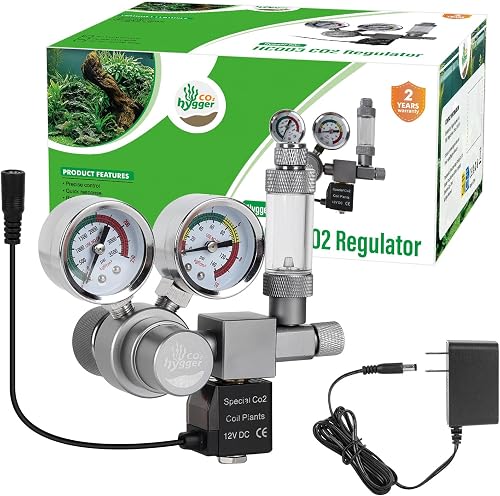

aquarium co₂ systems comparison, in stock
Aquarium Regulator with Dual Pressure Gauges, 12V DC Solenoid Valve, Bubble Counter & Check Valve - Precise Display for…
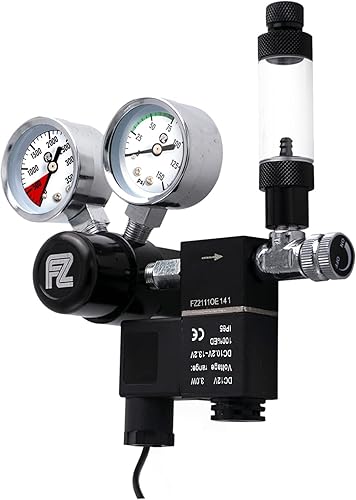
FZONE CO2 Solenoid Valve with Adapter for Desktop Aquarium CO2 System

Aquarium CO2 Raw Materials Citric Acid and Baking Soda, CO2 Generator Refill Kit

FZONE Pro Dual Stage Aquarium CO2 Regulator CGA320 for Aquarium Plant Tanks
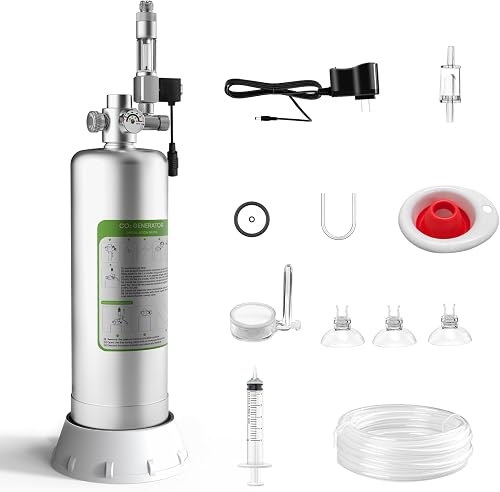
MagTool 2025 Upgraded 2.5-5L DIY Aquarium CO2 Generator Kit, Stainless Steel Bottle with Integrated Solenoid & Bubble…
MagTool 2025 Upgraded 2.5-5L DIY Aquarium CO2 Generator Kit, Stainless Steel Bottle with Integrated Solenoid & Bubble…
FZONE Aquarium CO2 Regulator for CGA320 Side Open CO2 Cylinder

Fzone 5.5 L Aquarium CO2 System Generator Kit for Aquarium Plants Tanks
AcuarioSano rating: combines the average rating and the number of buyer reviews on Amazon. No brand pays to be featured.
What CO₂ does in an aquarium
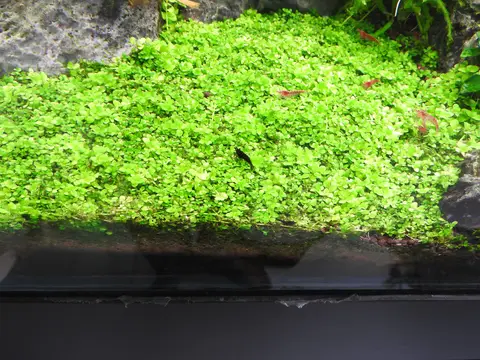
Plants need light, nutrients and carbon to grow. In a tank without injection, the only carbon available is the small amount of CO₂ that dissolves from the air plus what the fish exhale, roughly 2-5 ppm. That is enough for hardy plants such as Cryptocoryne wendtii, anubias or Java fern. But if you want a carpet of Dwarf Baby Tears (HC Cuba) or Monte Carlo, or reddish stem plants like Rotala rotundifolia, CO₂ makes the difference. The usual target in a medium- to high-light planted tank is 20-30 ppm during the photoperiod.
Types of CO₂ systems
Pressurized cylinder with regulator and solenoid
This is the benchmark. It includes a refillable cylinder (typically 1-5 lb, or about 0.5-2 kg, or larger), a regulator with a needle valve for fine flow control, a solenoid valve you plug into a timer, a bubble counter and a diffuser or inline reactor. It is the most stable option and, in the long run, the cheapest per ounce of CO₂. Brands like Fluval, Aquael, Chihiros, JBL and Dennerle sell complete kits on Amazon.
DIY yeast or citric acid kits
These generate CO₂ through fermentation (sugar and yeast) or a chemical reaction (citric acid and baking soda). They are cheap and work well in nano tanks and aquariums up to about 15 gallons (60 liters). Their weak point is inconsistent output: strong at first, weak at the end, and you cannot turn them off at night unless it is a citric acid system with a solenoid.
Liquid carbon
These are glutaraldehyde-based (or similar) products that supply organic carbon. It is not real CO₂ and does not replace a pressurized system, but it helps in low-light tanks and has some algae-fighting effect. Some plants, such as Vallisneria and mosses, react badly to high doses, and with shrimp you must stick to the dose per gallon.
Quick comparison
| System | Stability | Upfront cost | Night shut-off | Best for |
|---|---|---|---|---|
| Cylinder + regulator + solenoid | very high | medium-high | yes, with a timer | planted tanks of 15+ gallons |
| DIY yeast | low | very low | no | nanos and experiments |
| DIY citric acid | medium | low | yes, with a solenoid | small and mid-size tanks |
| Liquid carbon | medium | very low | not applicable | low-light tanks |
Dialing in CO₂: bubble rate and drop checker
A bubble counter helps you repeat a setting, but it does not tell you how much CO₂ is dissolved, because bubble size varies between kits. A common starting point is about 1 bubble per second per 25 gallons (100 liters), increasing gradually over several days. To actually measure it, use a drop checker filled with a 4 dKH reference solution: blue means too little CO₂, green is the sweet spot and yellow means too much. It takes around 2 hours to respond, so make one adjustment and wait before touching it again.
Tip: set the solenoid to switch on 1-2 hours before the lights and off about 1 hour before lights-out. That way the water is saturated when plants need it, and levels drop overnight.
Keeping fish safe
At night plants stop photosynthesizing and also consume oxygen, so you should turn the CO₂ off when the lights go off and keep good surface agitation. If you see fish gasping at the surface or breathing fast, shut off the CO₂ immediately, add aeration and do a water change. Shrimp are even more sensitive.
Warning: never use soda-maker cylinders without a proper regulator, never use welding gas, and never crank the flow up suddenly. A cheap single-stage regulator can dump the rest of the cylinder into the tank at once (end-of-tank dump).
Common mistakes
- Adding CO₂ without fertilizing: plants run out of nutrients and algae take over. Pair it with aquarium plant fertilizers.
- Relying on the bubble counter alone, with no drop checker.
- Leaving CO₂ running all night.
- Placing the diffuser in a dead spot: the fine mist should travel around the tank.
- Boosting CO₂ in a low-light tank, where plants cannot use it.
To understand the balance between light, nutrients and carbon, read our guide to CO₂ in the aquarium. We compare spec sheets, verified reviews and real-world criteria, but we do not physically test the products.
Frequently asked questions
Does my planted tank need CO₂?
Not always. With slow growers like anubias, Java fern or crypts under moderate light you can skip it. For carpeting plants, red plants or high light, CO₂ makes a big difference.
How many bubbles per second of CO₂ should I run?
A typical starting point is about one bubble per second per 25 gallons, raised gradually. The drop checker confirms the real level and should stay green during the lighting period.
Should I turn CO₂ off at night?
Yes. Without light, plants do not use CO₂ and oxygen drops, so leaving it on can suffocate your fish. A solenoid on a timer turns it off automatically.
Do DIY CO₂ kits work?
Yes for nanos and small tanks, especially citric acid kits. Yeast kits produce unevenly and cannot be switched off, so for medium or large tanks a pressurized cylinder with a regulator is the better investment.
You may also like
 Gear reviewAquarium plant fertilizers
 Gear reviewPlanted aquarium substrates
 Gear reviewPlanted aquarium LED lights
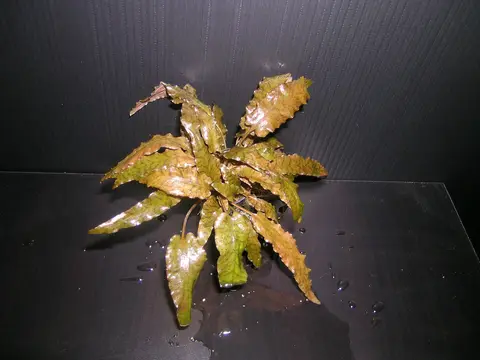 ProfileCryptocoryne wendtii
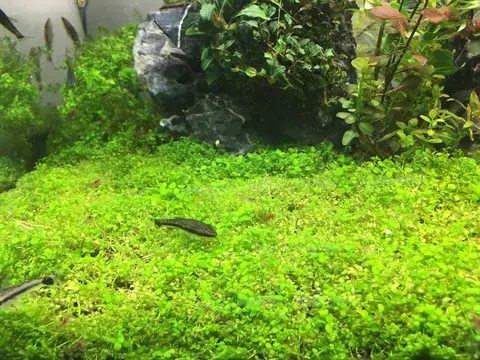 ProfileDwarf baby tears
 ProfileMonte Carlo
- GuidePlanted Tank for Beginners: Light, Substrate, Fertilizer and CO2
- GuideCO2 in a Planted Tank: When You Need It and How to Dial It In