If you buy through our links, Amazon pays us a small commission at no extra cost to you. That’s how we keep the site running. How we choose.
Contents
Overview
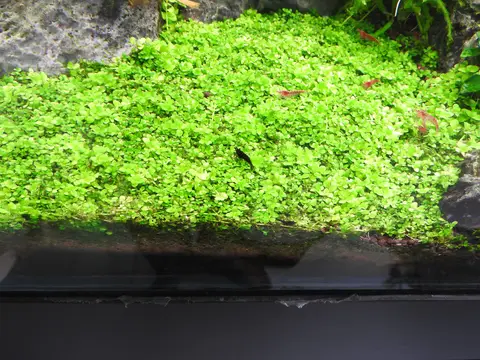
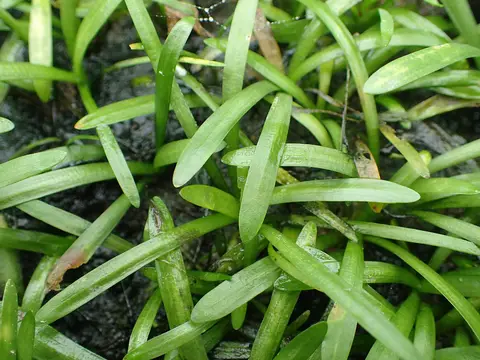
Dwarf sagittaria (Sagittaria subulata), often just called "dwarf sag," is a plant with narrow, ribbon-like leaves that forms natural-looking grassy meadows. It is native to the East Coast of the United States and parts of South America, where it grows in shallow and even brackish water, which explains how tough it is.
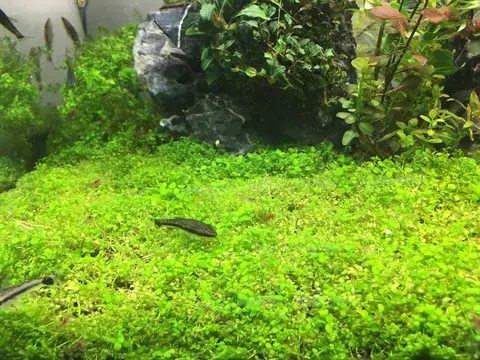
It is arguably the easiest carpeting plant for beginners: no CO2 needed, it grows in low light, tolerates hard water and spreads quickly on its own. Its height depends on light: under strong light it stays around 2 inches, while in dim tanks it can reach 6-8 inches, so it also works in the midground.
Care and tank setup
Dwarf sag adapts to almost any cycled community tank, but it does best with a nutrient-rich substrate or root tabs, since it feeds mainly through its roots.
- Light: low to high. The more light, the shorter and tighter it grows.
- CO2: not needed; with CO2 it grows even faster and denser.
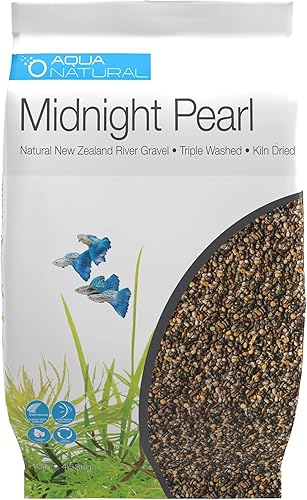
- Substrate: sand or fine gravel at least 2 inches deep; in inert substrate, push root tabs near the plants.
- Planting: separate individual plants and bury only the roots, leaving the crown (where the leaves meet) above the substrate.
- Placement: foreground in larger tanks, midground in smaller ones. It looks very natural around rocks and along edges.
It may drop a few leaves after purchase while it adjusts, but it bounces back quickly. Burying the crown is the number one cause of rot. Large herbivorous or digging fish may uproot it.
Fertilizing and trimming
Root tabs every 2-3 months are usually enough, plus some iron-containing liquid fertilizer if the leaves turn pale. It isn't trimmed like a stem plant: remove old leaves at the base and, above all, manage the runners by pulling daughter plants that pop up where you don't want them. In bright tanks it can become invasive if you don't thin it out now and then.
Propagation
It reproduces very easily by runners: each plant sends rhizomes under the substrate that produce new plantlets a couple of inches away. Once the daughters have several leaves and roots, cut them free and replant them. Within a few weeks a single pot can turn into a meadow, so there's no need to buy many.
Recommended equipment
What you need to keep the Dwarf sagittaria (Sagittaria subulata) healthy, checked against Amazon stock.


Frequently asked questions
What light and CO₂ does Dwarf sagittaria (Sagittaria subulata) need?
Light: low. CO₂: not needed. Growth: fast.
Is it a good plant for beginners?
Yes: it’s one of the easiest plants and forgives mistakes with light and fertilizing.