If you buy through our links, Amazon pays us a small commission at no extra cost to you. That’s how we keep the site running. How we choose.
Contents
Our top 3 picks
Stock checked on October 7, 2026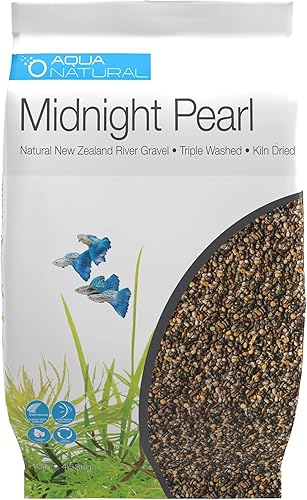


planted aquarium substrates comparison, in stock
Aqua Natural Aquarium Substrate, Midnight Pearl Gravel, 10lb

Aqua Natural Bio Substrate and Dry Substrate kit for New and existing Aquariums, Midnight (BIOKIT003)

Aqua Natural Aquarium Substrate, Delta Sand, 10lb
Aqueon Plant and Shrimp Aquarium Substrate, Aqua Soil for Fish Tanks, Aquarium Substrate for Live Plants, 5 Pounds
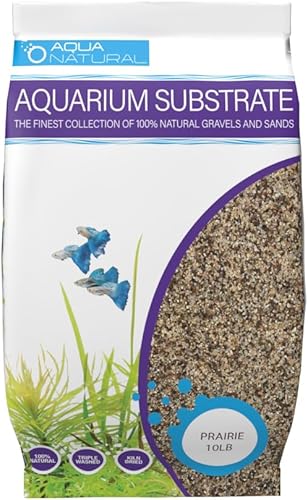
Aqua Natural Aquarium Substrate, Prairie Sand, 10lb

Aqua Natural Aquarium Substrate, Gold Pearl Gravel, 10lb
Aqua Natural Sugar White Sand Bio-Substrate 5lb for Freshwater Aquariums, Sand seeded with Start up bio-Active…
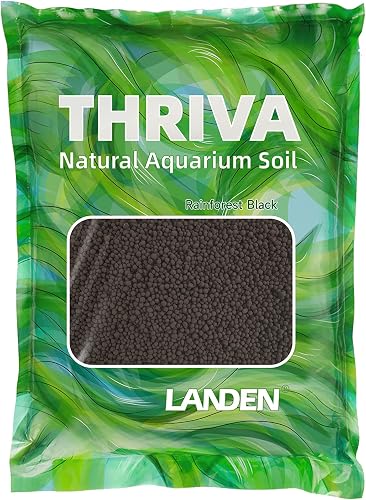
LANDEN Aquarium Substrate Soil for Plant Shrimp Tank,5L Black Large Size
AcuarioSano rating: combines the average rating and the number of buyer reviews on Amazon. No brand pays to be featured.
The two main substrate types
Active aquasoil
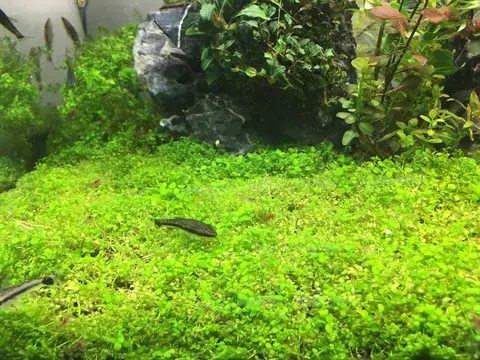
These are granules of baked volcanic soil or clay enriched with nutrients. You use them on their own, in a 2-3 inch (5-8 cm) layer, and they do three things: feed the roots, lower pH and carbonate hardness (KH) toward soft, slightly acidic water, and offer a light texture that fine roots grip easily. They are the go-to base for carpets of Dwarf Baby Tears (HC Cuba) or Monte Carlo. ADA Amazonia, Fluval Stratum, Tropica Aquarium Soil, UNS Controsoil and Dennerle Scaper's Soil are common examples.
Inert gravel capping a nutrient layer
You lay a 1 inch (2-3 cm) base of nutrient substrate (clays, peat, laterite or commercial blends) and cap it with 1.5-2 inches (3-5 cm) of fine gravel or 1-3 mm sand. It barely affects water chemistry and lasts much longer, but fine roots anchor less easily and the gravel itself provides nothing. It works well for sturdy root feeders like Cryptocoryne wendtii or Amazon swords, backed up with root tabs.
Comparison
| Feature | Active aquasoil | Inert gravel + nutrient base |
|---|---|---|
| Nutrients | high at first | moderate, in the base layer |
| Effect on water | lowers pH and KH | practically neutral |
| Initial ammonia | yes, for weeks | little or none |
| Lifespan | 1-3 years | many years (gravel lasts indefinitely) |
| Fine roots and carpets | excellent | fair |
| Best for | aquascapes, Caridina shrimp, soft-water fish | hardy plants, hard-water fish |
Ammonia leaching and cycling
Many nutrient-rich aquasoils leach ammonia for the first 2-6 weeks. Set up, plant and cycle the tank without fish, with frequent water changes (even 50% several times a week at first) until your test kit reads 0 ammonia and 0 nitrite. That spike actually helps kick-start the nitrogen cycle, but it would be deadly for fish and shrimp. Some "light" or shrimp-oriented soils leach very little, so check the product details.
Warning: do not add fish or shrimp to a tank with fresh aquasoil until ammonia and nitrite have stayed at 0 for several days. A full cycle usually takes 4-6 weeks.
pH, hardness and lifespan
Aquasoil acts like an ion exchanger: it binds carbonates and releases acids, keeping KH low and pH around 6-7. That is ideal for tetras, rasboras or Caridina shrimp, but wrong for hard-water fish such as African cichlids or demanding livebearers. Over time that buffering capacity runs out and the nutrients get used up: after one to three years the soil breaks down and loses its effect. At that point you can supplement with root tabs or replace it.
Tip: slope the substrate higher at the back than at the front (for example 3 inches behind and 1.5 inches in front). It adds visual depth and gives large background plants room for their roots.
How to layer it
- Optional: a thin layer of base fertilizer or bacteria powder on the glass, kept away from the front pane.
- With gravel, lay the 1 inch nutrient layer and cap it with 1.5-2 inches of fine gravel so it does not surface when you plant.
- With aquasoil, pour it straight in; do not rinse it, as it falls apart.
- Fill slowly onto a plate or plastic bag so the substrate is not disturbed.
Common mistakes
- Rinsing aquasoil or deep-vacuuming it: it crumbles and clouds the water.
- Adding fish on day one with fresh aquasoil.
- Using aquasoil with fish that need hard water.
- Capping the nutrient layer with coarse gravel: nutrients leak into the water and algae follow.
For a decorative finish, see our comparison of aquarium gravel and sand and our aquascaping guide. We compare spec sheets, verified reviews and real-world criteria, but we do not physically test the products.
Frequently asked questions
What is the best substrate for a planted tank?
For carpeting plants and demanding species, an active aquasoil. For hardy plants or fish that need hard water, inert gravel over a nutrient layer plus root tabs.
Why does ammonia rise with new aquasoil?
Many aquasoils leach ammonia from their nutrients during the first weeks. Cycle the tank without fish and do frequent water changes until ammonia and nitrite read zero.
How long does aquasoil last?
It usually keeps its nutrients and pH-lowering effect for one to three years. After that you can supplement it with root tabs or replace it.
Does aquasoil lower pH?
Yes, most aquasoils bind carbonates and leave the water soft and slightly acidic, with a pH around 6-7. It is not suitable for African cichlids or other hard-water fish.
You may also like
 Gear reviewAquarium plant fertilizers
 Gear reviewAquarium CO₂ systems
- Gear reviewAquarium gravel and sand
 ProfileDwarf baby tears
 ProfileMonte Carlo
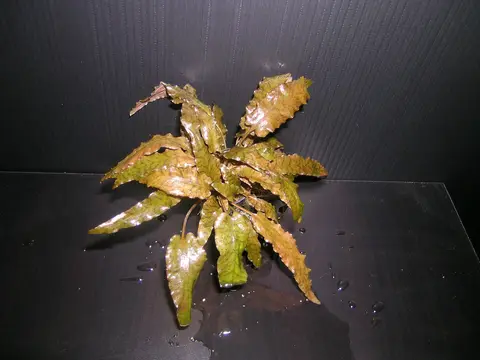 ProfileCryptocoryne wendtii
- GuidePlanted Tank for Beginners: Light, Substrate, Fertilizer and CO2
- GuideCO2 in a Planted Tank: When You Need It and How to Dial It In