If you buy through our links, Amazon pays us a small commission at no extra cost to you. That’s how we keep the site running. How we choose.
Contents
Lighting shapes how an aquarium looks more than anything else, and it is also one of the settings people get wrong most often. Many beginners leave the light on from morning to night "so the fish can see", and a few weeks later the glass is coated in green algae. In this guide we explain how many hours of light a tank really needs, how to schedule them, what role plants play, whether the popular midday "siesta" does anything, and how to put it all on a timer so you never touch the switch again.
The short rule: 6 to 8 hours of light a day, at the same time every day, on a timer. In a newly set-up tank, start with 6 hours and add half an hour every one or two weeks if the plants are growing well and no algae shows up.
How many hours of light per day
Tropical fish come from regions near the equator, where the day lasts about 12 hours all year round. That does not mean your tank needs 12 hours of light. In the wild, light filters through trees, floating leaves and tannin-stained water, and much of the day is dim. A modern LED fixture delivers strong, steady light from the first minute, so far less time is enough.
The benchmark most hobbyists and manufacturers use is a photoperiod of 6 to 8 hours. Below 6 hours, demanding plants grow slowly and lose color; above 8-10 hours, algae almost always appears, because there is more light than the available nutrients and CO2 can match.
| Type of tank | Recommended hours of light | Notes |
|---|---|---|
| New tank or tank that is cycling | 6 h (or lights off if there are no plants) | Plants are not using many nutrients yet |
| Community tank with few or low-light plants | 6-7 h | Anubias, ferns and mosses need no more |
| Planted tank without injected CO2 | 7-8 h | Extra hours will not make up for missing CO2 |
| Planted tank with CO2 and fertilizer | 7-8 h at high intensity | Adjust intensity rather than adding hours |
| Fish only, no live plants | 6-8 h | Any light that lets you see the fish well is enough |
What matters is not just the number of hours but consistency. Fish and plants adapt to a fixed rhythm. Switching on at different times every day, or leaving the light on all night by accident, stresses the fish and throws the tank off balance.
Sunrise, sunset and the siesta myth
Many current LED fixtures let you program a ramp: the light fades up over 15-60 minutes when it turns on and fades down the same way at the end. It is not essential, but it has real benefits: fish are not startled by a sudden blast of light (some dart or bump into the glass), and the tank looks more natural. If your light has ramps, count the time at full power plus roughly half of the ramps as your photoperiod.
The "siesta" or midday break means switching the light off for 3-4 hours in the middle of the day, on the theory that algae gets disrupted and plants rebuild CO2. It became popular in Germany and some hobbyists like it, but there is no solid evidence that it beats a short, continuous photoperiod. If you use it, do not make the total day longer: two 4-hour blocks are still 8 hours. For most community tanks, a single 6-8 hour block is simpler and gives the same results.
How light and algae are linked
Algae takes advantage of any imbalance between light, nutrients and CO2. Plants need all three in proportion. If there is plenty of light but not enough CO2 or fertilizer, plants cannot use that energy and algae can. That is why adding hours so plants "grow faster" usually backfires.
- Green spots or film on the glass: almost always too many hours or too much intensity.
- Green water: too much light combined with high nitrate or phosphate; common in tanks near a window.
- Black beard and brush algae: usually a sign of unstable CO2 under strong light.
- Brown diatoms: typical in new tanks; they fade on their own over time and depend less on light.
If you already have a problem, cut the photoperiod to 6 hours, do regular water changes and review how much you feed. Our guide to aquarium algae covers each type. A cleanup crew such as otocinclus catfish or Amano shrimp helps, but it does not replace fixing the cause.
Be careful with algaecides: unless you first reduce light and nutrients, chemicals only remove algae for a while. Many also harm shrimp, snails and delicate plants.
Why you should use a timer
A timer is the cheapest and most effective lighting upgrade there is. It keeps the same schedule every day, even when you are away or simply forget, and it ends accidental "lights on all night" episodes. There are three options:
- Mechanical outlet timer: simple and inexpensive; set in 15-minute steps.
- Digital or smart outlet timer: more precise and silent; some can be controlled from your phone.
- Controller built into the LED fixture: many lights from Chihiros, Fluval, Twinstar or Hygger include scheduling with ramps and per-channel intensity.
Pick a schedule that matches when you are home to enjoy the tank, for example 2 p.m. to 10 p.m. Fish do not care what the clock says; they need consistency. If you run CO2, start the injection one or two hours before the lights come on.
Window sunlight and moonlights
Direct or strong sunlight coming through a window counts as light hours, even if it does not feel like it. A tank next to a south-facing window can get several extra hours of sun you have no control over, and that is the most common cause of stubborn green water. Ideally, place the tank on a wall that gets no direct sun. If that is not possible, use a curtain or blind, add an opaque background on the exposed side, or cut the fixture's hours to compensate.
Moonlights (low-power blue LEDs) are a cosmetic feature for watching nocturnal fish. If you use them, keep them very dim and on for a short time, one or two hours after the main light goes off. A blue light running all night stops fish from resting properly and can encourage algae. Fish need real darkness: many, such as corydoras and plecos, are most active at dusk, and others sleep resting on the bottom.
Common lighting mistakes
- Running the light 12 hours or more: the fastest route to algae.
- Switching it on and off by hand: irregular schedules and days that creep longer without you noticing.
- Maxing out intensity in a tank without CO2: plants cannot use it.
- Setting up the tank by a sunny window: direct sun, algae and unstable temperature.
- Leaving moonlights on all night: fish need to sleep in the dark too.
- Changing several things at once: if you adjust hours, intensity and fertilizer together, you will not know what worked.
If you are choosing a light, compare models in our guides to aquarium LED lights and lighting for planted tanks, and if plants interest you, start with our planted tank guide for beginners.
Recommended gear for this guide


Frequently asked questions
How many hours of light does a tank without plants need?
Between 6 and 8 hours a day is plenty. Fish do not need more light to stay healthy, and extra hours only feed algae. What matters most is keeping the same schedule every day, ideally with a timer.
Can I leave the aquarium light on overnight?
No. Fish need a period of darkness to rest, and constant light causes stress and rapid algae growth. If you want to watch the tank at night, use a very dim moonlight for a short time.
Is a midday lighting break better?
It is not necessary. A lighting siesta works for some hobbyists, but there is no clear evidence that it beats a continuous photoperiod of 6 to 8 hours. If you do use one, do not increase the total hours of light per day.
Does room light or window light count?
Normal room lighting has very little effect, but sunlight through a window matters a lot. A tank that gets direct sun often has green water and algae even when the fixture only runs for 6 hours.
How much light do aquarium plants need?
Most grow well with 7 to 8 hours under a suitable LED fixture. Low-light plants such as anubias, ferns and mosses are happy with 6 hours. For demanding plants, intensity, CO2 and fertilizer matter more than a longer photoperiod.
You may also like
- GuideAquarium Water Changes: How Much, How Often and How To
- GuideLeaving Your Fish Tank on Vacation: Food, Lights and Heat
- GuideHow to Move a Fish Tank Without Losing Fish or Your Cycle
- GuideAquarium Algae: Types, Causes and How to Get Rid of Them
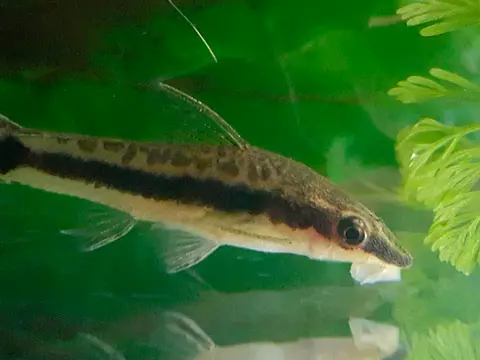 ProfileOtocinclus catfish
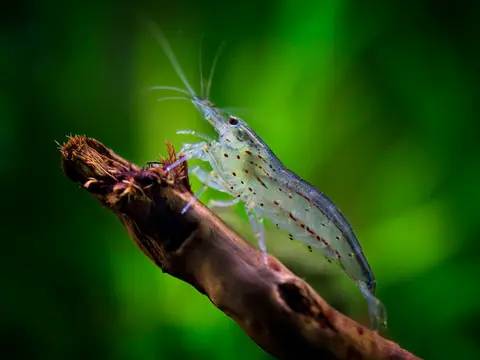 ProfileAmano shrimp
- Gear reviewAquarium LED lights
- Gear reviewPlanted aquarium LED lights