If you buy through our links, Amazon pays us a small commission at no extra cost to you. That’s how we keep the site running. How we choose.
Contents
Spotting a fish with white specks, ragged fins or swimming on its side is alarming, and the usual reaction is to rush to the store for the first medication on the shelf. Nearly always it pays to stop for a moment: most aquarium fish diseases are opportunistic and show up when the water is poor or the fish is stressed. In this guide we go through the most common ones, how to recognize them, what usually triggers them and the first steps to take before adding anything to the water.
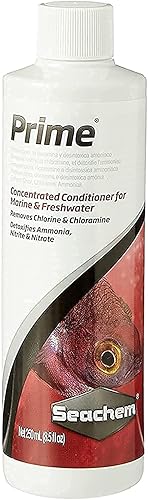
First, every time: test ammonia, nitrite and nitrate, check the temperature and do a 25-30% water change with water conditioner. Many problems improve with that alone, and no medication works well in polluted water.
Why fish get sick
The parasites, bacteria and fungi behind most diseases are present in almost every aquarium. A healthy, well-kept fish holds them in check with its immune system and slime coat. Trouble starts when something weakens those defenses. The most frequent causes are:
- Poor water quality: ammonia or nitrite above 0, nitrate building up because of skipped water changes, or a tank that was never cycled.
- Sudden swings: in temperature, pH or hardness, for example when topping up with much colder tap water or moving fish without acclimating them.
- Stress: overstocking, aggressive tankmates, no hiding places, or schooling species kept alone.
- New fish without quarantine: the usual way ich and other parasites get in.
- Poor feeding: leftover food rotting in the tank or a monotonous diet.
That is why treating the symptom without fixing the cause so often leads to relapses.
Symptoms of the most common diseases
This table sums up the diseases you will see most often in freshwater tanks. Treat it as a guide: several symptoms look alike and one fish can have more than one problem at once.
| Disease | Typical symptoms | Likely cause | First step |
|---|---|---|---|
| Ich (white spot) | White dots like grains of salt on the body and fins; fish flash or rub against decor | The parasite Ichthyophthirius, nearly always brought in by new fish or triggered by a temperature drop | Raise the temperature gradually and use a dedicated ich treatment |
| Fin rot | Ragged, whitish or reddish fin edges; fins get shorter | Opportunistic bacteria due to poor water or fin nipping | Test the water and do frequent water changes |
| Fungus | White or grayish cotton-like tufts, often on a wound | Injuries, dirty water, weakened fish | Check the water; isolate the fish if badly affected |
| Velvet | Fine gold or rust-colored dust, easiest to see with a flashlight; clamped fins, fast breathing | The parasite Oodinium, favored by stress | Dim the lights and start a dedicated treatment quickly |
| Dropsy | Swollen belly, scales sticking out like a pinecone, bulging eyes | A sign of internal failure, often after chronic stress or poor water | Move the fish to a hospital tank |
| Swim bladder problems | Swims sideways or head-down, floats, or cannot leave the bottom | Constipation, overfeeding, cold water or physical issues (common in round-bodied goldfish) | Fast for a couple of days and check the temperature |
| Columnaris | White or gray "saddle" patches on the back, cottony mouth, fast progression | The bacterium Flavobacterium columnare, closely linked to warm, dirty water | Water change, isolate and treat without delay |
Ich is by far the most common disease and has its own guide: how to treat ich step by step.
First steps before medicating
Whatever the symptom, follow this order. It is the same for almost every disease and avoids half of all unnecessary treatments.
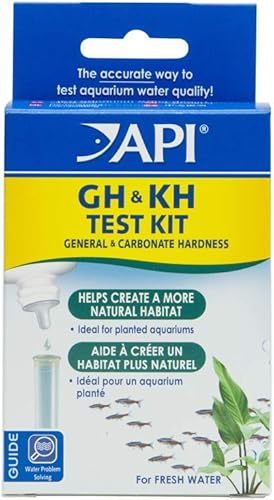
- Test the water. Use a liquid test kit to check ammonia, nitrite, nitrate and pH. Ammonia and nitrite should read 0 and nitrate should stay below 25-40 ppm.
- Check the temperature. A reliable thermometer rules out a faulty heater; for most tropical fish, 75-81 °F (24-27 °C) is normal.
- Change the water: 25-30% with conditioner and water at a similar temperature. If ammonia or nitrite is high, repeat the next day.
- Observe calmly. Is it one fish or several? Is it eating? Has anything new gone in over the last few weeks (fish, plants, decor)?
- Isolate if needed. A hospital tank lets you treat a single fish without medicating the whole aquarium, its plants and its shrimp.
A hospital tank does not have to be expensive: a small 5-10 gallon (20-40 l) tank, a heater, a sponge filter seasoned in the main tank and a hiding spot are enough. Leave it bare-bottomed so it is easy to clean. The same setup doubles as a quarantine tank for new fish for 2-4 weeks, which is the best prevention there is.
When and how to medicate
Medication makes sense when the disease has been identified with reasonable confidence and does not improve after fixing the water, or when it moves fast, like velvet or columnaris. Some general rules:
- Use a product made for that specific disease, from established aquarium brands such as API, Seachem, Tetra or Fritz, and follow the label exactly: dose, duration and water changes.
- Remove activated carbon from the filter during treatment: it absorbs many medications and cancels them out.
- Work out the real water volume, minus substrate and decor, so you do not overdose.
- Increase aeration: many treatments and warmer water reduce the oxygen available.
- Be careful with shrimp, snails and sensitive fish: many products containing copper or dyes are toxic to invertebrates, and some scaleless fish, such as loaches or corydoras, tolerate certain treatments poorly.
Important: this guide offers general fishkeeping advice and does not replace a diagnosis from a vet experienced with fish. Do not combine medications on your own, do not use antibiotics "just in case," and always follow the manufacturer's directions. If a valuable fish gets worse or several die within a few days, consult a professional.
Prevention: what actually works
Prevention is boring but effective. A cycled tank with weekly 20-30% water changes, stable temperature and sensible stocking has very few outbreaks. Add quarantine for new fish, careful acclimation and a varied diet in portions eaten within 2-3 minutes.
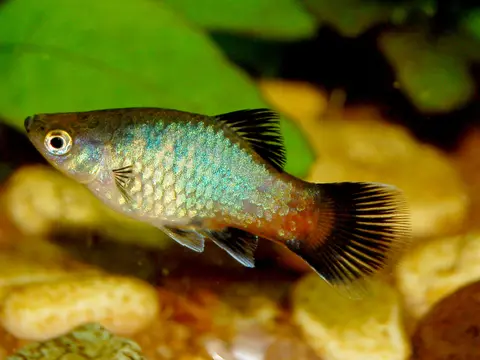
Choosing hardy species also helps when you are starting out. Fish like platies or zebra danios forgive small mistakes far better than delicate species such as the discus, which needs very stable, soft water. And if fish die without clear symptoms, see our guide on why aquarium fish die.
Common mistakes
- Medicating without testing the water: if ammonia is the problem, medication just adds more stress.
- Mixing several products at once: they can react with each other or add up in toxicity.
- Stopping treatment when symptoms vanish: ich and velvet have invisible life stages; finish the course on the label.
- Dosing the whole tank for one fish when a hospital tank is safer for plants, shrimp and beneficial bacteria.
- Leaving activated carbon in the filter during treatment.
- Adding new fish without quarantine to a healthy tank.
- Cranking up the temperature suddenly or doing huge water changes with cold water.
Recommended gear for this guide

Frequently asked questions
How can I tell if my fish is sick?
The earliest signs are changes in behavior: it stops eating, hides more than usual, hangs at the surface, rubs against objects or keeps its fins clamped. Visible signs such as spots, ragged fins or a swollen belly come later. Whenever behavior changes, test the water first.
Should I treat the whole tank or just the sick fish?
It depends on the disease. Contagious parasites like ich or velvet usually require treating the whole tank, because the parasite is in the water. Individual cases, such as dropsy or an injured fish with fungus, are better handled in a hospital tank.
Does aquarium salt cure fish diseases?
Aquarium salt is used as a supporting measure in some cases and at low doses, but it is not a cure-all. Many plants, shrimp, corydoras and other fish tolerate it poorly. If you use it, follow the manufacturer's directions and do not keep it in the tank permanently.
Can a fish with dropsy be saved?
It is difficult, because dropsy is usually a sign of advanced internal failure. Isolating the fish in very clean, stable water may help if it is caught early. The most useful step is to review the water quality in the main tank to protect the other fish.
How long should new fish be quarantined?
Two to four weeks in a separate tank is recommended. That gives diseases like ich time to show up before the new fish come into contact with the ones in your main aquarium.
You may also like
- GuideIch (White Spot Disease) in Fish: Symptoms, Life Cycle, Treatment
- GuideWhy Are My Fish Dying? Stress Signs, Causes and Fixes
- GuideCloudy Aquarium Water: White, Green or Brown and How to Clear It
- Gear reviewAquarium water test kits
- Gear reviewAquarium thermometers
 ProfilePlaty
- Gear reviewAquarium water conditioners
- GuideAquarium Algae: Types, Causes and How to Get Rid of Them