If you buy through our links, Amazon pays us a small commission at no extra cost to you. That’s how we keep the site running. How we choose.
Contents
Overview
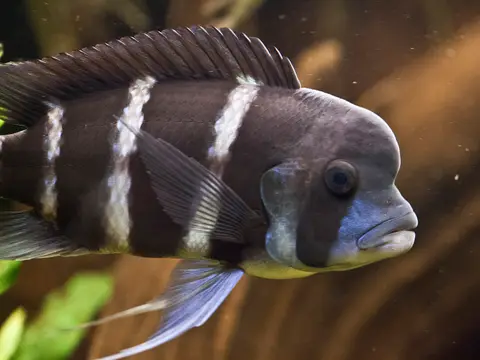
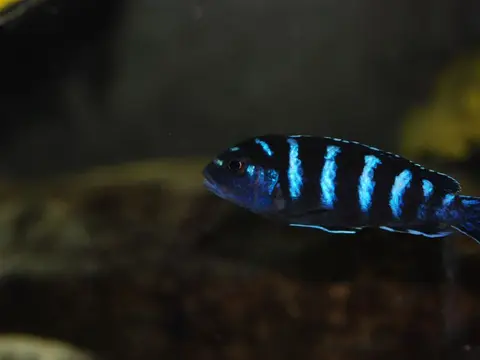
The frontosa is one of the most impressive African cichlids. It comes from the deep waters of Lake Tanganyika and shows bold black vertical bars over a white or bluish body, with fins that shimmer blue. Adult males grow a large nuchal hump on the forehead that makes them instantly recognizable.
Unlike many Lake Malawi cichlids, it is slow-moving, stately and relatively calm, often learns to recognize its keeper and can live twenty years or more. The catch is size: the 2-inch juveniles sold in stores grow beyond 12 inches (30 cm). This is a species for experienced hobbyists who can commit to a truly large aquarium for the long haul.
Care and tank setup
A group needs at least a 160-gallon (600-litre) tank that is 6 feet (180-200 cm) long or more, and a larger harem needs even more room. Keep the water hard, alkaline, very stable and low in nitrate, in a cycled tank with powerful filtration and a heater. Frontosa dislike sudden swings, so do regular water changes with temperature-matched water.
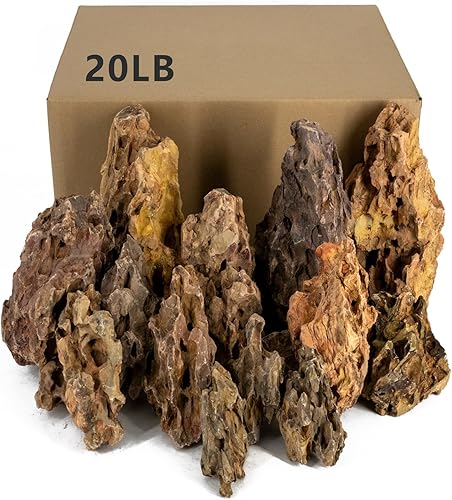
- Aquascape: large, stable rocks with roomy caves, fine sand and plenty of open swimming space.
- Group: ideally one male with several females, or a big colony in a very large tank, to spread out aggression.
- Lighting: moderate light suits it, much like the deep lake.
Keep it with robust Tanganyikan cichlids of similar size, or large, calm mbuna in very big tanks. It will eat any fish that fits in its mouth, so no tetras, shrimp or small community fish.
Feeding
In the wild it hunts small fish and crustaceans at dawn. In the aquarium it takes large, quality pellets for carnivorous cichlids, supplemented with frozen mysis, krill or chopped shrimp. Avoid mammal meat and live feeder fish. Two moderate feedings a day are plenty; frontosa are greedy and put on weight easily.
Breeding
Frontosa are slow-breeding maternal mouthbrooders. They mature at around 3-4 years, and the female holds a few dozen large eggs in her mouth for four to six weeks. The fry are big at release and take baby brine shrimp and crushed foods. Breeding at home is possible but takes patience, a settled group and space to grow out the young.
Compatible tank mates
Species from our database that share water parameters, size and temperament with the Frontosa cichlid. Calculated from the data in each profile.
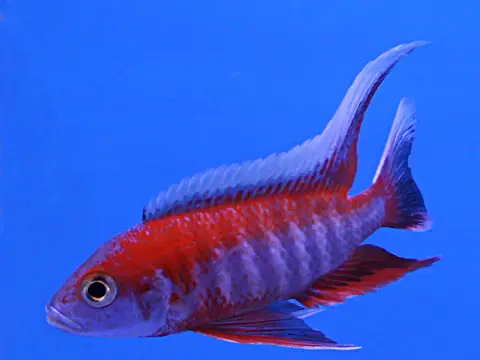 Peacock cichlid (Aulonocara) Aulonocara jacobfreibergi 79 gal (300 L) · 75–81 °F (24–27 °C)
 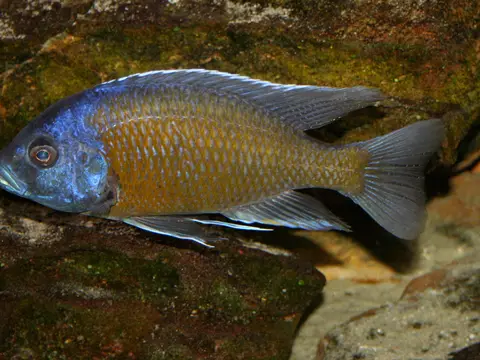 Borleyi (Copadichromis borleyi) Copadichromis borleyi 106 gal (400 L) · 75–81 °F (24–27 °C)
 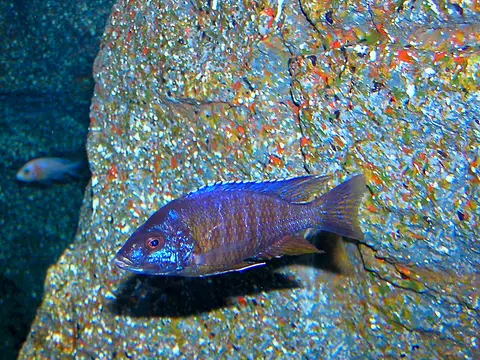 Electric blue hap Sciaenochromis fryeri 106 gal (400 L) · 75–81 °F (24–27 °C)
 Check the compatibility of your whole tank →
What not to keep it with
Popular species you shouldn’t house with the Frontosa cichlid, and why.
- Bristlenose pleco: incompatible pH
- Cherry barb: incompatible pH, one may eat the other due to size
- Tiger barb: incompatible pH, one may eat the other due to size
- Betta fish: incompatible pH, one may eat the other due to size
- Bronze cory: incompatible pH, one may eat the other due to size
- Panda cory: incompatible temperatures, incompatible pH, one may eat the other due to size
- Zebra danio: incompatible temperatures, incompatible pH, one may eat the other due to size
- Discus: incompatible temperatures, incompatible pH, incompatible water hardness
Recommended equipment
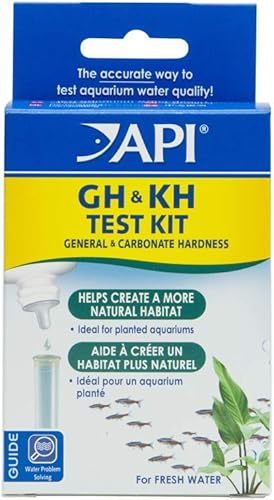
What you need to keep the Frontosa cichlid healthy, checked against Amazon stock.


Frequently asked questions
How many liters does a Frontosa cichlid need?
At least about 600 liters for a group of at least 4 fish. More space always helps keep the water stable.
What water temperature does the Frontosa cichlid need?
Between 24 and 27 °C, with a pH of 7.8 to 9.
What fish can live with the Frontosa cichlid?
Based on water, size and temperament, it fits with species such as Peacock cichlid (Aulonocara), Borleyi (Copadichromis borleyi) and Electric blue hap. Use our compatibility calculator to check your whole tank.
Can the Frontosa cichlid be kept with shrimp?
Not recommended: because of its size or instinct, it will eat shrimp.
You may also like
African cichlids → Freshwater fish → Complete aquarium guide →