If you buy through our links, Amazon pays us a small commission at no extra cost to you. That’s how we keep the site running. How we choose.
Contents
Overview
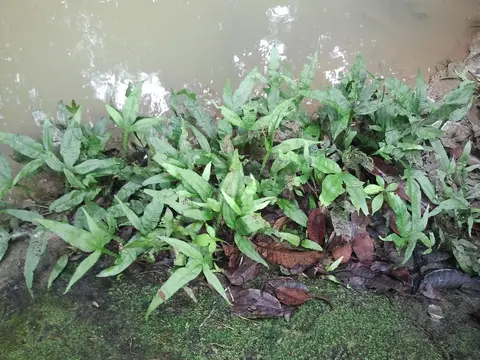
Java fern (Microsorum pteropus) is an aquatic fern from Southeast Asia that grows on rocks and logs in streams and along riverbanks. Its long, deep green, slightly textured leaves grow from a creeping rhizome and reach 8 to 12 inches (20 to 30 cm). Popular varieties include 'Windelov', with frilly lace tips, and the fine-leaved 'Narrow' and 'Trident'.
Along with anubias, it is the easiest plant in the hobby. It thrives in low light without CO2 and with minimal fertilizer, and almost no fish eats it because the leaves taste bad. It is perfect for beginners, cichlid tanks, driftwood layouts and even goldfish tanks.
Care and tank setup
Java fern is an epiphyte: never bury the rhizome or it will rot. Tie it to driftwood or rock with cotton thread, fishing line or thin zip ties, or glue it with a drop of cyanoacrylate gel. Within a few weeks the dark roots grip on their own and you can remove the tie. Wedging it into rock crevices also works well.
- Light: low to medium. Strong light causes brown patches and algae on the leaves.
- Water: it handles soft to fairly hard water, and even a little salt.
- Flow: it likes moderate water movement, like in its natural habitat.
Black or brown spots on the underside of the leaves are usually just sori (spore structures) or new plantlets forming, not a disease. If leaves turn black and translucent instead, check that the rhizome is not buried and that nutrients are not lacking. Watch out for sudden water changes in chemistry: it sometimes drops leaves in response, but grows back from the rhizome.
Fertilizing and trimming
It grows slowly and needs little: a low weekly dose of a comprehensive liquid fertilizer is plenty. It absorbs nutrients through its leaves, so root tabs do little for it. Translucent leaves or large brown patches can point to a potassium shortage. Pruning means cutting old or damaged leaves at the base; healthy ones can last many months.
Propagation
Its way of reproducing is unusual: it grows adventitious plantlets on the edges and tips of its leaves, especially older ones. Once they have a few leaves and their own roots they break off on their own, or you can pull them off and tie them wherever you like. You can also divide the rhizome into sections with several leaves each. Within a few months one plant becomes a nice clump.
Recommended equipment
What you need to keep the Java fern healthy, checked against Amazon stock.


Frequently asked questions
What light and CO₂ does Java fern need?
Light: low. CO₂: not needed. Growth: slow.
Is it a good plant for beginners?
Yes: it’s one of the easiest plants and forgives mistakes with light and fertilizing.
You may also like
 ProfileAnubias nana
 ProfileAfrican water fern
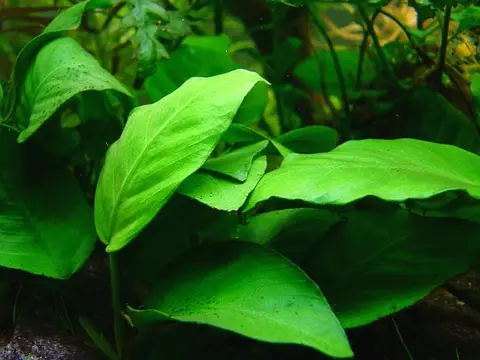 ProfileAnubias barteri
- GuidePlanted Tank for Beginners: Light, Substrate, Fertilizer and CO2
- GuideHow to Set Up a Fish Tank Step by Step: From Stand to First Fish
- Gear reviewAquarium LED lights
- Gear reviewAquarium plant fertilizers
- GuideCO2 in a Planted Tank: When You Need It and How to Dial It In
Epiphyte plants → Aquarium plants → Complete aquarium guide →