If you buy through our links, Amazon pays us a small commission at no extra cost to you. That’s how we keep the site running. How we choose.
Contents
Overview
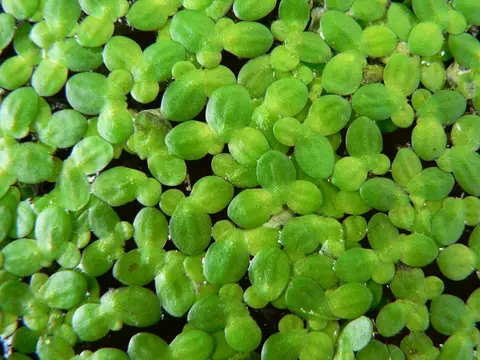
Duckweed (Lemna minor) is a tiny floating plant made of one or a few oval fronds about 1/8 inch (2-4 mm) long, each with a single fine root hanging into the water. It grows in ponds and ditches almost worldwide, including across North America, and is one of the smallest flowering plants on Earth.
Hobbyists either love it or hate it. Kept under control, it is useful: it absorbs nitrate and phosphate very quickly, shades shy fish such as bettas and makes a good snack for goldfish and other herbivores. But it multiplies so fast that it can blanket the entire surface in a couple of weeks, and it often sneaks in as a hitchhiker on other plants.
Care and tank setup
It works in any aquarium, goldfish tank or pond as long as the surface is calm; strong flow pushes it under, clumps it and sends it into the filter. Before adding it, decide whether you really want it, because getting rid of it later is very hard: a single frond left behind is enough for it to come back.
- Light: medium; strong light makes it grow even faster.
- Surface: always keep at least half open for gas exchange and so light reaches plants below.
- Lid: avoid constant condensation dripping onto it.
Typical mistakes: letting it form a solid mat that darkens the tank and lowers dissolved oxygen, and flushing it or tossing it into a pond or stream, which spreads it where it does not belong. Always dispose of extra duckweed in the trash or compost. If you do not want it, inspect and rinse new plants carefully before they go in your tank.
Fertilizing and trimming
It needs no fertilizer: it takes everything from nutrients in the water, which is exactly why it helps lower nitrate. If it turns yellow, iron or potassium is usually lacking. Maintenance means scooping out the excess with a net or cup every week, leaving only the amount you want. Many hobbyists corral it inside a floating ring, such as a loop of airline tubing, so it cannot take over the whole surface.
Propagation
It reproduces by division: each frond buds new fronds at its edges, which break off and keep dividing. In good conditions it can double its coverage in just a few days. You do not need to do anything to multiply it; the real job is slowing it down. If you want it as live food for goldfish, grow it in a separate container with tank water and light, and add portions as needed.
Recommended equipment
What you need to keep the Duckweed (Lemna minor) healthy, checked against Amazon stock.

Frequently asked questions
What light and CO₂ does Duckweed (Lemna minor) need?
Light: medium. CO₂: not needed. Growth: fast.
Is it a good plant for beginners?
Yes: it’s one of the easiest plants and forgives mistakes with light and fertilizing.
You may also like
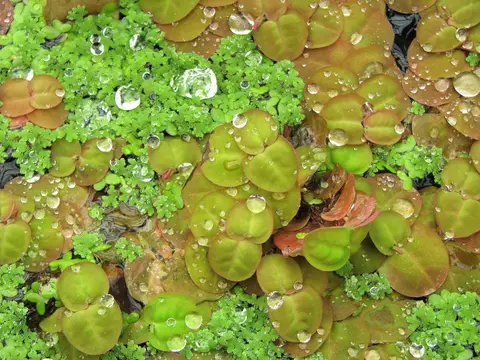 ProfileRed root floater (Phyllanthus fluitans)
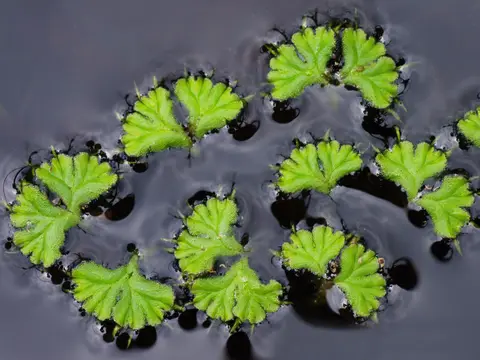 ProfileRicciocarpus (purple-fringed riccia)
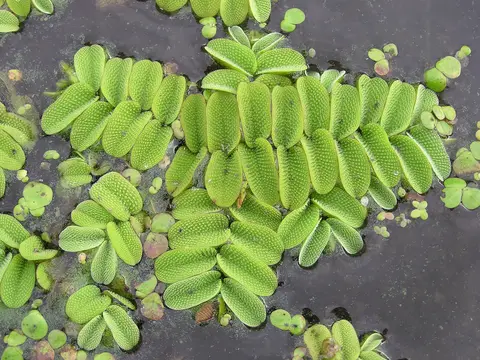 ProfileSalvinia (Salvinia natans)
- ListEasy plants
- Gear reviewPlanted aquarium LED lights
- Gear reviewAquarium plant fertilizers
- GuidePlanted Tank for Beginners: Light, Substrate, Fertilizer and CO2
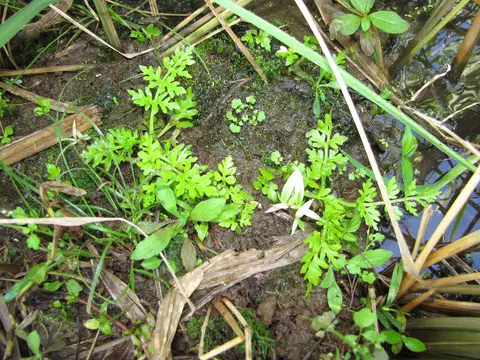 ProfileWater sprite
Floating plants → Aquarium plants → Complete aquarium guide →