If you buy through our links, Amazon pays us a small commission at no extra cost to you. That’s how we keep the site running. How we choose.
Floating plants grow on the surface with their roots hanging into the water. They take carbon dioxide from the air, so they grow fast even in tanks without CO2 and absorb large amounts of nitrate and phosphate. That makes them one of the simplest tools to fight algae.
They also soften the light, which shy fish such as bettas, gouramis, killifish and hatchetfish appreciate, and their roots shelter fry and shrimp.
- Red root floater: turns red under strong light and with low nitrate.
- Frogbit and salvinia: easy to control and very effective nutrient sponges. Giant salvinia (Salvinia molesta) is a federal noxious weed in the US, so stick to the small species.
- Duckweed: grows extremely fast and is almost impossible to eradicate once established; add it only if you really want it.
- Ricciocarpus: a decorative floating liverwort.
Keep floating plants under control: if they cover the whole surface, plants below get too little light and gas exchange drops. Remove a portion every week and use a floating ring to keep an open area for feeding. Strong surface agitation pushes them into the filter, so gentle flow suits them best. Never dump excess plants outdoors; bag them and throw them in the trash.
Floating plants
| Species | Light | CO₂ | Temp. | Difficulty |
|---|---|---|---|---|
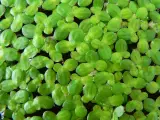 Duckweed (Lemna minor) Lemna minor | Medium | Not needed | 50–86 °F (10–30 °C) | Easy |
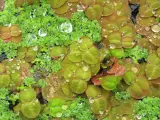 Red root floater (Phyllanthus fluitans) Phyllanthus fluitans | Medium | Not needed | 72–82 °F (22–28 °C) | Moderate |
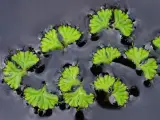 Ricciocarpus (purple-fringed riccia) Ricciocarpos natans | Medium | Not needed | 59–82 °F (15–28 °C) | Moderate |
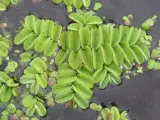 Salvinia (Salvinia natans) Salvinia natans | Medium | Not needed | 64–82 °F (18–28 °C) | Easy |
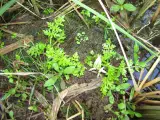 Water sprite Ceratopteris thalictroides | Medium | Not needed | 68–82 °F (20–28 °C) | Easy |
No species match those filters.