If you buy through our links, Amazon pays us a small commission at no extra cost to you. That’s how we keep the site running. How we choose.
Contents
Overview
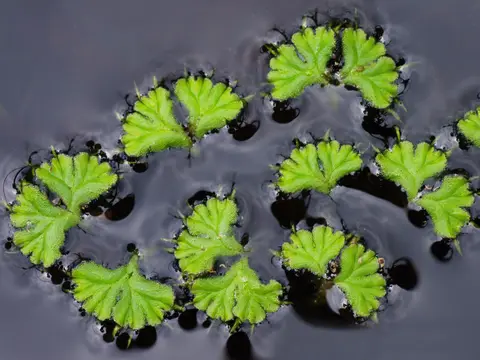
Ricciocarpos natans, usually just called ricciocarpus or purple-fringed riccia, is not a flowering plant but a liverwort, a distant relative of mosses. It forms small floating, heart- or fan-shaped thalli about half an inch to an inch (1 to 2 cm) wide, green on top with long purple scales underneath that look like roots. It lives in ponds and still water on almost every continent.
Hobbyists like it for its unusual look, unlike any other floater, and for the dense, low mat it creates, giving shade without long dangling roots. It is a good pick for shrimp tanks, betta tanks and low-flow nano tanks.
Care and tank setup
It is easier than its cousin Riccia fluitans, but it has two firm needs: a calm surface and humid air. Condensation drips and strong water movement push it under and break it apart, so baffle the filter outlet and use a lid that does not drip directly onto it.
- Light: medium to high. In low light it turns pale and loses its purple fringe.
- Temperature: it handles cool to tropical water, but struggles above 82°F (28°C).
- Coverage: always leave open areas for gas exchange and for fish that come up to the surface.
Fish that pick at the surface, such as goldfish or some gouramis, can shred it. It does perfectly well with shrimp, small rasboras and bettas. Like any aquarium plant, never release it into ponds, lakes or streams.
Fertilizing and trimming
It feeds from the water column; a stocked tank plus a low weekly dose of liquid fertilizer is usually enough. If it yellows, check the light first and iron second. It needs no trimming: just scoop out thalli when they cover too much surface and remove broken or brown bits before they rot. In tanks with strong filters, it grows best inside a floating ring.
Propagation
It propagates by division: each thallus forks in two and, over time, the halves split apart into new plants. With good light and a calm surface it doubles in two to three weeks. To spread it on purpose, gently pull clumps apart with your fingers and distribute them across the surface, or move a few to another tank.
Recommended equipment
What you need to keep the Ricciocarpus (purple-fringed riccia) healthy, checked against Amazon stock.


Frequently asked questions
What light and CO₂ does Ricciocarpus (purple-fringed riccia) need?
Light: medium. CO₂: not needed. Growth: moderate.
Is it a good plant for beginners?
It’s manageable if you have decent lighting and fertilize regularly.
You may also like
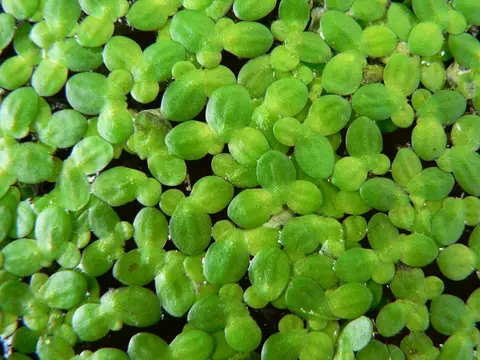 ProfileDuckweed (Lemna minor)
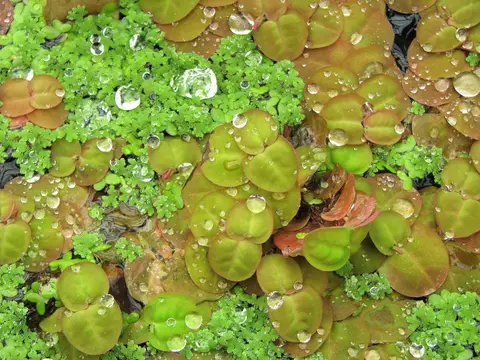 ProfileRed root floater (Phyllanthus fluitans)
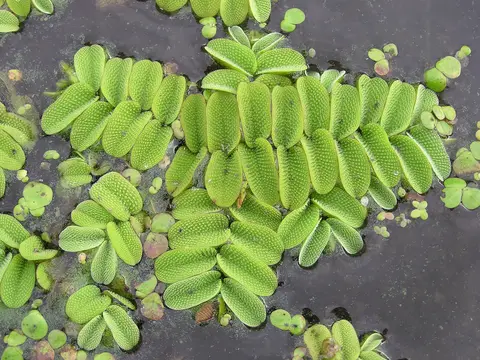 ProfileSalvinia (Salvinia natans)
- Gear reviewPlanted aquarium LED lights
- Gear reviewAquarium plant fertilizers
- GuidePlanted Tank for Beginners: Light, Substrate, Fertilizer and CO2
 ProfileWater sprite
- GuideCO2 in a Planted Tank: When You Need It and How to Dial It In
Floating plants → Aquarium plants → Complete aquarium guide →