If you buy through our links, Amazon pays us a small commission at no extra cost to you. That’s how we keep the site running. How we choose.
Contents
If your fish are gasping at the surface, sitting listless or dying for no obvious reason, the first thing to check is almost always ammonia, nitrite and nitrate. These are the three compounds of the nitrogen cycle, and they explain most water problems in a freshwater aquarium. In this guide we explain what each one is, which levels are safe, why they spike and how to bring them down quickly and safely without wiping out the bacteria colony that keeps your filter working.
The three numbers that matter: ammonia 0, nitrite 0 and nitrate below 25-40 ppm (under 20 ppm for shrimp and sensitive species). Any ammonia or nitrite reading above 0 in an already cycled tank is a warning sign.
What they are and where they come from
Fish excrete ammonia through their gills and urine, and leftover food, dead plant matter and any organic waste release it too as they break down. In a mature tank, two groups of bacteria living in the filter and substrate do the dirty work: one converts ammonia into nitrite and the other turns nitrite into nitrate. That process is the nitrogen cycle, and establishing it takes 4 to 6 weeks in a new tank, as we explain in our guide to aquarium cycling.
- Ammonia (NH3/NH4+): highly toxic. It burns gills and skin. Toxicity rises with pH and temperature: below pH 7 most of it is ammonium (NH4+), which is far less harmful; at high pH, free ammonia (NH3) is lethal even in small amounts.
- Nitrite (NO2-): also highly toxic. It enters the bloodstream and blocks hemoglobin, so fish suffocate even when the water has plenty of oxygen. Gills may turn brownish.
- Nitrate (NO3-): much less toxic, but it builds up constantly. At high, sustained levels it causes chronic stress, weaker immunity, faded colors and stunted growth, and it feeds algae.
Safe levels: reference table
Test kits report results in ppm (parts per million), which is the same as mg/L. This table shows how to read the results in a tropical community tank:
| Compound | Ideal | Caution | Danger |
|---|---|---|---|
| Ammonia (total) | 0 ppm | 0.25 ppm | 0.5 ppm or more (worse at high pH) |
| Nitrite | 0 ppm | 0.1-0.25 ppm | 0.5 ppm or more |
| Nitrate | Under 25 ppm | 40-80 ppm | Over 80 ppm |
| Nitrate (shrimp, discus, sensitive species) | Under 20 ppm | 20-40 ppm | Over 40 ppm |
Keep in mind that tap water may already contain nitrate, especially in farming areas. Test it before blaming the tank; if it comes out high, mixing it with RO (reverse osmosis) water can be worthwhile.
Why ammonia and nitrite spike
In an established tank, an ammonia or nitrite spike means something has upset the balance between how much waste is produced and how much the bacteria can process. The most common causes are:
- An uncycled tank: classic "new tank syndrome," from adding fish before there are enough bacteria.
- Overfeeding: anything not eaten within 2-3 minutes rots on the bottom.
- Too many fish, or a large group added all at once.
- A dead fish or snail hidden among plants or behind decor.
- Aggressive filter cleaning: rinsing it under the tap, replacing all the media at once, or cleaning the filter and gravel on the same day.
- A filter switched off for hours due to a power outage or failure: bacteria run out of oxygen and die.
- Medications, especially some antibiotics, that harm nitrifying bacteria.
High nitrate, on the other hand, usually builds slowly: too few water changes, heavy stocking, chronic overfeeding, a very dirty substrate or tap water that is already high in nitrate.
How to lower ammonia, nitrite and nitrate
Emergency: ammonia or nitrite above 0
- Do an immediate 30-50% water change with dechlorinator and water at the same temperature. If the reading stays high, repeat the next day.
- Stop feeding for 1-2 days, then offer very small portions.
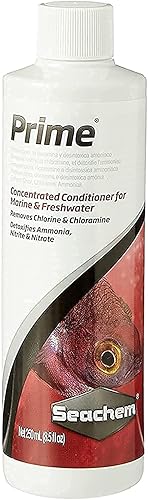
- Use a water conditioner that detoxifies ammonia and nitrite: some products make them temporarily less toxic for 24-48 hours while the bacteria catch up. It does not replace a water change.
- Add bottled bacteria to speed up the colony's recovery, especially after a filter mishap.
- Increase aeration with an air pump or more surface agitation: both bacteria and fish need it.
- Find the cause: dead fish, rotting food or a filter that has stopped.
Don't clean or replace your filter media during a spike. It's the instinctive reaction and the worst possible one: the filter is where nearly all of your bacteria live. Rinsing it under the tap or putting in new sponges will make the spike worse. And never change 100% of the water: the shock can be more harmful than the problem itself.
Keeping nitrate low long-term
- Regular water changes: 20-30% weekly is your main tool; no filter removes nitrate. See the step-by-step in our guide to aquarium water changes.
- Fast-growing plants: plants use nitrate as fertilizer. Floating plants and species like hornwort are especially effective.
- Less food, better quality: what they eat in 2-3 minutes, once or twice a day.
- Vacuum the gravel in sections to remove built-up organic waste.
- Filter maintenance that spares the bacteria: rinse sponges and ceramic media in water taken from the tank, only when flow drops; never replace all the media at once, and space filter cleaning and gravel vacuuming a week apart.
- Review your stocking: if you need huge water changes every few days to keep nitrate down, there are probably too many fish for the tank.
Test kits: which to use and when to test
Without testing, it's all guesswork. There are two kinds of aquarium test kits:
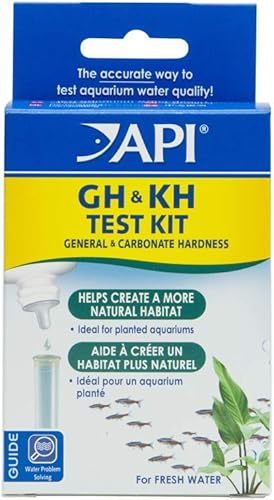
- Liquid drop kits: more accurate and cheaper in the long run. Brands such as API, JBL, Sera and Tetra sell kits covering ammonia, nitrite, nitrate, pH and KH. They're the best choice for cycling and troubleshooting.
- Test strips: quick and convenient for routine checks, but less reliable, especially for ammonia. Keep them tightly sealed and respect the expiration date.
When to test: daily or every other day while cycling; once a week in a stable tank (before the water change, to see peak nitrate); and any time fish act strangely, the water turns cloudy, or after adding fish, medicating or cleaning the filter. Sensitive species such as cherry shrimp are often the first to sound the alarm.
Common mistakes
- Testing only pH and assuming the water is fine.
- Trusting water that "looks clean": ammonia and nitrite are invisible.
- Rinsing the filter under the tap or replacing all the media at once.
- Using "nitrate remover" products instead of water changes: they mask the symptom, not the cause.
- Adding many fish at once to a newly cycled tank.
- Using expired or badly stored strips that give false readings.
- Not testing your tap water when nitrate won't come down despite water changes.
With a reliable test kit, consistent water changes and moderate feeding, ammonia and nitrite stay at 0 and nitrate stays under control. It's the foundation for everything else: more colorful, more active fish and far fewer diseases.
Recommended gear for this guide

Frequently asked questions
What nitrate level is safe in an aquarium?
Ideally keep it below 25-40 ppm in a community tank, and below 20 ppm with shrimp, discus or other sensitive species. Above 80 ppm the risk to fish is high.
Why do I have nitrite in a tank that was already cycled?
Usually because something has harmed the bacteria or the waste load has jumped: rinsing the filter under the tap, replacing all the media, a long power outage, medication, a dead fish or overfeeding. Do 30-50% water changes and track down the cause.
How long does it take for nitrite to drop?
Water changes lower the level immediately, but the problem is only solved once the bacteria recover, which can take from a few days to two weeks. Bottled bacteria and leaving the filter alone help shorten that time.
Are test strips reliable?
They're fine for quick checks, but less accurate than liquid drop kits, especially for ammonia. For cycling a tank or diagnosing a problem, a liquid test kit is the better choice.
Do plants remove nitrate?
They help a lot because they use it as a nutrient, especially floating and fast-growing plants. But they don't replace weekly water changes, except in heavily planted, lightly stocked tanks.
You may also like
- GuideAquarium Water Parameters: Ideal Ranges and How to Test
- GuideHow to Raise or Lower Aquarium pH Safely (Plus KH and GH)
- GuideAquarium Cycling: The Nitrogen Cycle, Testing and When to Add Fish
- Gear reviewAquarium water conditioners
- Gear reviewAquarium bacteria starters
- GuideAquarium Water Changes: How Much, How Often and How To
- Gear reviewAquarium water test kits
- GuideHow to Acclimate Fish: Floating, Drip Method and Quarantine
Water care & maintenance → See all guides → Complete aquarium guide →