If you buy through our links, Amazon pays us a small commission at no extra cost to you. That’s how we keep the site running. How we choose.
Contents
Ich, also called white spot disease, is the most common illness in freshwater aquariums. Almost every fishkeeper runs into it sooner or later, especially after adding new fish or after a sudden temperature drop. The good news is that when it is caught early and treated properly, it can be cured in the vast majority of cases. In this guide we explain what it is, how its life cycle works (the key to treating it), what the symptoms are and how to treat it step by step.
General information, not veterinary advice. This guide summarizes common practice in the hobby. Every medication has its own dosage and warnings: always follow the instructions on the label and, if in doubt or with valuable fish, ask a specialist store or an aquatic veterinarian.
What ich is
Ich is caused by a parasitic protozoan, Ichthyophthirius multifiliis, which lodges under the skin and in the gills of fish. The white dots you see, about the size of a grain of salt or sugar, are parasites encapsulated in the fish's tissue. It nearly always appears when two things happen together: the parasite enters the tank (with fish, plants or water from another tank) and the fish are stressed or run down from shipping, temperature swings or poor water quality. That is why the best prevention is proper acclimation with quarantine.
The life cycle: why treatment takes time
Understanding the cycle is what separates a treatment that works from one that fails. The parasite goes through three stages:
- Trophont (on the fish): it lives under the skin and feeds. This is the visible white spot. At this stage medications cannot reach it, because it is shielded by the fish's tissue.
- Tomont (on the bottom): once mature, it drops off the fish, settles on the substrate or plants and forms a cyst in which it divides into hundreds or thousands of new parasites.
- Theronts (free swimmers): they burst out of the cyst and swim in search of a host. If they do not find one within a day or two, they die. This is the only stage vulnerable to treatment.
How long the cycle takes depends heavily on temperature:
| Water temperature | Approximate cycle length |
|---|---|
| 59°F (15°C) | 2-3 weeks or more |
| 70°F (21°C) | About 1-2 weeks |
| 75-79°F (24-26°C) | About 4-7 days |
| 82-86°F (28-30°C) | About 3-4 days |
That is why treatment has to last several days: you need to wait until every parasite on the fish has dropped off and reached the free-swimming stage. And that is why you treat the whole tank, not just the spotted fish: cysts sit on the bottom and theronts are throughout the water, even if other fish show no symptoms yet.
Symptoms of ich
- Small, round white spots on the fins, body and gills, as if the fish had been sprinkled with salt.
- Fish flashing or rubbing against rocks, driftwood or the substrate.
- Clamped fins, lethargy and loss of appetite.
- Rapid breathing or gasping at the surface when the gills are affected.
- In advanced cases, cloudy-looking skin or excess slime.
Do not confuse it with breeding tubercles on some fish (such as male goldfish in spawning season) or with velvet (oodinium), which looks like a finer, gold-colored dust. If you are unsure, check our guide to fish diseases.
Step-by-step treatment
- Remove activated carbon (and other chemical media) from the filter, because it pulls medication out of the water. Keep the filter running with its biological media.
- Do a 25-30% water change and vacuum the substrate to remove some of the cysts.
- Raise the temperature gradually, if your fish can handle it: about 2°F (1°C) every 12-24 hours up to 82-86°F (28-30°C). This speeds up the parasite's cycle and shortens treatment. Use a reliable aquarium thermometer to keep track.
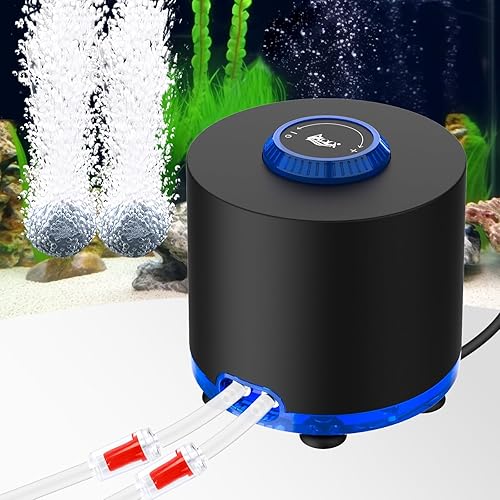
- Increase aeration: warm water holds less oxygen, and fish with damaged gills struggle to breathe. An airstone on one of the air pumps we recommend helps a lot.
- Dose an ich-specific medication (API, Seachem, Hikari, Tetra and others make them, based on malachite green, formalin, copper or other active ingredients). Follow the label's dose and schedule exactly.
- Keep treating for several days after the last spot is gone, as the manufacturer directs (often 3 days or more), because cysts may still be hatching on the bottom.
- When you finish, do a large water change, put fresh carbon back for a few days if you want to remove residue, and bring the temperature down gradually to its normal level.
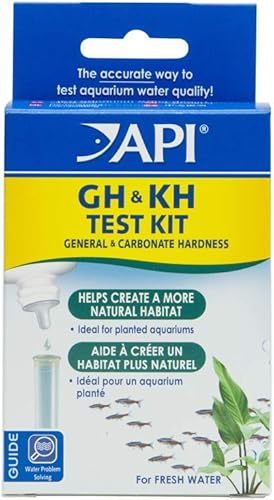
Tip: during treatment, check ammonia and nitrite with a water test kit. Some medications can affect filter bacteria, and an ammonia spike stresses the fish even more. Feed lightly.
When not to raise the temperature
Going up to 82-86°F (28-30°C) is not right for every tank. Coldwater fish (goldfish, White Cloud minnows), panda corys and other species that prefer cooler water, or tanks with shrimp may not tolerate it well. In those cases keep the temperature within the species' range and rely on the medication, even if treatment takes longer. Review the ranges in our guide to aquarium temperature.
Precautions: scaleless fish, invertebrates, plants and salt
Not every tank inhabitant tolerates treatment equally:
- Scaleless or fine-scaled fish (loaches, corydoras, plecos, knifefish, small tetras): they tend to be more sensitive to medications. Many labels call for a reduced dose with them. The clown loach is notorious for catching ich easily and for being delicate with treatments.
- Shrimp and snails: copper and many other active ingredients are toxic to invertebrates. If you keep cherry shrimp or other inverts, make sure the product is invertebrate-safe or move them to another tank during treatment.
- Salt: non-iodized aquarium salt is sometimes suggested as support, but it has drawbacks. Many plants do not tolerate it, and loaches, corydoras and other scaleless fish are sensitive to it. If you use it, do so only with species that tolerate it, at low doses, and never without researching first.
- Plants: some medications harm delicate plants. Read the label.
- Filter bacteria: do not clean the filter during treatment.
| Measure | Benefit | Caution |
|---|---|---|
| Raising temperature | Shortens the parasite's cycle | Only if your species tolerate it; add aeration |
| Ich medication | Kills theronts | Follow the label; care with inverts and scaleless fish |
| Salt | Support in some cases | Bad for many plants and scaleless fish |
| Water changes and vacuuming | Removes cysts and improves water | Match temperature and use conditioner |
Prevention: quarantine and a stable tank
The most effective way to avoid ich is not to bring it in and not to give the parasite stressed fish:
- Quarantine all new fish for 2-4 weeks in a separate tank.
- Never pour store water into your tank when acclimating.
- Stable temperature: a properly sized heater (roughly 4 watts per gallon, or 1 W per liter) prevents sudden drops that weaken fish.
- Good water quality: ammonia and nitrite at 0 and weekly 20-30% water changes.
- Avoid stress: sensible stocking, compatible species and hiding places. More ideas in why are my fish dying.
Common mistakes when treating ich
- Stopping treatment once the spots disappear: cysts on the bottom reinfect the fish days later.
- Treating only the affected fish in a separate container and leaving the tank untreated.
- Leaving activated carbon in the filter.
- Raising the temperature all at once, or doing it with species that cannot handle it.
- Using full doses with scaleless fish or invertebrates without reading the label.
- Mixing several medications at the same time.
- Forgetting extra aeration in warm water.
With patience, a full course of treatment and some prevention, ich stops being a serious threat to your aquarium.
Recommended gear for this guide

Frequently asked questions
Will ich go away on its own?
In very mild cases with strong fish it sometimes clears up, but waiting is risky. The parasite multiplies with every cycle, and an outbreak that starts with a few spots can spread through the whole tank within days. It is best to treat as soon as you notice it.
How long does ich treatment take?
It depends on temperature and the medication. At 82-86°F (28-30°C) about a week is often enough; at lower temperatures it can take two weeks or longer. Keep treating for a few days after the last spot disappears, as the label directs.
Why do I need to treat the whole tank?
Because the parasite is not only on the spotted fish. Its cysts are on the bottom and its free-swimming stage is throughout the water, so the other fish are probably already exposed even if they show no symptoms yet.
Can I use salt to treat ich?
Salt is sometimes used as support, but many plants do not tolerate it and scaleless fish such as loaches and corydoras are sensitive to it. Research carefully, use low doses only with species that tolerate it, and never combine it with medication without confirming it is safe.
Is ich treatment safe for shrimp?
Many medications, especially copper-based ones, are toxic to shrimp and snails. Check the label to see whether the product is invertebrate-safe, or move them to another tank during treatment.
You may also like
- GuideAquarium Fish Diseases: Symptoms, Causes and What to Do
- GuideWhy Are My Fish Dying? Stress Signs, Causes and Fixes
- GuideCloudy Aquarium Water: White, Green or Brown and How to Clear It
- GuideHow to Acclimate Fish: Floating, Drip Method and Quarantine
- Gear reviewAquarium thermometers
- Gear reviewAquarium air pumps and air stones
- Gear reviewAquarium water test kits
- GuideAquarium Algae: Types, Causes and How to Get Rid of Them