If you buy through our links, Amazon pays us a small commission at no extra cost to you. That’s how we keep the site running. How we choose.
Contents
Our top 3 picks
Stock checked on October 7, 2026


aquarium thermometers comparison, in stock
Aquarium Thermometer Digital Fish Tank Thermometer with Spare Battery

Aquarium Thermometer Digital Fish Tank Thermometer with Spare Battery 2pack
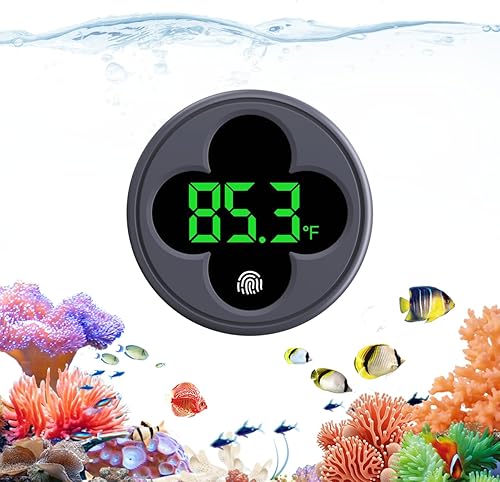
PAIZOO Wireless Aquarium Thermometer Accurate ±0.9℉, Replaceable Battery
LLC 43330972: Liquid Crystal Aquarium Thermometer Vertical

PAIZOO Aquarium Thermometer Digital, Highly Accurate Fish Tank Thermometer

AQUANEAT 2 Pack Aquarium Thermometer, Fish Tank Thermometer, Digital Temperature Test, with Large LCD Display
AQUANEAT Aquarium Thermometer, Fish Tank Thermometer, Digital Temperature Test, with Large LCD Display (1 Pack)

AQUANEAT Aquarium Thermometer, Fish Tank Thermometer, Digital Temperature Test, with Large LCD Display (6 Packs)
AcuarioSano rating: combines the average rating and the number of buyer reviews on Amazon. No brand pays to be featured.
Why you need a thermometer even with a heater
Many beginners assume that if the heater is set to 78 °F, the water is 78 °F. Not always: heater dials are often off by 2-4 °F, thermostats can stick, and in summer the water warms up on its own from room heat or the light. The thermometer is your early-warning system: one glance a day is enough to catch a problem before it hurts your fish.
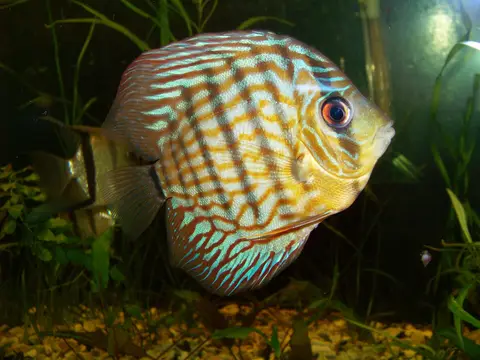
Most tropical fish do well between 75 and 80 °F (24-27 °C). Species like the betta or discus prefer the upper end, while goldfish and other coldwater fish are happier below 72-73 °F (22-23 °C). Knowing the real temperature lets you adjust the heater or react during a heatwave. You'll find species ranges in our aquarium temperature guide.
Types of aquarium thermometer
| Type | Typical accuracy | Pros | Cons |
|---|---|---|---|
| Digital with probe | ± 1-2 °F (0.5-1 °C) | Easy to read, sometimes with alarm and min/max memory | Needs a battery; probe cable |
| Glass (in-tank) | ± 2 °F (1 °C) | Cheap, no batteries, measures the water itself | Fragile; suction cup comes loose; small scale |
| Stick-on (LCD strip) | ± 2-4 °F (1-2 °C) | Very cheap, sticks on the outside | Measures the glass, not the water; affected by light and room |
| Floating or submersible digital | ± 1-2 °F (0.5-1 °C) | No cables, display in the water | Sealed battery; can fog up |
Digital with probe
The most convenient option: the display sits outside the tank while the submerged probe reads the water. Many models from brands like Hygger, JBL or generic makers include a high and low temperature alarm, which is great for catching a failed heater. Make sure the probe is fully submersible and the cable is long enough. Most let you switch between °F and °C.
Glass
The classic glass thermometer with a suction cup (Tetra, Marina, JBL…) is still reliable if it's well made. Pick one with a large, readable scale and avoid mercury: almost all now use colored alcohol, which is safer if it breaks.
Stick-on
Liquid-crystal strips stick to the outside of the glass. They're fine for a quick reading, but they measure the glass, which is influenced by room air, sunlight or the light fixture. Use them as a backup, not as your only thermometer.
Tip: check a new thermometer against a reference one, or a digital kitchen thermometer in a glass of water. If they differ by more than 2 °F, note the offset and keep it in mind.
Where to place the thermometer
Put it on the opposite side from the heater, at mid-depth, so you read the coolest water. If it sits next to the heater it will read high and give you a false sense of security. Also avoid the filter outlet and the spot right under the LED light.
Warning: if a tropical tank reads above 86 °F (30 °C), switch off the light, check the heater and increase aeration. Warm water holds less oxygen and fish can suffocate even when every other parameter is fine.
Common mistakes
- Trusting the heater dial alone.
- Placing the thermometer right next to the heater.
- Relying only on a stick-on strip in a sunny room.
- Letting the digital's battery die, right when summer hits.
- Never looking at it: a thermometer only helps if you check it daily.
We compare spec sheets, verified reviews and real-world use criteria, but we don't physically test the products.
Frequently asked questions
Which aquarium thermometer is most accurate?
Generally a good digital thermometer with a submerged probe, accurate to within 1 to 2 °F. Quality glass thermometers are also reliable; stick-on strips are the least accurate.
Where should I put my aquarium thermometer?
On the side opposite the heater, at mid-depth, away from the filter outlet and direct light, so it reads the coolest water in the tank.
Do stick-on aquarium thermometers work?
For a quick check, yes, but they measure the glass rather than the water, so room temperature affects them. Use them alongside an in-tank or digital thermometer.
How often should I check the temperature?
Once a day, for example at feeding time. During heatwaves or after replacing a heater, check two or three times a day.