If you buy through our links, Amazon pays us a small commission at no extra cost to you. That’s how we keep the site running. How we choose.
Contents
Our top 3 picks
Stock checked on October 7, 2026


automatic fish feeders comparison, in stock
Automatic Fish Feeder for Aquarium Easy Setup & 4 Timers Black
Automatic Fish Feeder for Aquarium Easy Setup & 4 Timers Green
Automatic Fish Feeder for Aquarium Easy Setup & 4 Timers Blue

FISHNOSH Automatic Fish Feeder for Aquarium with Digital Thermometer - 2026 Auto Fish Food Dispenser Programmable…

Freesea Automatic Fish Feeder for Aquarium: One-Touch Easy Setup & 3 Timers

DXOPHIEX Automatic Fish Feeder Food Dispenser Vacation Fish Feeder
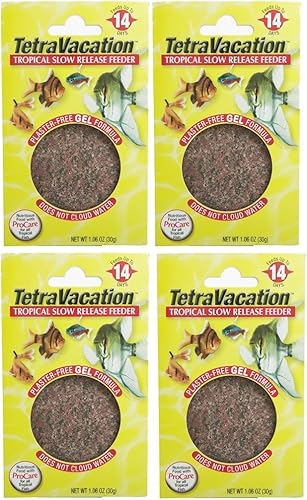
Tetravacation 14-Day Feeder For Tropical Fish. 4 Pack (4.24 oz total).
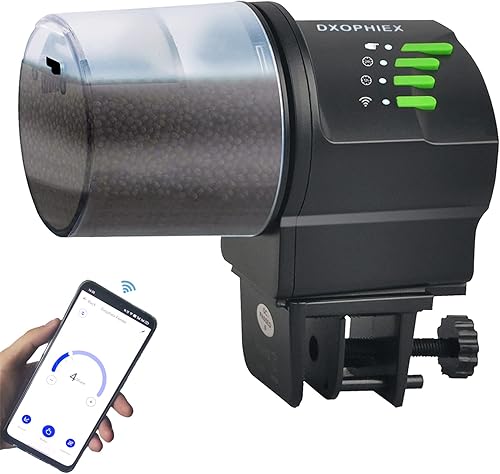
DXOPHIEX WiFi Fish Feeder Automatic Fish Feeder Automatic Dispenser
AcuarioSano rating: combines the average rating and the number of buyer reviews on Amazon. No brand pays to be featured.
When you actually need an automatic feeder
A healthy adult fish in a cycled, stable tank can easily go a weekend without food, and most community species handle 5-7 days of fasting with no ill effects. So for short trips the safest option is to leave nothing at all: the water stays clean and there is zero risk of overfeeding.
An automatic feeder makes sense for trips longer than a week, for fry or young fish that need frequent meals, and for tiny species with a fast metabolism. It is also handy day to day if your schedule is irregular, as long as you stick to the rule of feeding only what the fish eat in 2-3 minutes. The full travel plan is in what to do with your aquarium on vacation.
Feeder types: rotating drum, carousel and compartments
- Rotating drum: a cylinder with an adjustable slot turns at the programmed time and drops a portion. It is the most common design (Eheim, Fluval, Tetra and Hygger all make one). It works well with crushed flakes, small pellets and micro pellets; the portion depends on how wide the slot is and how many turns it makes.
- Carousel or compartment feeders: a wheel with 14-28 cells that opens one at a time. Each portion is fixed and known, which prevents surprises, and it accepts sinking wafers or mixes. The downside is that autonomy is limited to the number of cells.
- Wi-Fi or app feeders: let you schedule and check feedings from your phone, and some warn you when the drum is empty. They are convenient but depend on your home network and the maker's app.
| Type | Portion accuracy | Food it handles | Autonomy | Best for |
|---|---|---|---|---|
| Rotating drum | medium (needs calibrating) | flakes, small pellets | weeks | community tanks |
| Carousel with cells | high (fixed portion) | pellets, wafers, mixes | 14-28 feedings | 1-2 week trips, bottom feeders |
| Wi-Fi / app | medium-high | depends on model | weeks | remote monitoring |
The big enemy: humidity
Moisture rising from the tank makes flakes clump, so they stick inside the drum and stop dropping, or they fall all at once in a lump. To avoid this, pick a model with a built-in fan or a sealed hopper, mount it away from the filter outlet and the air stone, and prefer small pellets or micro pellets, which handle humidity better than flakes. If your tank has a lid, mount the feeder over the feeding hatch and keep the lid closed so steam does not get into the drum.
Tip: start using the feeder at least one week before you leave. That way you confirm the portion is right, the food does not clump and the fish learn to show up at feeding time.
How much food to program
The usual setting is one feeding a day, slightly smaller than your normal portion. While you are away nobody will remove leftovers or do water changes, so it is better to underfeed. If you keep bottom feeders, add a wafer in one of the cells or rely on what reaches the substrate. Check portion sizes in our guide on how much and how often to feed fish.
Large or special foods are a poor match for feeders: a betta needs very little and a drum can easily drop too much, while goldfish eat large pellets that may jam the slot. In those cases a compartment model with counted portions is more reliable.
Common mistakes
- Setting up the feeder the night before you leave without knowing how much it really drops.
- Using large flakes that clump in humid air and jam the drum.
- Programming two or three feedings "just in case": the fastest route to an ammonia spike.
- Forgetting to check the batteries, or having no plan for a power outage with plug-in models.
- Relying on plaster vacation feeder blocks: they cloud the water and provide little real food.
- Not asking anyone to check the tank on trips longer than 10-14 days.
Warning: a feeder that dumps its whole load at once can kill your fish through water pollution. An unfed tank is safer than an untested feeder. Put in fresh batteries before you go, and do your 20-30% water change and filter cleaning a few days earlier, not on departure day.
We compare spec sheets, verified reviews and real-world use criteria, but we do not physically test the products: use the models above as a starting point and check each listing for the dispensing system, hopper capacity and power source (batteries or plug-in).
Frequently asked questions
How long can aquarium fish go without food?
A healthy adult fish in a stable tank can easily go a weekend and generally 5-7 days without eating. For longer trips, or with fry and very small species, use a tested automatic feeder or a trusted person.
What food works best in an automatic feeder?
Small pellets or micro pellets, because they handle humidity better than flakes and dispense more evenly. Flakes are fine if crushed and the feeder has a fan or sealed hopper.
How many feedings should I program while I'm away?
Usually one a day, slightly smaller than your normal portion. Nobody will remove leftovers or change the water, so underfeeding is safer than overfeeding.
Do vacation feeder blocks work?
We do not recommend them as the main solution: they dissolve unevenly, can cloud the water and upset water parameters. For a few days, fasting is better; for long trips, use a tested automatic feeder.
You may also like
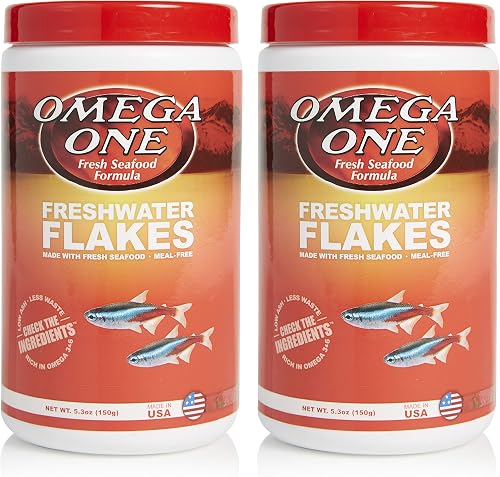 Gear reviewFish flakes and micro pellets
 Gear reviewFood for bottom feeders
 Gear reviewBetta fish food
- GuideLeaving Your Fish Tank on Vacation: Food, Lights and Heat
- GuideHow Much and How Often to Feed Aquarium Fish
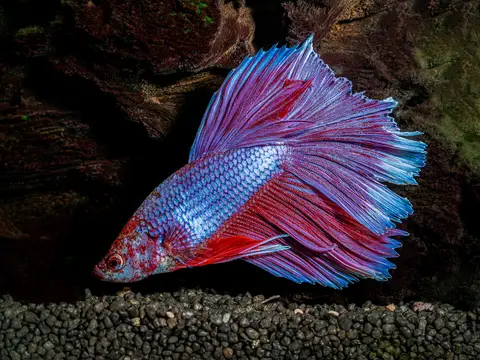 ProfileBetta fish
- GuideAquarium Water Changes: How Much, How Often and How To
- GuideHow Many Hours of Light Does an Aquarium Need? Photoperiod Guide