If you buy through our links, Amazon pays us a small commission at no extra cost to you. That’s how we keep the site running. How we choose.
Contents
Our top 3 picks
Stock checked on October 7, 2026


aquarium filter media comparison, in stock
Fluval Zeo-Carb, Chemical Filter Media Aquariums, White, 3 Count, 150-gram
Marineland Black Diamond Carbon Filter Media for Aquariums, 22 oz

Aquatic Experts Aquarium Filter Floss for Fish Tank Filters - FilterFirst Aquarium Filter Pad - Media Roll for Crystal…

Marineland Diamond Blend Zeolite & Carbon Filter Media, 50 oz
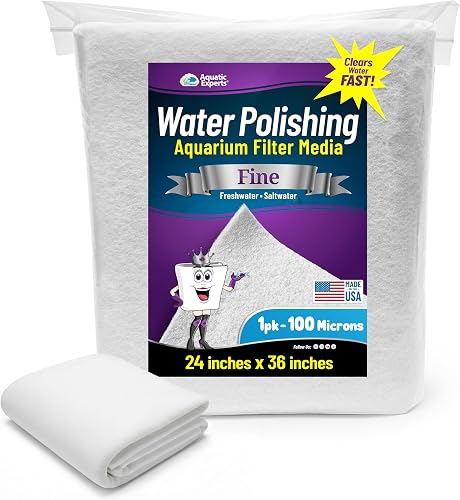
Aquatic Experts Aquarium Polishing Filter Pad, Water Polishing Pad for Aquarium Filters, Filter Floss for Fish Tank…
Hipanda Bio Sponge Filter Media Pad,Filter Foam, 9" x 9" x 1", 2pcs

AQUANEAT Replacement Canister Filter Pads Compatible with Cascade 700/1000 CCF2UL/CCF3UL Generic Aquarium Floss Media

Aquarium Filter Media Pad Cut to Fit Roll, 12" x 72" (6 ft)
AcuarioSano rating: combines the average rating and the number of buyer reviews on Amazon. No brand pays to be featured.
Mechanical, biological and chemical
Three things happen inside a filter. Mechanical filtration traps particles: leftover food, waste, plant debris. Biological filtration is the most important: the bacteria living on the media surface convert toxic ammonia into nitrite and then into nitrate, which is far less harmful. Chemical filtration removes dissolved substances such as tannins, odors or leftover medication.
Each type of media does one or more of these jobs. Bacteria will colonize any surface, but the more porous it is, the more room they have. That is why ceramic media is the king of biological filtration, although a good sponge also hosts huge numbers of bacteria.
Types of filter media
| Media | Role | Lifespan | Notes |
|---|---|---|---|
| Coarse sponge | mechanical and biological | years (rinse it) | first stage, traps large debris |
| Fine sponge | mechanical and biological | 1-2 years | traps mid-size particles |
| Ceramic or sintered rings | biological | years | huge porous surface area |
| Plastic bio balls | biological | indefinite | less surface than ceramic; best in wet/dry trickle filters |
| Filter floss (polyester) | fine mechanical | weeks | polishes water crystal clear; toss it when dirty |
| Activated carbon | chemical | 3-4 weeks | occasional use, not permanent |
| Resins (e.g. Seachem Purigen) | chemical | rechargeable | organics and yellow-tinted water |
Brands such as Fluval, Seachem, Marineland, API and Eheim all sell their own ceramics and sponges, and most will work in any filter as long as they fit the baskets or media chamber.
What order to stack them in
The rule is simple: coarse to fine, in the direction the water flows.
- Coarse sponge or pre-filter: catches the big stuff and protects everything after it.
- Ceramic rings: the biological core, always after the mechanical stage so they do not clog.
- Fine sponge: a second mechanical barrier plus more biology.
- Filter floss: final polishing, right before the outlet.
- Carbon or resins, if you use them: last, once the water is free of particles.
In a canister filter each stage gets its own basket; in small filters there may only be room for a sponge and a handful of ceramic, and that is enough.
Tip: setting up a new tank? Ask a friend or your local fish store for a handful of ceramic media or a piece of sponge from a mature filter. It speeds up cycling the aquarium dramatically.
Maintenance: never all at once
Biological media does not wear out. Rinse sponges in tank water during your water changes and only replace them when they fall apart; swish ceramic media gently in that same water every few months; floss is the one thing you throw away when it gets dirty.
Warning: never replace all your media at once or rinse it under the tap. You would wipe out the bacterial colony and the tank would have to cycle again, with ammonia and nitrite spikes that can kill fish. If media needs renewing, replace no more than a third at a time, several weeks apart.
Activated carbon deserves a special note: it saturates within a few weeks and then does nothing. Use it only to remove medication residue, tannins from driftwood or a one-off problem. And always take it out during treatment, for example for ich, because it absorbs the medication.
Common mistakes
- Following the box and replacing cartridges or sponges every month.
- Putting ceramic media first, where it fills with gunk.
- Running activated carbon permanently "just in case".
- Packing floss so tightly that water cannot pass and flow drops.
- Skipping a pre-filter in shrimp tanks: baby cherry shrimp end up inside.
- Blaming the media when cloudy water is really caused by overfeeding or an uncycled tank.
We compare spec sheets, verified reviews and real-world use criteria, but we do not physically test the products: treat the options above as a starting point and check size and compatibility with your filter on each listing.
Frequently asked questions
What order should filter media go in?
Coarse to fine in the direction of water flow: coarse sponge, ceramic rings, fine sponge and floss last. If you use activated carbon or resins, they go in the final stage, once the water is free of particles.
How often should you replace filter media?
Ceramic media and sponges almost never: rinse them in tank water and only replace them when they fall apart, a portion at a time. Replace floss when it is dirty, and activated carbon every 3 to 4 weeks if you use it.
Do I need activated carbon in my aquarium?
It is not essential. It is useful now and then to remove medication, odors or the yellow tint from driftwood, but it saturates within a few weeks and must be removed during any treatment.
Are ceramic rings better than bio balls?
In submerged filters such as canisters and internal filters, porous ceramic rings offer far more surface area for bacteria. Plastic bio balls work best in wet/dry trickle filters, where water flows over them.
You may also like
 Gear reviewCanister filters
 Gear reviewInternal aquarium filters
 Gear reviewAquarium bacteria starters
- GuideAquarium Cycling: The Nitrogen Cycle, Testing and When to Add Fish
- GuideAquarium Water Changes: How Much, How Often and How To
- GuideIch (White Spot Disease) in Fish: Symptoms, Life Cycle, Treatment
- GuideAquarium Without a Filter or Heater: Can You Do It Safely?
- GuideAquarium Temperature: Ideal Range, Heaters, Summer and Outages