If you buy through our links, Amazon pays us a small commission at no extra cost to you. That’s how we keep the site running. How we choose.
Contents
Overview
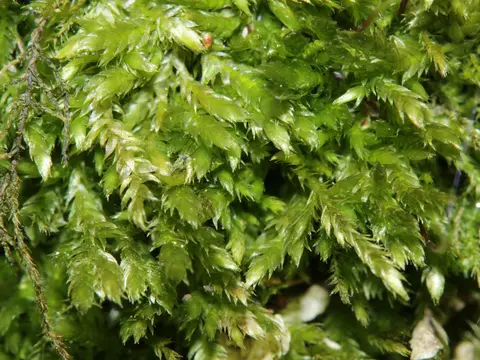
Flame moss is an Asian moss in the genus Taxiphyllum that is easy to recognize: instead of spreading sideways like Java moss, its stems grow upward and twist around each other, forming tufts that look like small green flames. Its exact wild origin is unclear, and it is sold under the name of its cultivated form.
Hobbyists love it because it adds vertical texture and volume in very little space. It shines in nano tanks, nature-style aquascapes and shrimp tanks, where it gives baby shrimp cover and a constant grazing surface. It is hardy and slow growing, which makes it a great choice for beginners who want something a little different.
Care and tank setup
It does well in almost any tropical tank with clean water and some flow. Under low or medium light it stays compact and darker; with stronger light and CO2 it grows denser and brighter green, but it also catches more algae if the tank is out of balance.
- Attaching: tie it to a rock or piece of wood with cotton thread or fine fishing line, or glue it with gel superglue (cyanoacrylate). Never bury it.
- Placement: on foreground stones or branches, in small clumps, so the "flames" stand out.
- Cleaning: moss traps debris; give it a gentle shake during water changes.
- Temperature: above 82 °F (28 °C) it weakens and may turn brown.
The classic mistake is placing it in a dead spot with no flow, where it collects gunk and gets smothered by hair algae.
Fertilizing and trimming
Its needs are modest: fish waste plus a low dose of a complete liquid fertilizer is usually enough. If it yellows, check iron and potassium. Trim it with curved scissors whenever it loses its shape and siphon out the clippings, because every loose fragment can attach where you don't want it. Regular trimming makes the clump thicker.
Propagation
It propagates by division, and it couldn't be easier. Cut a healthy tuft, split it into small portions and tie them onto a new rock or piece of driftwood. Within a few weeks the pieces anchor themselves with rhizoids and start sending up new vertical shoots. Trimmings work too. It does not produce spores in the aquarium, so all propagation is vegetative.
Recommended equipment
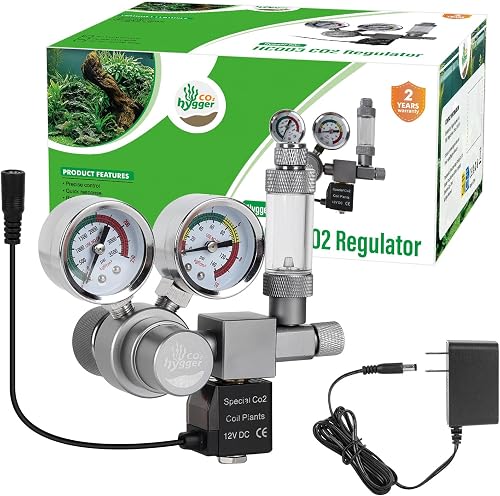
What you need to keep the Flame moss healthy, checked against Amazon stock.



Frequently asked questions
What light and CO₂ does Flame moss need?
Light: low. CO₂: optional (helps). Growth: slow.
Is it a good plant for beginners?
Yes: it’s one of the easiest plants and forgives mistakes with light and fertilizing.
You may also like
Aquarium mosses → Aquarium plants → Complete aquarium guide →