If you buy through our links, Amazon pays us a small commission at no extra cost to you. That’s how we keep the site running. How we choose.
Contents
Overview
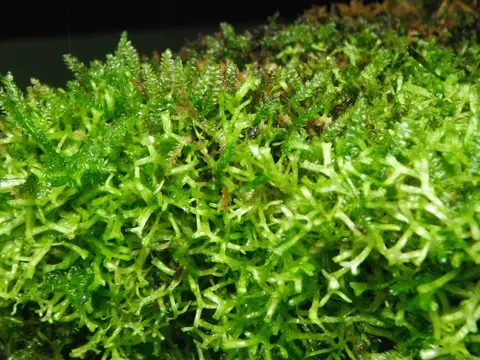
Christmas moss (Vesicularia montagnei) gets its name from its side branches, which grow in neat rows on both sides of the stem and droop slightly, like tiny fir trees. It comes from Southeast Asia and forms tidier, denser clumps than Java moss.
It is a favorite in aquascaping: on driftwood and rock it creates a miniature forest effect, and it looks especially striking on moss walls. Like every moss, it is excellent cover and grazing ground for shrimp and fry. It grows a little slower and is slightly fussier than Java moss, but it is still a good choice for anyone with a stable tank.
Care and tank setup
It does well in cycled tanks, nanos included. Tie it on with fine thread or attach it with gel superglue to driftwood, rock or stainless steel mesh, in thin layers so light reaches all of the moss.
- Light: moderate. In very low light it grows messy and loses its fir-tree shape.
- Temperature: best between 70 and 77 °F (21-25 °C); above 81 °F (27 °C) it struggles.
- Flow: gentle water movement keeps debris and algae from settling in it.
- Algae: pull out any hair algae as soon as it appears; once inside the clump it is very hard to remove.
It is ideal with dwarf shrimp, otocinclus and small fish. Avoid fish that dig or uproot plants.
Fertilizing and trimming
It needs few nutrients: a mild, copper-free liquid fertilizer at a low dose is usually enough. CO2 makes it grow faster and denser, but it is not required. Trim it with curved scissors every few weeks to the shape you want; frequent trimming encourages new branching. Siphon out the clippings after each trim.
Propagation
It propagates by division: separate a piece of the clump or use your trimmings and tie them onto another surface. Within a few weeks they start to grip and branch out. To cover a large area, spread many small pieces across the mesh instead of one thick mass; it will grow in more evenly.
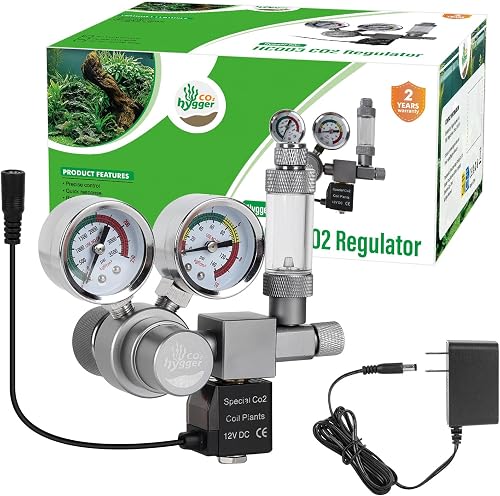
Recommended equipment
What you need to keep the Christmas moss healthy, checked against Amazon stock.



Frequently asked questions
What light and CO₂ does Christmas moss need?
Light: medium. CO₂: optional (helps). Growth: slow.
Is it a good plant for beginners?
It’s manageable if you have decent lighting and fertilize regularly.
You may also like
Aquarium mosses → Aquarium plants → Complete aquarium guide →