If you buy through our links, Amazon pays us a small commission at no extra cost to you. That’s how we keep the site running. How we choose.
Contents
Our top 3 picks
Stock checked on October 7, 2026

hang-on-back filters comparison, in stock
Seachem Tidal Filter, 35 gal. (135 L) NA 120 V, 60 Hz, US, 2P
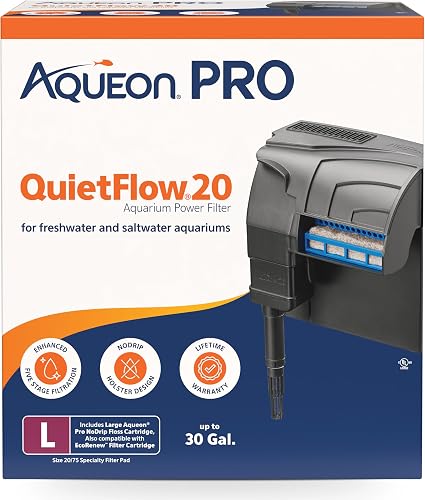
Aqueon QuietFlow 20 LED PRO Aquarium Fish Tank Power Filter For Up To 30 Gallon Aquariums
Marineland Bio-Wheel Penguin 375 GPH Power Aquarium Filter

Marineland Bio-Wheel Penguin 450 GPH Power Aquarium Filter

Marineland Bio-Wheel Penguin 275 GPH Power Aquarium Filter
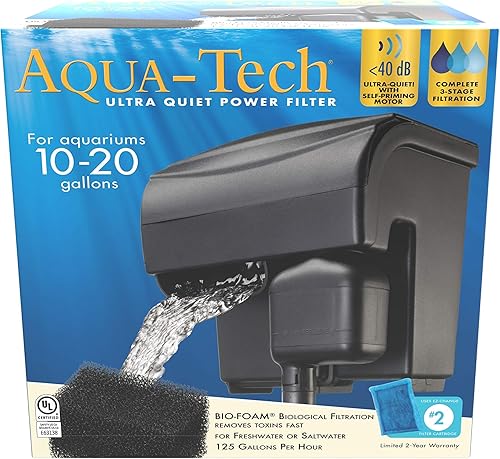
Aqua-Tech Ultra Quiet Power Filter For Aquariums, 10-20 Gallon

Aqua-Tech Ultra Quiet Power Filter For Aquariums, 20-40 Gallon

Ultra Quiet Power Filter For Aquariums, 30-60 Gallon
AcuarioSano rating: combines the average rating and the number of buyer reviews on Amazon. No brand pays to be featured.
How a hang-on-back filter works
A hang-on-back (HOB) filter, also called a power filter, is a box that hangs on the back glass, outside the aquarium. An intake tube reaches down into the water; the motor lifts the water into the box, runs it through the filter media and returns it over a spillway like a small waterfall. That flow breaks the surface and boosts gas exchange, so it adds plenty of oxygen without an air pump.
The big advantage is convenience: the lid opens from above and you can service the media without putting your hands in the tank. The whole interior stays free for fish, plants and decor. On the downside, it needs a few inches of clearance behind the tank and a lid with a cut-out, and its media capacity is limited compared with a canister.
What flow rate and size to choose
The general rule is to turn over 3 to 5 times the tank volume per hour. HOB filters lose a lot of flow as the media gets dirty, so do not buy the model that only just matches your tank. Models with an adjustable flow control are far more versatile.
| Tank | Approx. flow | What to look for |
|---|---|---|
| 5-10 gal (20-40 l) | 25-50 GPH (100-200 l/h) | flow control and a guarded intake |
| 10-20 gal (40-80 l) | 50-100 GPH (200-400 l/h) | room for sponge and ceramic media |
| 20-40 gal (80-150 l) | 100-185 GPH (400-700 l/h) | large media chamber or two filters |
In shrimp tanks, for example with red cherry shrimp, the intake needs a pre-filter sponge: without one, baby shrimp end up inside the filter. The same sponge softens the suction for slow swimmers like the betta.
What to check on the listing
- Custom media or cartridges: the best models let you fill the chamber with your own sponge, ceramic rings and floss. Cartridge-only filters lock you into buying refills and throwing away bacteria.
- Flow control: essential for small tanks or long-finned fish.
- Self-priming: some restart on their own after a power cut; others must be refilled by hand. Very handy if you travel.
- Adjustable intake tube: so it fits your tank height and keeps the intake near the bottom.
- Noise: motor hum and waterfall splash vary a lot between models.
Tip: keep the water level high, about half an inch to an inch (1-2 cm) below the spillway. The water falls a shorter distance and the filter makes far less splashing noise.
Maintenance and cartridges
Open the lid and rinse the sponge in tank water every 2-4 weeks, during your water changes. Clean the impeller and intake tube every few months, since debris builds up there and cuts flow. When you first install the filter, remember it needs weeks to be colonized by bacteria: that is part of cycling the aquarium.
Warning: manufacturers often say to replace the cartridge every month, but doing so throws away much of your bacteria and can cause ammonia spikes. Rinse the cartridge in tank water and only replace it when it is falling apart, or better, swap it for reusable sponge and filter media you will never have to replace all at once.
Common mistakes
- Letting evaporation drop the water level until the filter splashes or loses its prime.
- Replacing the whole cartridge every month because the box says so.
- Leaving the intake unguarded in a tank with shrimp or fry.
- Forgetting about clearance behind the tank and under the lid.
- Running a powerful HOB without flow control on a nano: for very small shrimp tanks a sponge filter is usually better.
We compare spec sheets, verified reviews and real-world use criteria, but we do not physically test the products: treat the models above as a starting point and confirm flow rate, flow control and media type on each listing.
Frequently asked questions
What is a hang-on-back filter?
It is a filter that hangs on the back rim of the tank, outside the water. It pulls water up through an intake tube, runs it through the filter media and returns it as a waterfall. It is also called a HOB or power filter.
Do I need to replace the HOB filter cartridge every month?
It is not recommended. Much of the filter's beneficial bacteria lives in the cartridge. Rinse it in tank water and only replace it when it falls apart, or switch to reusable sponge and ceramic media.
Why is my hang-on-back filter so loud?
Usually the water level has dropped and the waterfall falls further, or the impeller is dirty. Top the tank up to just below the spillway and clean the impeller and its shaft.
Can I use a hang-on-back filter in a shrimp tank?
Yes, as long as you add a pre-filter sponge to the intake so it does not suck up baby shrimp, and choose a model with flow control. In very small nano tanks, a sponge filter is even safer.
You may also like
 Gear reviewInternal aquarium filters
 Gear reviewSponge filters
 Gear reviewAquarium filter media
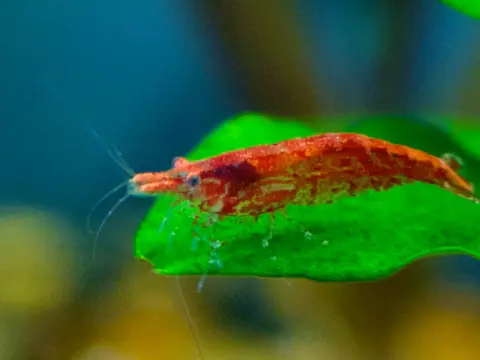 ProfileCherry shrimp
 ProfileBetta fish
- GuideAquarium Water Changes: How Much, How Often and How To
- GuideAquarium Without a Filter or Heater: Can You Do It Safely?
- GuideAquarium Temperature: Ideal Range, Heaters, Summer and Outages