If you buy through our links, Amazon pays us a small commission at no extra cost to you. That’s how we keep the site running. How we choose.
Contents
Overview
The Amazon sword (Echinodorus bleheri, now treated as a form of E. grisebachii) is one of the most iconic aquarium plants. It forms a rosette of long, lance-shaped, bright green leaves that all grow from a short rhizome. It comes from South America, where it grows along riverbanks and in seasonally flooded areas.
Hobbyists love it because it is tough, lives for years and becomes a centerpiece with very little effort. It is perfect for large community tanks, including angelfish and discus setups that mimic the Amazon. The only real catch is size: a mature plant can spread 16 to 20 inches (40-50 cm) wide.
Care and tank setup
This is not a nano plant. Give it a tank of about 30 gallons (110 liters) or larger and at least 18 inches (45 cm) tall. Use it as a single specimen in the back or center with open space around it, because the leaves shade nearby plants.
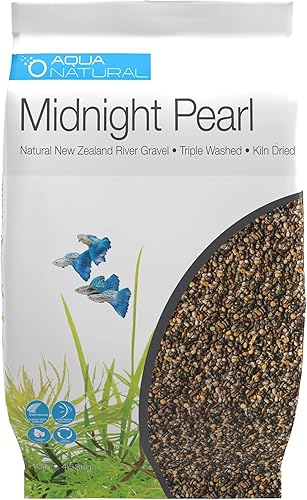
- Substrate: the key factor. It is a heavy root feeder, so use an aquasoil or fine gravel with root tabs.
- Light: medium. In very low light it grows slowly and stretches its leaf stalks.
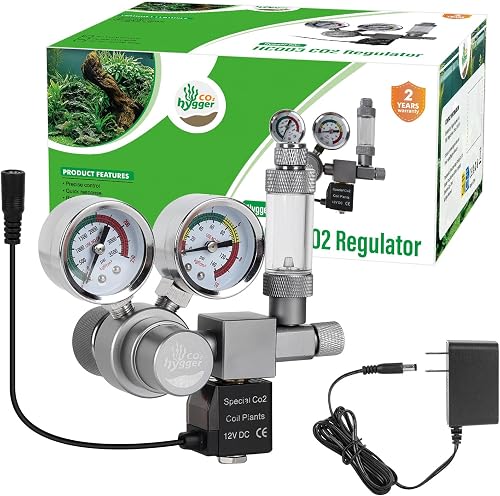
- CO2: optional.
When planting, bury only the roots and keep the crown above the substrate, or it will rot. Losing a few leaves after purchase is normal: store plants are often grown emersed and switch to submerged leaves within a few weeks. Avoid heavy diggers and plant eaters such as large cichlids or silver dollars.
Fertilizing and trimming
Root feeding is what matters most: push root tabs into the substrate near the plant every one to two months. New leaves that come in yellow with dark veins usually signal iron deficiency. Weekly liquid fertilizer helps but does not replace substrate feeding. Pruning simply means cutting old, damaged or overly long leaves at the base when they reach the surface. Avoid uprooting it to move it; the root system is extensive and the plant sulks afterward.
Propagation
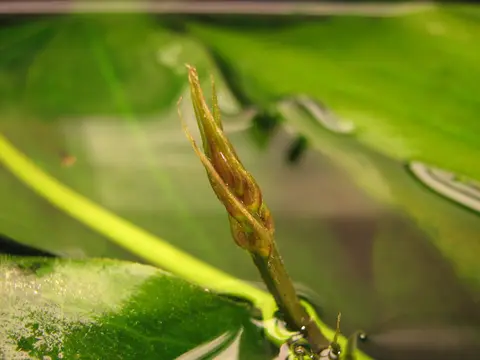
In aquariums it reproduces through adventitious plantlets. A healthy plant sends up long flower stalks that, underwater, produce baby plants instead of flowers. Let them grow until they have 4 or 5 leaves and their own roots, then cut them off and plant them. Large plants can also be divided at the rhizome, though that is riskier. If a stalk breaks the surface, it may bloom with small white flowers.
Recommended equipment
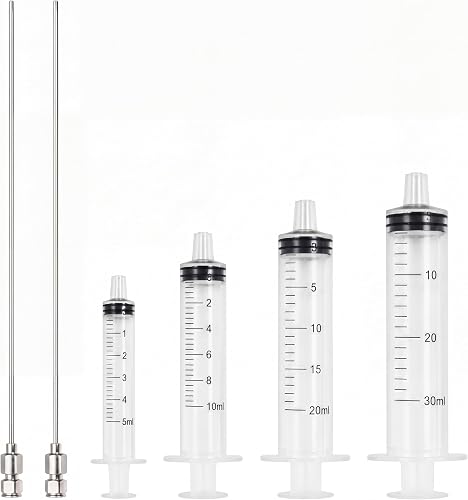
What you need to keep the Amazon sword (Echinodorus bleheri) healthy, checked against Amazon stock.

Frequently asked questions
What light and CO₂ does Amazon sword (Echinodorus bleheri) need?
Light: medium. CO₂: optional (helps). Growth: moderate.
Is it a good plant for beginners?
Yes: it’s one of the easiest plants and forgives mistakes with light and fertilizing.
You may also like
 ProfileVallisneria
- ProfileAponogeton ulvaceus
 ProfileAsian ambulia (Limnophila sessiliflora)
- Gear reviewAquarium plant fertilizers
- Gear reviewPlanted aquarium substrates
- Gear reviewPlanted aquarium LED lights
- GuidePlanted Tank for Beginners: Light, Substrate, Fertilizer and CO2
- GuideCO2 in a Planted Tank: When You Need It and How to Dial It In
Background plants → Aquarium plants → Complete aquarium guide →