If you buy through our links, Amazon pays us a small commission at no extra cost to you. That’s how we keep the site running. How we choose.
Contents
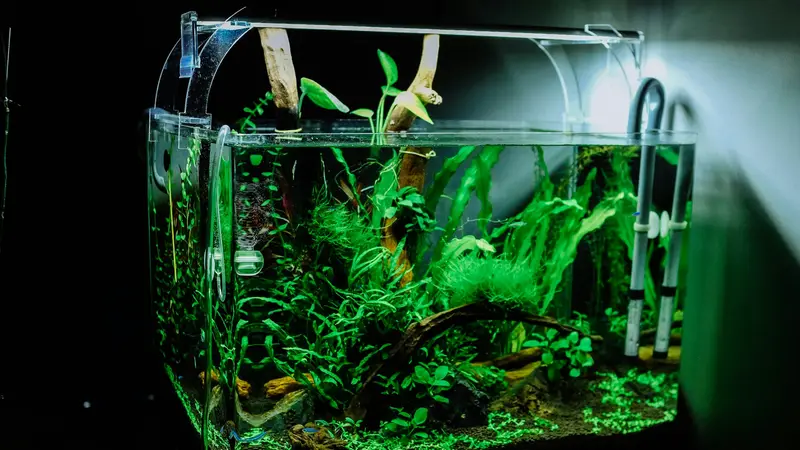
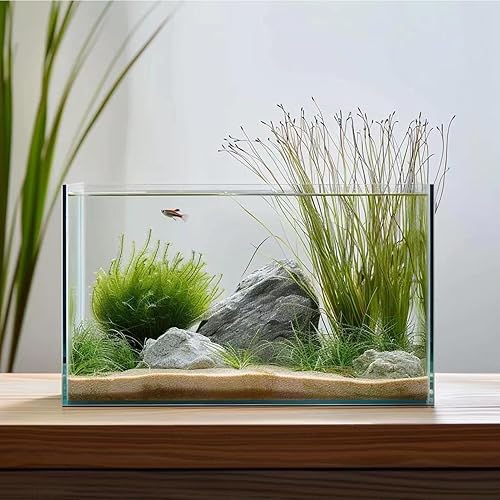
Nano tanks, roughly 3 to 8 gallons (10-30 L), are hugely popular: they fit on a desk or shelf, cost less to set up and, when well planted, look like miniature works of art. But their reputation as "perfect for beginners" is not quite accurate. The less water you have, the smaller your margin for error. In this guide we explain the pros and cons of a nano tank, which animals can really live in one and which cannot, what equipment you need and how to keep it stable.
In short: a nano tank works very well for shrimp, snails, a single betta or a school of tiny fish such as chili rasboras, as long as it is cycled, has a filter and heater, and gets weekly water changes. It is no place for goldfish, groups of guppies or any fish that grows beyond about 1.5 inches (3-4 cm).
Pros and cons of a nano tank
| Pros | Cons |
|---|---|
| Takes up little space and is light (a full 5-gallon nano weighs around 55-65 lb / 25-30 kg) | Water parameters change fast: overfeeding or one dead fish can spike ammonia |
| Cheaper equipment, substrate and plants | Temperature swings more with the room |
| Quick water changes with a single bucket or jug | Few suitable species |
| Ideal for shrimp and miniature aquascapes | Evaporation concentrates minerals, so you top off often |
| Low power use | Stocking mistakes show up right away |
The key concept is stability. In 25 gallons (100 L), a forgotten bit of food gets diluted and the bacteria deal with it without any visible effect. In 4 gallons (15 L), the same amount of waste means a concentration almost seven times higher. Temperature works the same way: a nano next to a window can swing several degrees in a day. A nano is not harder to do right, but it is much less forgiving of slip-ups.
Which species can live in a nano tank
Forget "an inch of fish per gallon" as a hard rule; what matters is each species' adult size, activity level and behavior. These are proven choices:
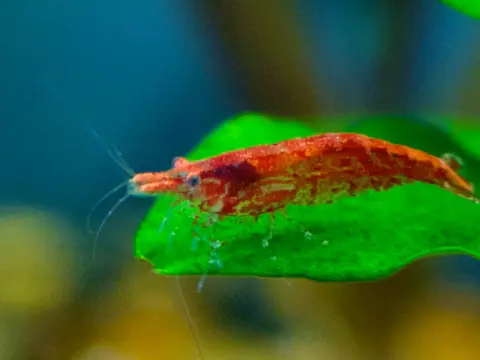
- Dwarf shrimp: cherry shrimp and other Neocaridina are the stars of the nano world. They add little bioload, breed on their own and are fascinating to watch. A colony of 10 is a good start from about 3 gallons (10-12 L).
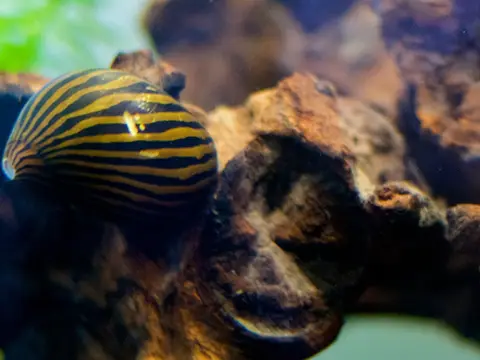
- Snails: the nerite snail cleans algae off glass and decor and cannot reproduce in freshwater. Ramshorn snails fit too, but they multiply if there is leftover food.
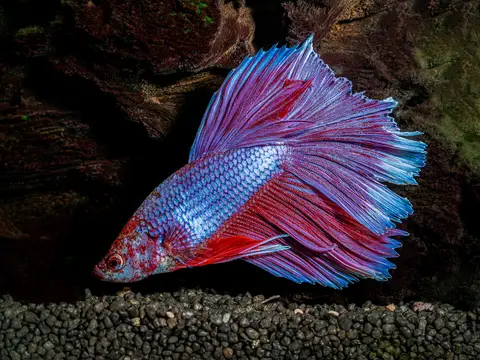
- Betta: a single male betta does well from about 5 gallons (20 L) with a heater, a gentle filter and plants. Always alone: no two males and no sorority in a nano.
- Tiny schooling fish: chili rasboras barely reach 0.8 inch (2 cm); a group of 8-10 fits in a well-planted nano of 7-8 gallons (25-30 L).
| Tank size | Suggested stocking |
|---|---|
| 3-4 gallons (10-15 L) | A Neocaridina shrimp colony and 1-2 nerite snails; no fish |
| 5 gallons (20 L) | One male betta with snails, or shrimp and snails |
| 7-8 gallons (25-30 L) | A group of 8-10 chili rasboras with shrimp and snails, or one betta with snails |
Be careful mixing a betta with shrimp: some bettas ignore them, others eat the babies or even the adults. If you try it, plant heavily and have a backup plan.
Species that do not belong in a nano tank
- Goldfish and other large coldwater fish: they grow beyond 6-8 inches (15-20 cm) and produce a lot of waste. They need large tanks, never bowls.
- Groups of guppies, platies and mollies: they are active and breed nonstop; within a few months the nano is overcrowded.
- Neon tetras, danios and barbs: fast swimmers that need horizontal space, at least 15 gallons (60 L).
- Common corydoras and plecos: they grow too big and produce too much waste.
- Angelfish, cichlids and puffers: because of size or territorial behavior, they do not fit any nano.
No unfiltered bowls: a fishbowl with no filter or heater is not a nano tank. A betta or goldfish kept that way suffers from ammonia and unstable temperature. And never release fish, shrimp or snails into rivers, lakes or ponds.
Equipment you need for a nano
- Tank with a lid: a lid reduces evaporation and stops jumpers. Many kits from Fluval, Dennerle, Aqueon or Marineland include a filter and light; compare them in our guide to nano tanks.
- Gentle filter: an air-driven sponge filter is perfect for shrimp and bettas because it cannot suck in babies and the flow is soft. Small internal or hang-on-back filters with adjustable flow also work.
- Heater: in a nano, use about 5-6 watts per gallon (1.5 W/L), meaning a 25 W heater for 4-5 gallons. A compact, adjustable model is best.
- Thermometer: essential, because temperature changes quickly.
- LED light: 6-8 hours on a timer. A nano with too much light fills with algae fast.
- Substrate and plants: mosses, small anubias, Java fern and floating plants help absorb nitrate and give shrimp places to hide.
Setup and cycling
You set up a nano just like a big tank, only smaller: substrate, hardscape, plants, dechlorinated water, equipment running and, above all, patience. Before adding any animals it must be cycled, a process that takes 4 to 6 weeks and is explained in our guide to cycling an aquarium. Ammonia and nitrite must read 0, and nitrate should stay below 20 ppm if you plan to keep shrimp. Add animals gradually, starting with shrimp or snails, and drip-acclimate the shrimp.
Weekly maintenance
- Change 20-30% of the water every week, using water conditioner and water at the same temperature. In a nano that is only about 1-1.5 gallons (3-6 L).
- Top off evaporation with dechlorinated or RO water, never untreated tap water.
- Vacuum debris from the bottom with a mini siphon or a thin tube.
- Feed sparingly: only what they eat in 2 minutes. Remove leftovers.
- Rinse the filter sponge in tank water every 2-4 weeks, never under the tap.
- Test nitrite and nitrate now and then, and always when something looks off.
Common nano tank mistakes
- Adding animals on day one without cycling.
- Choosing fish because they look pretty without checking adult size.
- Overfeeding: in a nano, one extra pinch is a lot.
- Skipping the heater with tropical species.
- Placing it next to a window or on top of an appliance that gives off heat.
- Using filters with strong flow that buffet the betta or suck up baby shrimp.
Recommended gear for this guide


Frequently asked questions
What size is a nano tank?
A nano tank usually means anything from about 3 to 8 gallons (10-30 liters), although some manufacturers stretch the term to 10-15 gallons. Below about 3 gallons it is very hard to keep stable conditions for any animal.
Is a nano tank a good idea for beginners?
It can be, if you choose the right stocking, cycle the tank first and do weekly water changes. However, it is less forgiving than a 15 or 20 gallon tank, which is why many hobbyists recommend starting with something bigger.
How many fish can go in a 5 gallon tank?
In 5 gallons the sensible choice is a single male betta, or shrimp and snails. A small school of tiny fish such as chili rasboras is better suited to a heavily planted tank of 7-8 gallons. Shrimp and snails add very little bioload.
Does a nano tank need a heater?
Yes, if you keep tropical species such as bettas or chili rasboras. Nano tanks lose heat fast, so a thermostatic heater of about 5-6 watts per gallon is a good idea. Neocaridina shrimp tolerate cooler water, depending on the room.
How often should I clean a nano tank?
Change 20-30% of the water every week and top off evaporation as needed. Rinse the filter sponge in tank water every few weeks. Never empty the tank completely or clean everything at once.
You may also like
- GuideFirst Aquarium for Beginners: Tank Size, Equipment and Easy Fish
- GuideHow Much Does an Aquarium Cost? Setup Budget and Real Monthly Costs
- GuideHow to Set Up a Fish Tank Step by Step: From Stand to First Fish
 ProfileCherry shrimp
 ProfileNerite snail
 ProfileBetta fish
- Gear reviewNano aquariums
- Gear reviewSponge filters