If you buy through our links, Amazon pays us a small commission at no extra cost to you. That’s how we keep the site running. How we choose.
Contents
Our top 3 picks
Stock checked on October 8, 2026
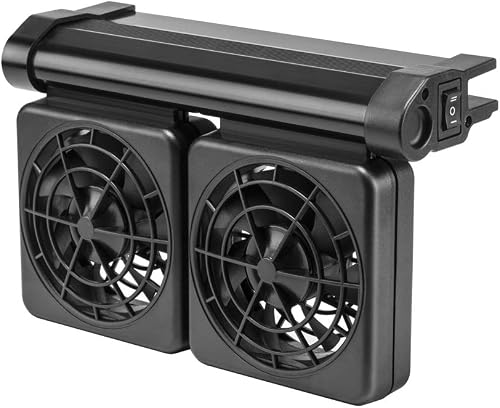
aquarium cooling fans comparison, in stock
Aquarium Fan,Ultra-Quiet Fish Tank Cooler,More Powerful,Cooling Effect 3-7℉ with 3 Speed Modes Adjustable Applicable…
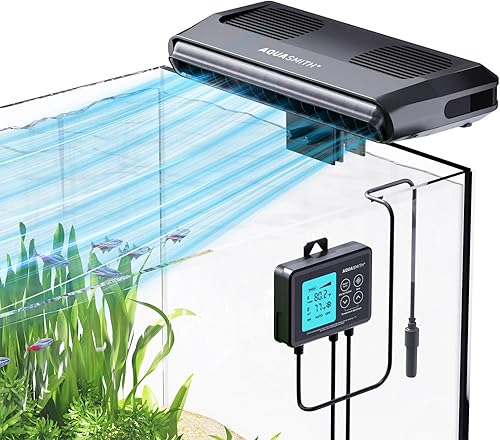
AQUASMITH Aquarium Chiller Fan,Fish Tank Cooler with Temperature Control,Minimum Setting 59℉,Auto Start/Stop…
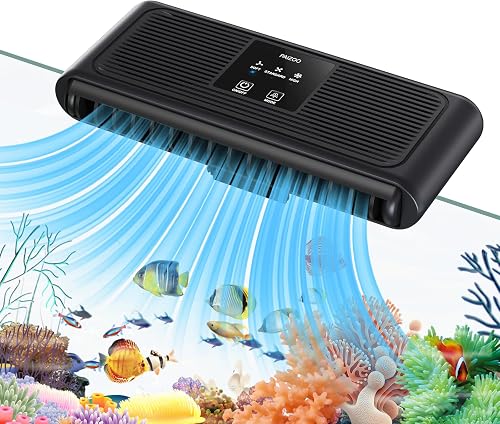
PAIZOO Aquarium Chiller Fan, Ultra-Quiet Fish Tank Cooler with 3 Speed Mode

Aquarium Fan 2 3 4 Heads, Aquarium Chillers Cooling Fan Adjustable Fish Tank Cooling Fan with 2 Wind Speed Fan for…
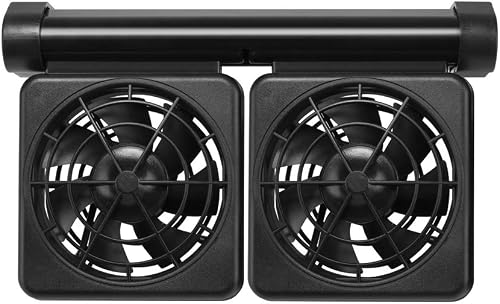
Aquarium Cooling Fan Fish Tank Fan Aquarium Chillers for Salt Water Fresh Water
DaToo Aquarium Chiller Fish Tank Fan Aquarium Cooling Fan, 1 Yr Warranty

DaToo 4 Fans Aquarium Chiller Fish Tank Fan Aquarium Cooling Fan, 1 Yr Warranty

DaToo 3 Fans Aquarium Chiller Fish Tank Fan Aquarium Cooling Fan, 1 Yr Warranty
AcuarioSano rating: combines the average rating and the number of buyer reviews on Amazon. No brand pays to be featured.
Why heat is dangerous for fish
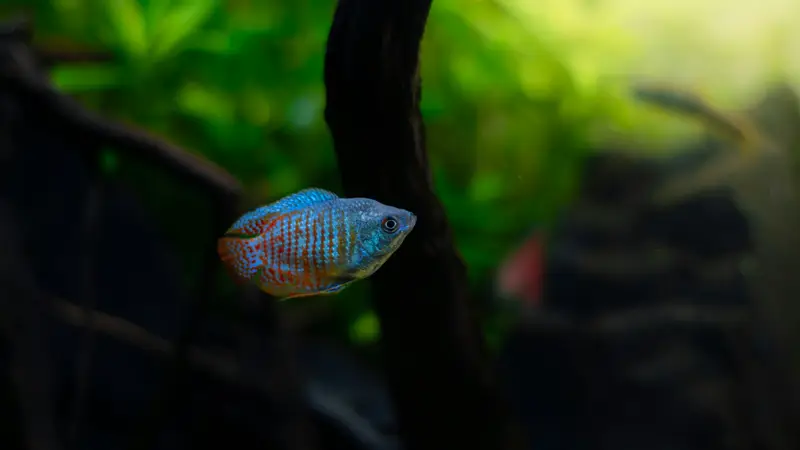
Most tropical fish are comfortable between 75 and 80 °F (24-27 °C). Above 84-86 °F (29-30 °C) trouble starts: warm water holds less oxygen, while fish, with their metabolism running faster, need more of it. Filter bacteria also use more oxygen, so the risk of suffocation rises, especially at night when plants stop producing it. The first signs are fish gasping at the surface, rapid breathing and lethargy.
Coldwater species have it even worse: goldfish, white cloud minnows and shrimp like cherry shrimp get stressed above 77-79 °F (25-26 °C). Our aquarium temperature guide lists the ranges for each group.
How an aquarium fan works
A fan doesn't chill the air: it moves air across the water surface and speeds up evaporation. Evaporating water takes heat with it, and that heat leaves the tank. That's why fans work best with the lid open or removed and in dry rooms; in very humid air the effect drops.
| Option | Approximate drop | Cost | Downsides |
|---|---|---|---|
| Open the lid, lights off | 1-2 °F (0.5-1 °C) | None | Not enough in a heatwave |
| Clip-on fan (1-2 fans) | 2-5 °F (1-3 °C) | Low | Evaporation, some noise |
| Multi-fan unit with thermostat | 4-7 °F (2-4 °C) | Low to mid | Evaporation; more cables |
| Chiller | Whatever you set | High | Expensive, noisy, dumps heat into the room |
What to look for in a cooling fan
- Number of fans: one or two are enough up to about 20 gallons (60-80 L); for tanks over 30 gallons (100+ L), choose a 3-4 fan unit or use two.
- Built-in thermostat: models with a probe switch on when the water passes your set point (say 80 °F) and switch off as it cools. That avoids over-cooling at night and cuts evaporation.
- Adjustable speed: handy for balancing noise and cooling power.
- Mounting: a sturdy clamp that fits your glass or rim thickness; some fit poorly on tanks with built-in hoods.
- Power: USB or low-voltage adapters are safer near water.
Brands such as JBL, Aquael, Hygger and Sicce make dedicated aquarium fans, and there are plenty of affordable generic units with thermostats.
Tip: during a heatwave, cut back the light period, boost aeration with an air pump or by raising the filter outlet to break the surface, and feed less: less digestion means less oxygen demand.
Evaporation and topping off
The price of evaporative cooling is a fast-dropping water level: a strong fan can evaporate a gallon or more per week. Minerals don't evaporate, so hardness creeps up. Always top off with mineral-free water (RO or distilled), or dechlorinated tap water if yours is soft, and do it daily in small amounts.
Warning: don't crash the temperature with ice or big cold water changes. A drop of more than 4 °F (2 °C) in a few hours stresses fish as much as the heat. If you use frozen water bottles, keep them sealed and remove them before the tank cools too far.
Common mistakes
- Running the fan with the lid closed.
- Topping off with hard tap water and building up minerals.
- Not watching the thermometer and over-cooling at night.
- Keeping the full 8-hour photoperiod and normal feeding during a heatwave.
- Dropping ice straight into the tank.
We compare spec sheets, verified reviews and real-world use criteria, but we don't physically test the products.
Frequently asked questions
How much does an aquarium fan lower the temperature?
Usually 2 to 5 °F (1-3 °C), and up to about 7 °F (4 °C) with multi-fan units, an open lid and dry air. In very humid rooms the effect is smaller.
What water should I use to top off evaporation?
Mineral-free water such as RO or distilled, because minerals stay behind when water evaporates. If your tap water is soft, dechlorinated tap water is fine.
Is a thermostat-controlled fan worth it?
Yes. It switches on only when the water passes your set temperature and off again as it cools, so you avoid over-cooling at night and reduce evaporation.
Can I put ice in my aquarium?
Not directly. If you need to cool the tank urgently, float sealed bottles of frozen water and remove them before the temperature drops more than about 4 °F in a few hours.
You may also like
 Gear reviewAquarium thermometers
 Gear reviewAquarium heaters
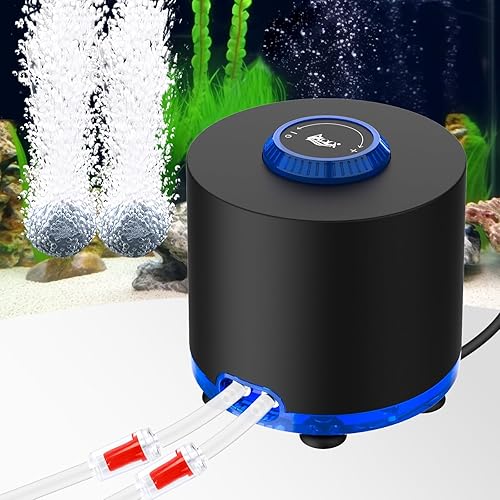 Gear reviewAquarium air pumps and air stones
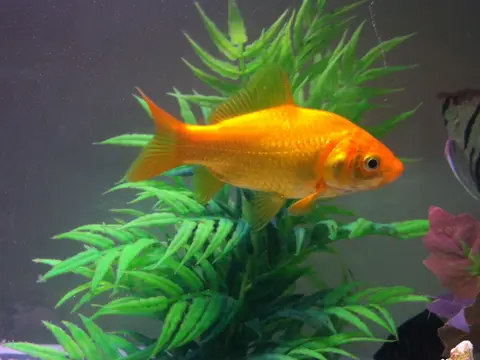 ProfileCommon goldfish
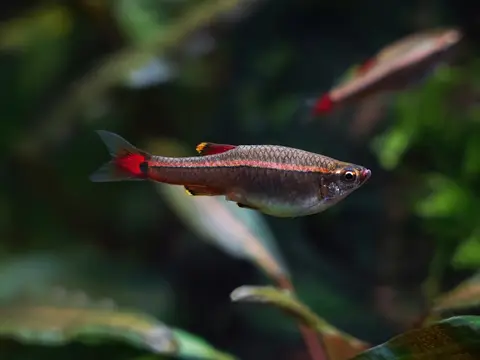 ProfileWhite cloud mountain minnow
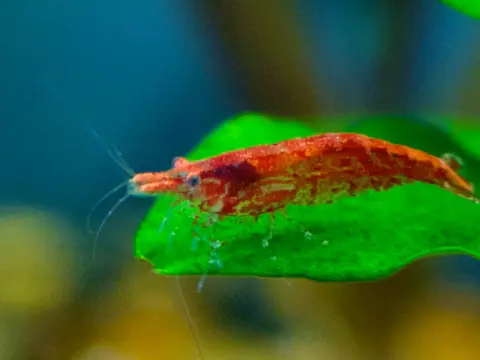 ProfileCherry shrimp
- GuideAquarium Without a Filter or Heater: Can You Do It Safely?
- GuideAquarium Temperature: Ideal Range, Heaters, Summer and Outages