
If you buy through our links, Amazon pays us a small commission at no extra cost to you. That’s how we keep the site running. How we choose.
Contents
Our top 3 picks
Stock checked on October 7, 2026

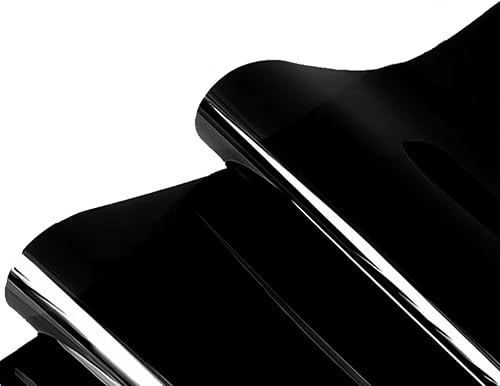
aquarium backgrounds comparison, in stock
Niviy Blackout Window Film, Black Aquarium Background,17.5"x 78.7"
Black Aquarium Background Film, Static Cling PVC, 11.8" H × 39" W
Black Aquarium Background Film, Static Cling PVC, 23.6" H × 78.7" W
48x24 inches Tropical Fish Tank Background Aquatic Plant Aquarium Backdrop
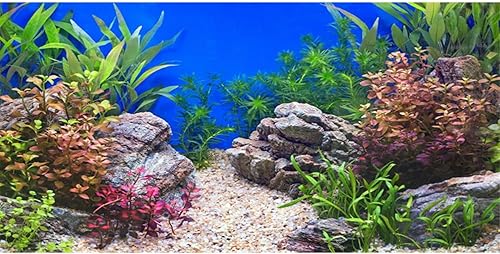
AWERT 48x24 in Aquatic Plant Fish Tank Background Stone Aquarium Backdrop
AWERT 30x18 in Aquatic Plant Fish Tank Background Stone Aquarium Backdrop
AWERT 36x24 in Aquatic Plant Fish Tank Background Stone Aquarium Backdrop

Aquarium Background Film, Static Cling, Glue-Free, Blue Ocean 11.8"H×23.6"W
AcuarioSano rating: combines the average rating and the number of buyer reviews on Amazon. No brand pays to be featured.
Why use a background
Without one, you see the outlet, filter tubing and wall through the back glass, and the tank looks smaller. A dark or neutral background creates depth, hides equipment and makes many fish feel more secure: a tank that's open front and back leaves them exposed, especially in high-traffic rooms. Shy fish tend to come out more with an opaque back.
Types of background
Vinyl or poster on the outside
The most common option: a sheet applied to the outside of the back glass. There are static cling versions (they stick to clean glass on their own and can be peeled off and repositioned), permanent adhesive versions and printed posters held with tape at the edges or with a mounting solution. They're sold by the roll or by the foot in standard heights (12, 16, 20 or 24 in), so you trim them to fit.
Paint or frosted film
Painting the outside of the back glass with acrylic or spray paint gives a clean, permanent finish; do it with the tank empty and well masked. Frosted or white diffusion films create the "infinity" look popular in aquascaping when lit from behind.
3D backgrounds
These are resin, polyurethane foam or fiber panels that mimic rock, roots or mud and go inside the tank, siliconed to the back glass. They look spectacular and add plenty of hiding spots, but they eat into volume (1-4 in, or 3-10 cm, of depth), must go in before filling and can trap debris or snails behind them. They shine in African cichlid and biotope tanks.
Black, blue or frosted
| Background | Look | Pros | Cons | Best for |
|---|---|---|---|---|
| Black | depth, rich colors | hides cords and algae on the glass | reflective in a bright room | planted tanks, tetras, colorful fish |
| Blue | open water, classic look | bright and cheerful | can look artificial | community tanks, African cichlids |
| Frosted white | "infinity", very bright | pro aquascape aesthetic | every cord and tube shows | Iwagumi and open layouts |
| Printed (plants, rocks) | illusion of scenery | inexpensive, themed | can look busy | unplanted or kids' tanks |
| 3D interior | real relief | hiding spots, natural look | loses volume, more upkeep | cichlids, biotopes |
In practice, black looks best in almost any tank: it makes the red of a neon tetra or a cherry barb glow far more and makes plants look denser.
How to apply a vinyl background without bubbles
- Measure the back glass and cut the background about 1/8 in (2-3 mm) smaller so it doesn't overhang.
- Clean the outside of the glass with rubbing alcohol or ammonia-free glass cleaner and dry it well.
- Mist the glass with water and a few drops of dish soap (or use glycerin or the maker's solution).
- Lay the sheet from one side and squeegee the liquid and air out to the edges with a plastic card.
- Tape the edges with clear tape if it isn't self-adhesive.
Tip: put the background on before filling and before pushing the tank against the wall. Once the tank is full, access is awkward, and a background with bubbles and creases really stands out. For the full sequence, see how to set up an aquarium step by step.
Watch out: for 3D backgrounds use only aquarium-safe silicone and let it cure for at least 24-48 hours before filling. If the background is from an unknown brand, soak it for a few days and change the water: some cheap ones give off odors or paint residue.
Common mistakes
- Trying to apply the background with the tank full and up against the wall.
- Cutting the vinyl to the exact size or larger: the edges peel up.
- Choosing a 3D background for a small tank and losing a big chunk of its volume.
- Picking a very colorful poster that competes with the fish and plants.
- Leaving gaps between a 3D background and the glass where small fish get trapped.
For real depth with natural materials, combine the background with aquarium rocks and check out aquascaping styles and tips. We compare spec sheets, verified reviews and real-world criteria, but we don't physically test the products: check the dimensions and attachment method in each listing.
Frequently asked questions
What color background is best for an aquarium?
Black is the most versatile: it adds depth, hides equipment and makes fish and plants stand out. Blue gives a more classic look, and frosted white is used in aquascaping with backlighting.
Does an aquarium background go inside or outside?
Vinyl, posters and paint always go on the outside of the back glass. Only 3D backgrounds go inside, attached with aquarium-safe silicone.
How do I apply an aquarium background without bubbles?
Clean the glass well, mist it with water and a few drops of dish soap or use glycerin, lay the sheet from one side and push the air out to the edges with a card or squeegee.
Can I add a background to a tank that's already full?
An outside vinyl, yes, if you can reach the back glass, though it's fiddly. A 3D interior background means draining the tank, so decide on it before setup.
You may also like
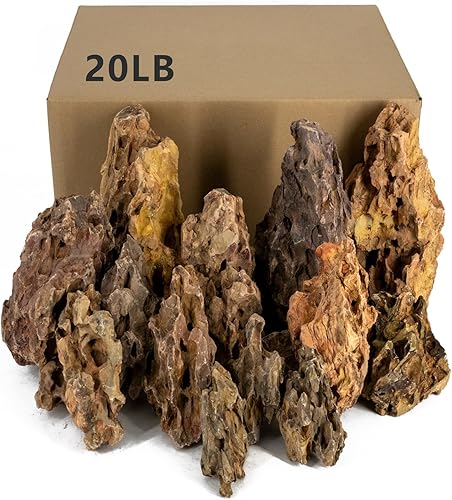 Gear reviewAquarium rocks
 Gear reviewAquarium driftwood
 Gear reviewAquarium caves and hides
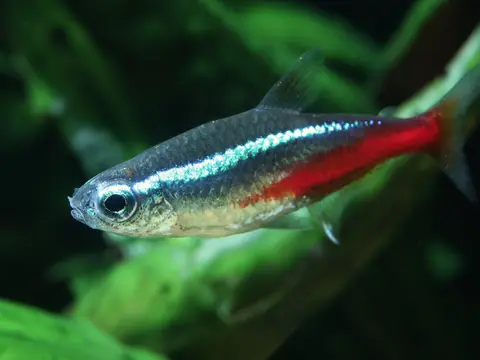 ProfileNeon tetra
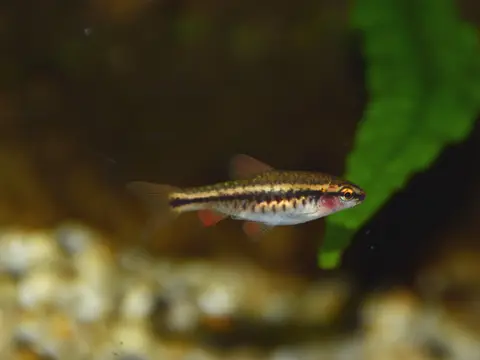 ProfileCherry barb
- GuideHow to Set Up a Fish Tank Step by Step: From Stand to First Fish
- GuideAquascaping: Styles, Composition and Tips for Beginners
- GuideFirst Aquarium for Beginners: Tank Size, Equipment and Easy Fish