If you buy through our links, Amazon pays us a small commission at no extra cost to you. That’s how we keep the site running. How we choose.
Contents
Our top 3 picks
Stock checked on October 7, 2026

betta fish food comparison, in stock
Crystalpro Betta Minerals - Creates Natural Beta Water Environment - Reduces Stress - Essential Minerals for Soft & RO…

Crystalpro Betta Minerals - Creates Natural Beta Water Environment - Reduces Stress - Essential Minerals for Soft & RO…

Aqua Beta Betta Fish Mineral Supplement – Essential Trace Elements for Healthy Growth, Vibrant Colour & Natural Habitat…


Awesome Aquatic 25 Alder Cones, Blackwater, Betta Shrimp Habitat

Aqueon Pure Betta Beads, Purple

AcuarioSano rating: combines the average rating and the number of buyer reviews on Amazon. No brand pays to be featured.
What bettas eat in the wild
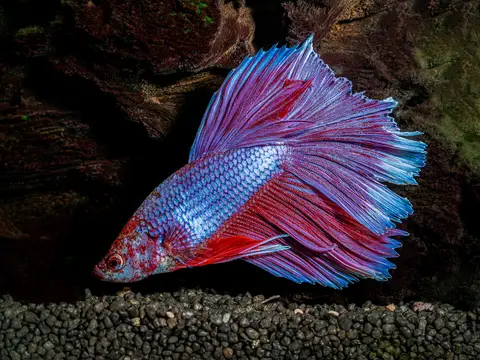
The betta lives in shallow rice paddies, ponds and canals in Southeast Asia, where it hunts mosquito larvae, tiny crustaceans and insects that fall onto the water. Its upturned mouth is built for feeding at the surface. That makes it a carnivore-insectivore: it needs a diet rich in animal protein with little plant matter.
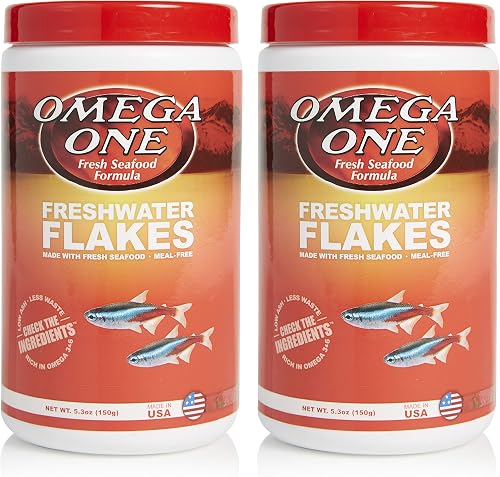
That is why generic tropical flakes are not the best staple: they usually contain more grains and vegetables than a betta needs and fall apart before they are eaten. The ideal is a floating betta-specific pellet of around 1 mm whose first ingredient is fish, krill, shrimp or insect meal (Hikari Betta Bio-Gold, Fluval Bug Bites Betta, Omega One Betta Buffet, Tetra Betta and similar).
Pellets, frozen and freeze-dried
| Type | Role in the diet | Pros | Precautions |
|---|---|---|---|
| Floating betta pellets | daily staple | easy to count, complete nutrition | pre-soak briefly if they swell a lot |
| Frozen (bloodworms, brine shrimp, daphnia) | 1-3 times a week | highly palatable, nutritious | thaw in tank water and feed small amounts |
| Freeze-dried | occasional treat | convenient, no freezer needed | expands when rehydrated: always soak first |
| Betta flakes | occasional alternative | easy to find | messier, hard to portion |
Variety helps: alternating pellets with frozen food improves color and appetite. Frozen daphnia, which is high in fiber, also helps prevent constipation.
How much to feed: the right portion
People often say a betta's stomach is about the size of its eye. It is only a rule of thumb, but it explains why 2-4 pellets once or twice a day is enough, depending on pellet size and the fish. With frozen food, a small portion of 3-5 bloodworms replaces one pellet meal.
- Count the pellets instead of dropping in "a pinch".
- Remove anything not eaten within 2-3 minutes with a turkey baster or pipette.
- Fast one day a week so the gut can empty.
- In a community tank, make sure the betta actually eats: it is slow and other fish steal its food.
Tip: soak pellets and freeze-dried food for 5-10 minutes in a little tank water before feeding. They swell outside rather than inside the stomach, which greatly lowers the risk of bloating.
Bloating, constipation and water quality
A betta with a swollen belly that sits still for long periods or struggles to swim has usually eaten too much or is constipated. The first step is a 1-3 day fast, followed by smaller portions and some daphnia. If the scales also stick out like a pinecone, it may be dropsy, a far more serious problem that needs treatment.
Uneaten food rotting in a small tank sends ammonia up very quickly. That is why a betta needs a cycled tank of at least 5 gallons (20 L) with a gentle filter and a heater set to 77-81 °F (25-27 °C); no unfiltered bowls. See options in betta tanks and general portions in how much and how often to feed fish.
Common mistakes
- Feeding generic flakes as the only food.
- Feeding by eye and letting pellets pile up on the bottom.
- Feeding lots of dry, unsoaked freeze-dried food.
- Assuming that begging means hunger: bettas always beg.
- Using vacation blocks or an untested feeder: for a weekend, fasting is safer (what to do on vacation).
Warning: a betta does not feed on plant roots and cannot live in a vase "eating whatever it finds". That myth causes many deaths from starvation and polluted water.
We compare spec sheets, verified reviews and real-world use criteria, but we do not physically test the products: use the products above as a starting point and check each listing for the first ingredient and pellet size.
Frequently asked questions
How many pellets should a betta eat per day?
As a guide, 2-4 pellets once or twice a day, depending on pellet size and the fish, with one fasting day a week. Underfeeding is safer than overfeeding.
Can I feed my betta regular tropical flakes?
Occasionally, yes, but not as the staple. Bettas are carnivore-insectivores and do best on a betta-specific pellet with animal protein as the first ingredient.
Why does my betta have a swollen belly?
Most often it has eaten too much or is constipated. Fast it for 1-3 days, then feed smaller portions with some daphnia. If the scales start to stick out, suspect dropsy.
Is freeze-dried food good for bettas?
Yes, as an occasional treat, but always soak it first because it expands when rehydrated and can cause bloating. It should not be the daily food.
You may also like
 Gear reviewBetta fish tanks
 Gear reviewFish flakes and micro pellets
 Gear reviewAutomatic fish feeders
 ProfileBetta fish
- GuideHow Much and How Often to Feed Aquarium Fish
- GuideLeaving Your Fish Tank on Vacation: Food, Lights and Heat
- GuideAquarium Water Changes: How Much, How Often and How To
- GuideHow Many Hours of Light Does an Aquarium Need? Photoperiod Guide